





















Numeric Springing Techniques for Game Animation and Procedural Control
By
fanf2

Baker's choice. Dense with flavour, light on filler.
Summary
This technical article explains numeric springing, a mathematical technique used in game development for procedural animation. The author discusses common implementation approaches that are designer-unfriendly and presents improved methods for precise control over spring parameters. The content covers mathematical foundations, implementation details, and practical applications in game animation systems.
Key quotes
· 3 pulledNumeric springing is a very powerful tool for procedural animation. You specify the initial value, initial velocity, target value, and some spring-related parameters; the result is a smooth springing effect.
The Common But Designer-Unfriendly Way - Here is a common, yet designer-unfriendly, implementation of numeric springing.
You can apply this technique to all sorts of numeric properties, some common ones being position, rotation, and scale of an object.
You might also wanna read


The Mathematical Mystery Hidden in Quake 3's Source Code
The article explores a fascinating mathematical mystery hidden within the source code of the 1999 first-person shooter Quake 3 Arena. It rev
 scientificamerican.com·3mo ago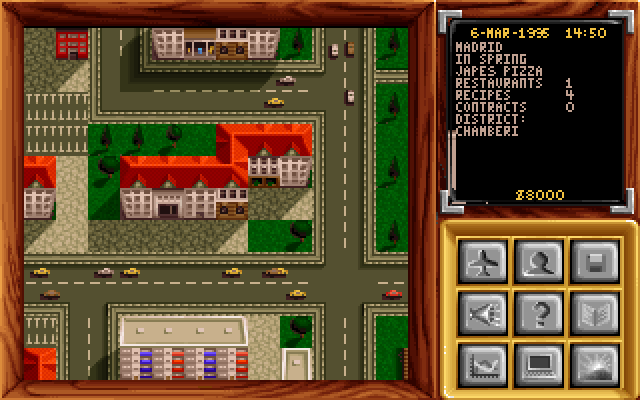
Reverse Engineering Pizza Tycoon's Traffic Simulation: How 1994 Game Simulated Dozens of Cars on 25 MHz CPU
This article explores the technical implementation of the traffic simulation system in the 1994 DOS game Pizza Tycoon. The author, working o

Nintendo DS Programming Manual and Tutorial for libnds 1.3.1
This is a technical manual and tutorial for Nintendo DS programming, covering libnds 1.3.1 and various aspects of game development including
Technical Analysis of RollerCoaster Tycoon's Assembly Language Optimization
This article explores the technical achievements of RollerCoaster Tycoon (1999), focusing on how its creator Chris Sawyer wrote the game alm
 larstofus.com·2mo ago
Termcraft: Terminal-Only 2D Sandbox Survival Game Built in Rust
Termcraft is an unofficial fan project that adapts Minecraft's classic survival gameplay to a terminal-only 2D side-scrolling experience. Bu
 github.com·2mo ago
ECS Survivors Development Update: Parts VII-X Overview and New Features
The article is a developer update for the ECS Survivors project, covering multiple parts (VII-X) of development over approximately 7 months.
 blog.ptidej.net·3mo ago