
























The International System of Units: From whale fat candles to universal constants
By
No Author
Summary
Ben Stein explores the International System of Units (SI), the foundation of modern metrology that ensures consistency across all scientific measurements. While today's SI definitions are based on universal constants like the speed of light and Planck's constant, the article delves into the quirky historical origins of units like the candela (originally based on a whale fat candle), the kilogram (still defined by a physical prototype until recently), and other unusual standards. The piece examines how the system has evolved from these idiosyncratic beginnings to the current rigorous, constant-based framework, while noting that some charming quirks remain embedded in the system's history and definitions.
Source
 bskyThe International System of Units: From whale fat candles to universal constantsphysicsworld.com
Key quotes
· 3 pulledThe International System of Units is the foundation of metrology, ensuring that all units across science are consistent.
The candela unit was initially defined in terms of a single candle made from whale fat, with a bit of beeswax to improve the burn, but it quickly became apparent that it was not a reproducible standard.
In among the strict modern definitions based on universal constants, there are some unusual quirks.
You might also wanna read

Rethinking Scientific Elegance: When Complex Systems Require Billions of Parameters
The article explores the evolution of scientific understanding from mystical explanations to concise physical laws, and questions whether ou
 worldgov.org·3mo ago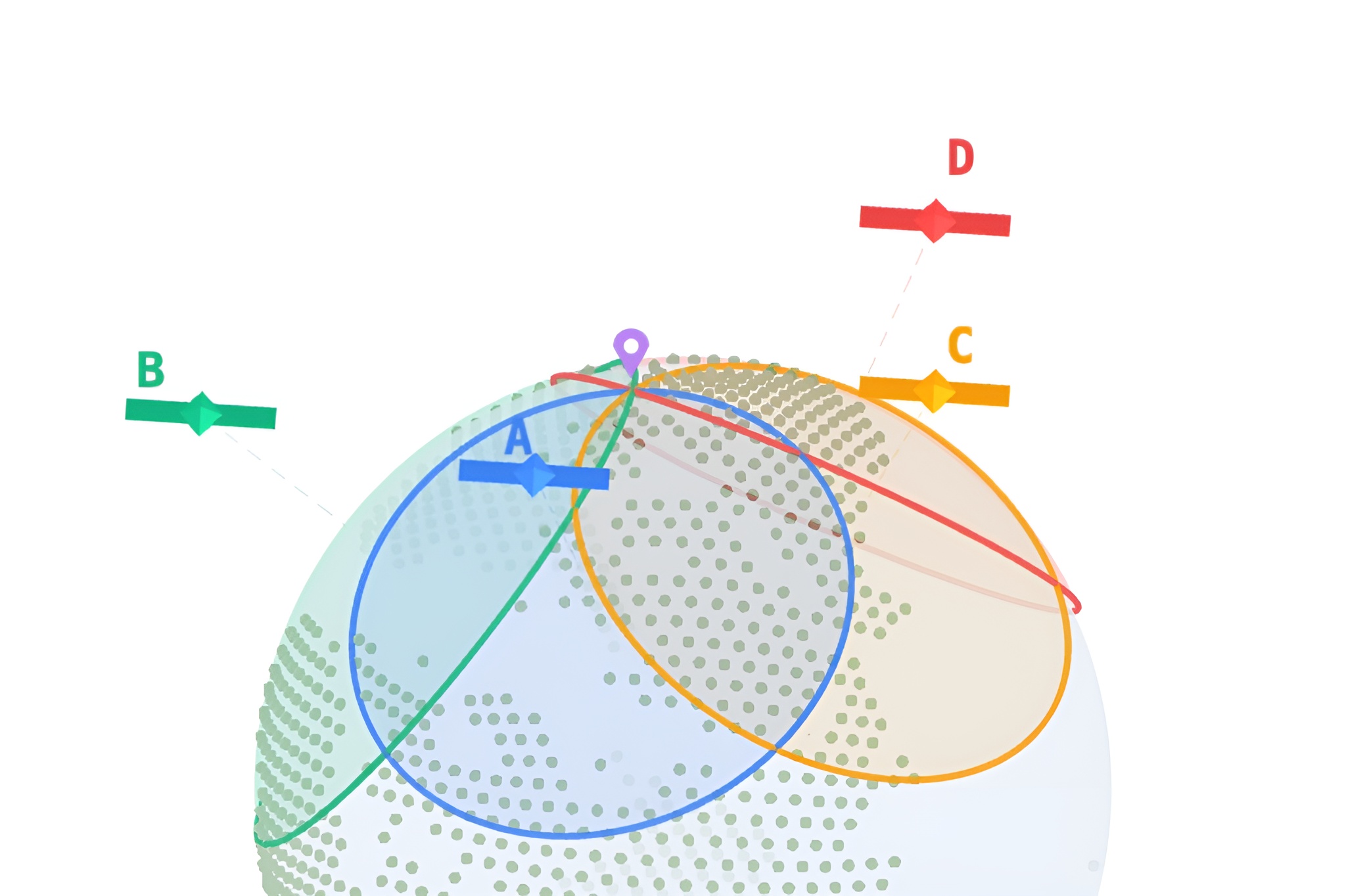
How GPS Works: Trilateration, Atomic Clocks, and Einstein's Relativity
An interactive exploration explaining how GPS works, covering the fundamental principles of trilateration using satellite geometry, the crit

Geometric Derivation of Planck Mass Achieves 0.574 ppm Precision Using π⁴⁵ Formula
Researchers present a geometric derivation of the Planck mass using pure geometry with zero free parameters, achieving 0.574 ppm precision.
 zenodo.org·5mo ago
Scientists Develop Nuclear Clocks, Promising a New Era of Ultra-Precise Timekeeping
Two new independent studies are heralding a new era of timekeeping with the development of nuclear clocks, which use the nucleus of atoms ra
 popularmechanics.com·1d ago
Mathematicians Use Network Theory to Advance Understanding of Fourier Transform
Mathematicians have made significant progress on a long-standing problem related to the Fourier transform, a fundamental mathematical tool u
 quantamagazine.org·4mo ago
Creating Cosmologically Unique Identifiers Using Cosmic Microwave Background Radiation
The article explores the challenge of creating globally unique identifiers for objects in a cosmological context, particularly as humanity e
 jasonfantl.com·4mo ago
Comments
Sign in to join the conversation.
No comments yet. Be the first.