
























The Shift from Manual Pentesting to AI-Driven Continuous Vulnerability Management
By
by Malana VanTyler
Summary
The article discusses the evolution of cybersecurity vulnerability management, contrasting traditional manual penetration testing (valuable but expensive and point-in-time) with automated scanners (broader coverage but signature-dependent). It introduces a new paradigm of AI-driven penetration testing, exemplified by platforms like XBOW, which use agentic AI to mimic human attackers for continuous validation. This represents a shift from periodic assessments and reactive patching toward ongoing exposure management and proactive prevention.
Source

 bskyThe Shift from Manual Pentesting to AI-Driven Continuous Vulnerability Managementlinuxjournal.com
Key quotes
· 5 pulledManual penetration tests remain valuable, especially for nuanced attack paths and business-logic issues, but they are expensive, point-in-time, and difficult to run continuously.
By the time a report is delivered, the environment may have already changed.
Automated scanners improved coverage and frequency, but most still rely on known signatures, templated checks, and shallow validation.
They can find obvious issues, but they rarely match the adaptive reasoning, chaining, and persistence of a skilled attacker.
This shift moves the focus from periodic assessment and reactive patching toward ongoing exposure management and earlier prevention.
You might also wanna read


Research Study: AI Agents vs Human Cybersecurity Professionals in Penetration Testing
This research paper presents the first comprehensive evaluation comparing AI agents to human cybersecurity professionals in real-world penet
 arxiv.org·6mo ago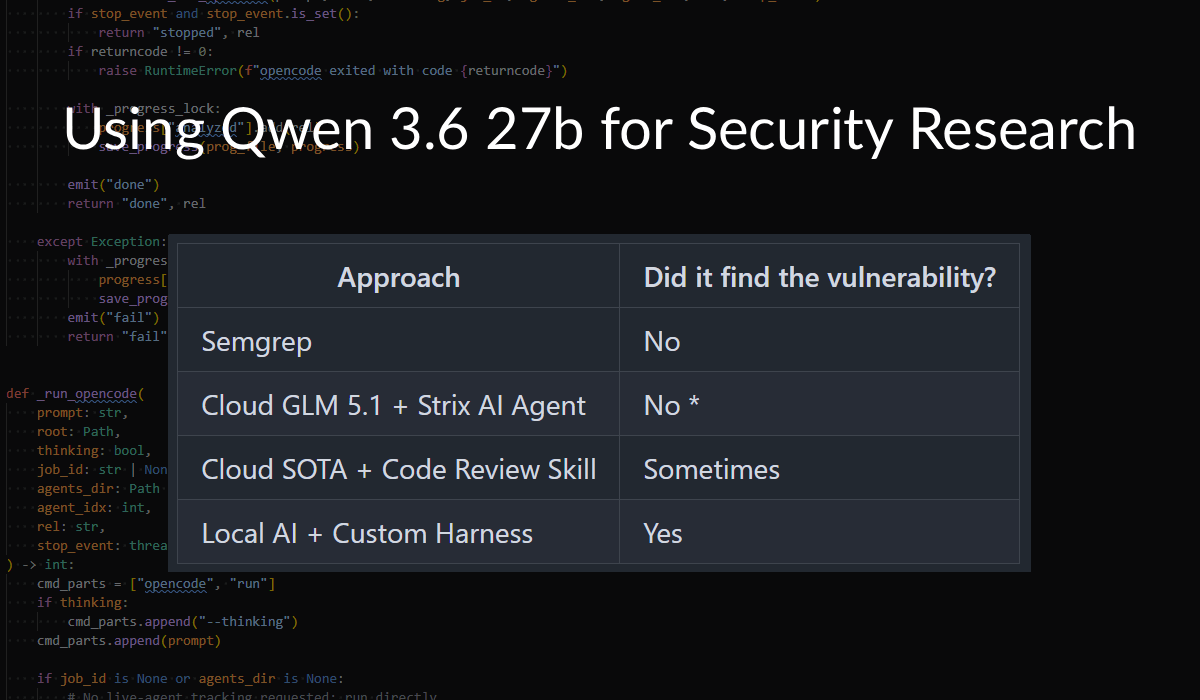
Benchmarking Local AI Models for Cybersecurity Vulnerability Detection
The article evaluates the effectiveness of local AI models for cybersecurity penetration testing and vulnerability research. The author benc
 projectblack.io·9d ago
Strix: AI-Powered Penetration Testing Tool That Finds and Fixes Vulnerabilities

AI-Generated Vulnerability Reports Overwhelm Bug Bounty Platforms and Security Teams
A cybersecurity expert with nearly a decade of experience in bug bounty programs analyzes the growing problem of AI-generated vulnerability
 devansh.bearblog.dev·8mo ago
Security Vulnerabilities in Agentic AI Browsers: Testing Reveals Scam Susceptibility
The article examines the emerging security vulnerabilities in agentic AI browsers that autonomously browse, search, and interact online. It
 guard.io·10mo ago
Comments
Sign in to join the conversation.
No comments yet. Be the first.