
























New evidence pushes back earliest known human fire use to 1.8 million years ago
By
Tom Metcalfe
Summary
Archaeologists have discovered evidence of controlled fire use by Homo erectus at Wonderwork Cave in South Africa, dating back up to 1.8 million years. The burnt remnants of owl pellets found in the cave indicate that early hominids regularly used fire, pushing back the earliest-known evidence of fire use by roughly 300,000 years. The research was published in PLoS One on June 1.
Source

 Twitter / XNew evidence pushes back earliest known human fire use to 1.8 million years agosciencenews.org
Key quotes
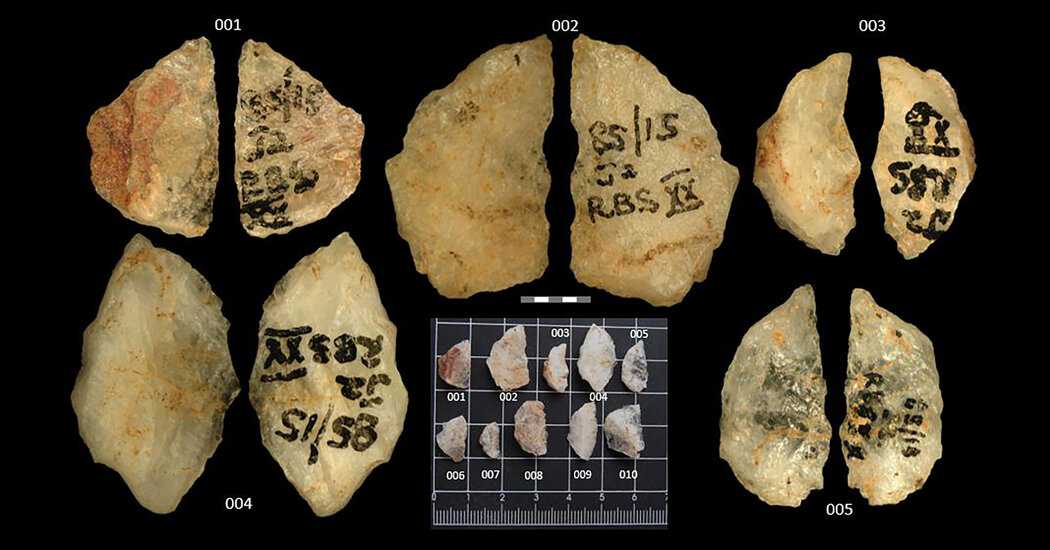
· 3 pulledNew evidence of early fire use comes from South Africa's Wonderwork Cave, which was inhabited by groups of Homo erectus between 1.8 million and 900,000 years ago.
Archaeologists have discovered traces of fires built up to 1.8 million years ago in a cave in southern Africa.
The burnt remnants of owl pellets reveal that the fires were regularly used by groups of the human ancestor Homo erectus, researchers report June 1 in PLoS One.
You might also wanna read

60,000-Year-Old Arrow Tips Reveal Earliest Evidence of Poison Use for Hunting
Researchers have discovered 60,000-year-old poison residues on arrow tips found in South Africa, pushing back the timeline for when humans b
 nytimes.com·5mo ago
Study: Recent Rwenzori Mountains Wildfire Unprecedented in 12,000 Years of Sediment Records
A study of ancient lake sediments reveals that a recent wildfire in the Rwenzori Mountains (African mountain range) was unprecedented in the
 mountainresearchinitiative.org·29d ago
Sedimentary Charcoal Analysis Tests Fire's Role in Late Miocene C4 Grassland Expansion
This research article investigates the role of fire in the late Miocene C4 grassland expansion by analyzing sedimentary charcoal from the So
 doi.org·17d ago
Proteins from 400,000-year-old Homo erectus teeth reveal genetic links to Denisovans and modern humans
A new study published in Nature reveals that researchers have successfully extracted and analyzed proteins from the enamel of six Homo erect
 doi.org·7d ago
Genetic analysis of Homo naledi skeletons reveals all known specimens are female, puzzling researchers
Archaeologists have conducted the first genetic analysis of Homo naledi, a 300,000-year-old hominin species discovered in South Africa's Ris
 livescience.com·1d ago
Million-Year-Old Skull Discovery May Rewrite Timeline of Modern Human Origins
A million-year-old human skull discovered in China, previously classified as Homo erectus, has been reanalyzed using sophisticated reconstru
 theguardian.com·8mo ago
Comments
Sign in to join the conversation.
No comments yet. Be the first.