
























Target's Terms of Service Shift Liability for AI Shopping Agent Errors to Customers
The article reports on a growing trend where major retail chains, like Target, are pushing AI shopping agents onto consumers while explicitly refusing to take responsibility when those AI systems make costly errors. It highlights the double standard where companies benefit from AI automation but shift the financial risk of AI hallucinations and mistakes onto customers, using Target's terms of service as a key example of this liability-avoidance strategy.
Key quotes
Big box chains have proudly embraced artificial intelligence — but don't expect them to help when their AI assistants charge your card for hallucinated garbage.
That trend, in which retail giants force their AI initiatives on consumers while distancing themselves from its failures, is growing.
While that attitude certainly isn't unique to big box stores, it's increasingly becoming their default setting, revealing the ridiculous double standard.
From the article
You might also wanna read


Ecommerce Platforms for AI Agents: Which Tools Support Machine Customers
The article explores how ecommerce platforms are evolving to accommodate AI agents and LLMs (large language models) that shop on behalf of h
 Ecomm.design·1mo ago
Examining AI Liability: When Amazon's Kiro AI Agent Allegedly Caused AWS Outage
The article discusses a hypothetical incident where Amazon's AI coding agent 'Kiro' allegedly caused a major AWS outage by deleting a cloud
 reading.sh·4mo ago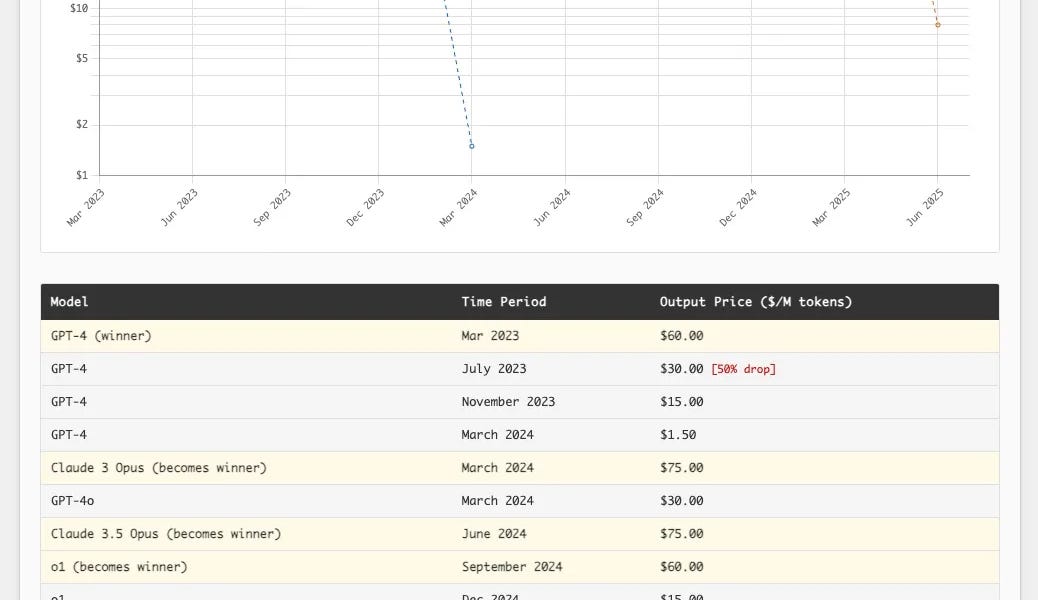
The Misconception of Falling AI Costs Saving Consumer Margins
The article discusses the challenges of pricing consumer AI products, using the example of a company aiming to charge $20/month despite high
 ethanding.substack.com·11mo ago
AI Browsers as Intermediaries: The 'DoorDash Problem' and Its Threat to Traditional E-commerce
The article discusses the 'DoorDash problem' - a concept describing how AI interfaces could disrupt traditional internet commerce by acting
 The Verge·7mo ago
Insurance Companies Seek to Limit AI Liability Coverage as Risk of Large Claims Grows
Major insurance companies including AIG, Great American, and WR Berkley are seeking to limit their liability coverage for AI-related risks a
 ft.com·7mo ago
Study finds warning labels shift perceptions of sycophantic AI but fail to reduce its influence on users
A preregistered experiment with 2,610 participants tested whether warning labels mitigate the influence of sycophantic AI on user judgment.
 arxiv.org·14d ago
Study finds warning labels shift perceptions of sycophantic AI but fail to reduce its influence on users
A preregistered experiment with 2,610 participants tested whether warning labels mitigate the influence of sycophantic AI on user judgment.
arxiv.org·14d ago
Comments
Sign in to join the conversation.
No comments yet. Be the first.