

























Multi-Agent Reinforcement Learning Reduces Drone Racing Collisions by 50% While Achieving Champion-Level Performance
Summary
This article presents research demonstrating that multi-agent reinforcement learning (MARL) enables superhuman performance in shared, dynamic real-world spaces, specifically in champion-level multi-player drone racing. The key finding is that MARL provides essential safety scaffolding for real-world interaction, achieving 50% fewer collisions compared to traditional single-agent approaches. The research uses league-based self-play to train agents that can effectively coordinate with other actors rather than treating them as environmental noise.
Source
 bskyMulti-Agent Reinforcement Learning Reduces Drone Racing Collisions by 50% While Achieving Champion-Level Performancerpg.ifi.uzh.ch
Key quotes
· 3 pulledAutonomous systems have achieved superhuman performance in isolation or simulation, yet they remain brittle in shared, dynamic real-world spaces.
This failure stems from the dominant single-agent paradigm for physical applications, where other actors are ignored or treated as environmental noise, preventing effective coordination.
Here we show that multi-agent reinforcement learning provides the essential safety scaffolding required for real-world interaction.
You might also wanna read

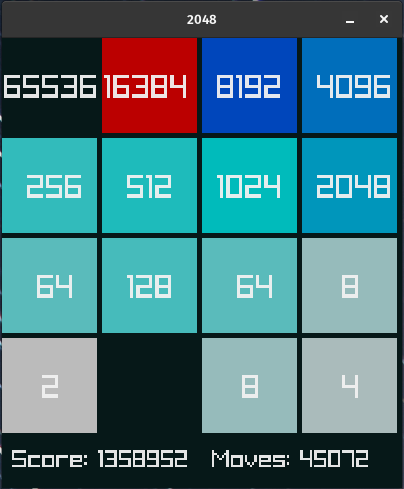
Using Curriculum Learning and PufferLib to Train Superhuman AI Agents for 2048 and Tetris
The article describes using PufferLib, a reinforcement learning framework, to train gaming agents that achieve superhuman performance in 204
AgentGym-RL: A Reinforcement Learning Framework for Training LLM Agents in Multi-Turn Decision Making
This paper introduces AgentGym-RL, a unified reinforcement learning framework for training LLM agents to perform multi-turn interactive deci
 arxiv.org·1d ago
AgentGym-RL: A Reinforcement Learning Framework for Training LLM Agents in Multi-Turn Decision Making
This paper introduces AgentGym-RL, a unified reinforcement learning framework for training LLM agents to perform multi-turn interactive deci
arxiv.org·1d ago
Self-play reinforcement learning with minimal human data produces human-compatible autonomous driving policies
This paper presents a novel approach to training autonomous driving policies that combines self-play reinforcement learning with a small amo
arxiv.org·1d agoSelf-play reinforcement learning with minimal human data produces human-compatible autonomous driving policies
This paper presents a novel approach to training autonomous driving policies that combines self-play reinforcement learning with a small amo
arxiv.org·1d ago
Skill-MAS: A Meta-Skill Approach to Improving Multi-Agent Systems Without Retraining
Skill-MAS proposes a novel approach to LLM-based automatic Multi-Agent Systems (MAS) generation that bridges the gap between inference-time
arxiv.org·2d agoSkill-MAS: A Meta-Skill Approach to Improving Multi-Agent Systems Without Retraining
Skill-MAS proposes a novel approach to LLM-based automatic Multi-Agent Systems (MAS) generation that bridges the gap between inference-time
arxiv.org·2d ago
10 Open-Source Reinforcement Learning Frameworks for Training AI Agents
A practical roundup of 10 open-source reinforcement learning (RL) training frameworks for AI agents, covering tools optimized for GRPO, RLHF
 turingpost.com·17h ago
New Benchmark Reveals High Rates of Outcome-Driven Constraint Violations in Autonomous AI Agents
Researchers introduce a new benchmark for evaluating autonomous AI agents' safety, specifically focusing on outcome-driven constraint violat
arxiv.org·4mo agoComments
Sign in to join the conversation.
No comments yet. Be the first.