
























Superatoms: How atomically precise nanoclusters could replace toxic and costly elements in materials
By
James Mitchell Crow
Summary
This article explores the emerging field of superatoms — atomically precise nanoclusters that can mimic the chemical properties of individual elements, potentially replacing toxic, rare, or expensive elements in materials. James Mitchell Crow reports on how researchers are engineering these nanoclusters to behave like specific atoms (e.g., mimicking arsenic or platinum) without the associated toxicity or cost drawbacks. The piece covers the science behind superatom design, their tunable electronic properties, and their potential applications in next-generation solar materials, catalysis, and other functional materials. It represents a new "third dimension" of the periodic table, where clusters of atoms collectively exhibit chemistry that resembles single atoms of different elements.
Source
 bskySuperatoms: How atomically precise nanoclusters could replace toxic and costly elements in materialschemistryworld.com
Key quotes
· 3 pulledNext generation thin-film solar materials, for example, have been hampered by a reliance on toxic elements such as arsenic or lead.
Palladium, platinum and rhodium often make exceptional catalysts, but their rela
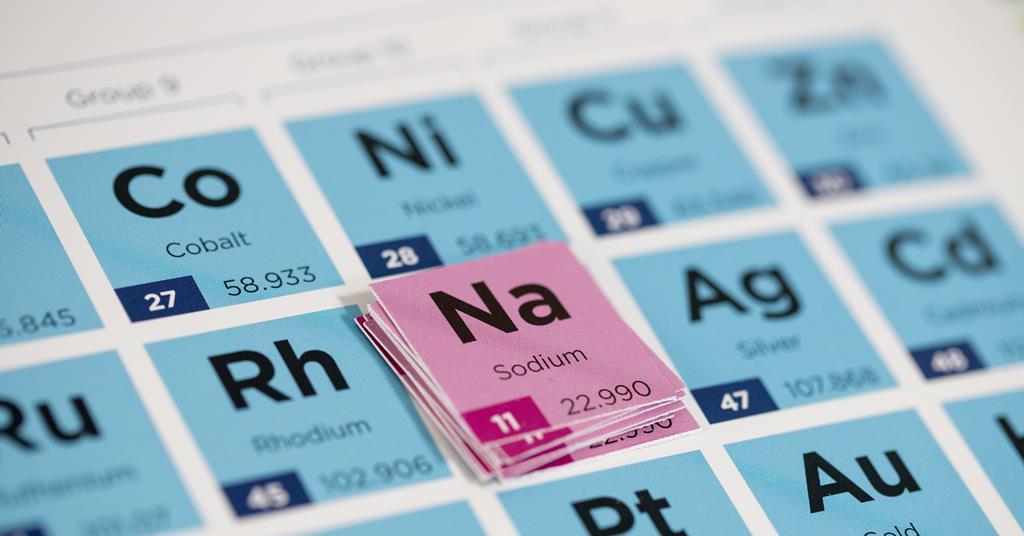
James Mitchell Crow reports on the emerging third dimension of the periodic table
You might also wanna read
Atomic-level engineering of Cu nanoclusters improves conversion of CO₂ to fuel


Call for Papers: Special Issue on Precision Chemistry for Halide Perovskites
This is a Call for Papers for a Special Issue focused on Precision Chemistry for Halide Perovskites. It highlights halide perovskites as a r
 go.acs.org·5d ago
Oregon State University Researchers Develop Iron Nanomaterial That Selectively Destroys Cancer Cells
Researchers at Oregon State University have developed a novel iron-based nanomaterial that targets and destroys cancer cells from within. Th

Nanocrystal Light Emission Reveals Quantum Zero-Point Motion in Atomic Lattice
Researchers have observed unexpected light emission from a nanocrystal cooled to near absolute zero, which is shown to arise from quantum fl
 physics.aps.org·7mo ago
Atomic 'domino effect' found to drive phase changes in a two-dimensional crystal

AI and Laboratory Automation Accelerate Discovery and Synthesis of Metal–Organic Frameworks: A Review
This review article examines how artificial intelligence and laboratory automation are converging to transform the discovery and synthesis o
 go.acs.org·13d ago
Comments
Sign in to join the conversation.
No comments yet. Be the first.