All Topics
All Topics
Technology
Technology
AI
AI
Business
Business
Entertainment
Entertainment
News
News
Programming
Programming
Science
Science
Design
Design
Environment
Environment
Finance
Finance
Crypto
Crypto
Politics
Politics
Sports
Sports
Education
Education
Gaming
Gaming
Art
Art
Music
Music
Health
Health
Security
Security
Books
Books
Food
Food
Travel
Travel
Personal
Personal
Bluesky
Twitter

Separate Channel Estimation for Transmissive RIS Based on Antenna-Side Favorable Propagation

23d ago
Read on ieee.org

From the article

In this paper, a novel three-stage separate channel estimation framework is proposed for transmissive reconfigurable intelligent surface (TRIS) wireless communication systems. TRIS communication systems achieve multi-stream communication capabilities equivalent to traditional large-scale antenna systems equipping only a single radio frequency (RF) link, but face significant challenges in channel estimation. However, the single-RF constraint and the passivity of TRIS elements pose significant challenges for high-dimensional channel estimation, often resulting in phase ambiguity when estimating the cascaded channel directly. To address these issues, the designed scheme is characterized by low complexity, low storage requirements, and high accuracy. First, the composite channel is constructed and estimated through uplink and downlink pilot transmission, where favorable propagation simplifies signal processing via dimension reduction, facilitating separate estimation and resolving the inherent phase ambiguity. Second, the antenna-to-TRIS channel is acquired with low complexity by exploiting the geometric prior of the TRIS, using a limited-memory Broyden-Fletcher-Goldfarb-Shanno (L-BFGS) algorithm tailored for large-scale optimization under the single-RF constraint. Thirdly, a subframe estimation scheme is introduced to formulate a sparse recovery problem for the TRIS-to-user channel. A lookahead orthogonal matching pursuit (LAOMP) algorithm is designed to enhance sparse channel recovery accuracy without requiring prior knowledge of sparsity.Simulation results demonstrate that, compared to least absolute shrinkage and selection operator (LASSO) for normalized mean square error (NMSE) and gradient descent (GD) for convergence metrics, this approach reduces channel estimation NMSE by 42.46%, convergence iterations by 92.73%, and computational time by 85.97%, while exhibiting strong robustness under diverse noise distributions, TRIS phase errors, and Doppler effects.
Continue reading on IEEE

You might also wanna read

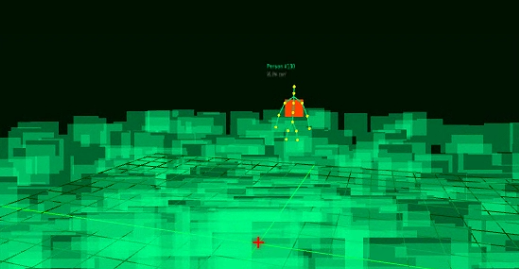
WiFi-3D-Fusion: Open-Source Project Using WiFi CSI Signals and Deep Learning for 3D Human Pose Estimation

WiFi-3D-Fusion is an open-source research project that uses WiFi Channel State Information (CSI) signals combined with deep learning to esti

github.com·10mo ago

QuadRF: An Open-Source Four-Channel SDR for Radio Direction Finding

The QuadRF project is an open-source, phase-coherent four-channel software-defined radio (SDR) designed to make radio direction finding acce

hackaday.com·13d ago

QuadRF: An Open-Source Four-Channel SDR for Radio Direction Finding

The QuadRF project is an open-source, phase-coherent four-channel software-defined radio (SDR) designed to make radio direction finding acce

hackaday.com·13d ago

FP8 Tensor Cores Enable FP64-Equivalent 3-D FFT on NVIDIA Blackwell Ultra via Ozaki-Bailey Decomposition

This technical paper presents the Ozaki-Bailey FFT, a method for achieving full FP64-equivalent 3-D FFT performance on NVIDIA's Blackwell Ul

arxiv.org·5d ago

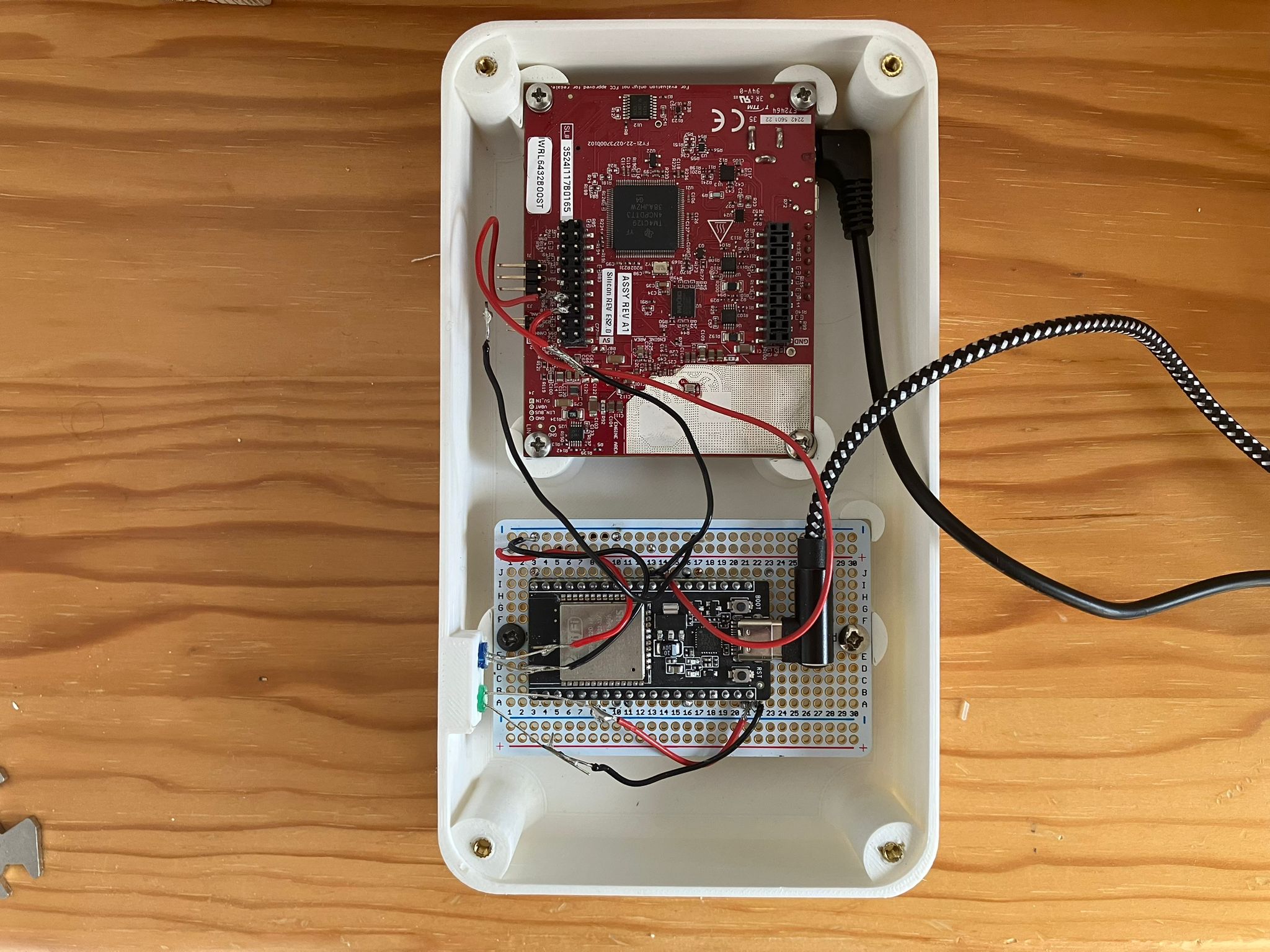
Building a mmWave material classification radar: A hardware startup journey

A detailed first-person account of building a millimeter-wave radar system for material classification (specifically asbestos detection) as

gauthier-lechevalier.com·8d ago

All-optical feedforward architecture proposed to overcome electronic bottlenecks in quantum teleportation

This paper proposes a loss-tolerant, all-optical feedforward (AOFF) architecture for generalized quantum teleportation that eliminates class

arxiv.org·4d ago

Rice University researchers show curving radio beams can deceive anti-jamming defenses

Rice University researchers have demonstrated that self-curving radio beams can mislead anti-jamming technology by making a jammer appear to

theregister.com·1mo ago

Rice University researchers show curving radio beams can deceive anti-jamming defenses

Rice University researchers have demonstrated that self-curving radio beams can mislead anti-jamming technology by making a jammer appear to

theregister.com·1mo ago

Comments

Sign in to join the conversation.

No comments yet. Be the first.