
























Study Uses Optogenetics to Mimic Deep-Sleep Brain Rhythms in Awake Mice, Boosting Memory
By
Luis Prada
Summary
Researchers at the University of Wisconsin-Madison used optogenetics to recreate the brain rhythm of deep sleep in awake mice, providing some memory benefits typically associated with actual sleep. The study, published in Nature Neuroscience, suggests a potential future pathway for mimicking sleep's restorative effects without sleeping, though human applications remain distant.
Source

 bskyStudy Uses Optogenetics to Mimic Deep-Sleep Brain Rhythms in Awake Mice, Boosting Memoryvice.com
Key quotes
· 3 pulledSleep is great, but you know what's even better? Not sleeping.
Scientists may have found a way to give us all the benefits of sleep without actually going to sleep.
Researchers at the University of Wisconsin-Madison used optogenetics, a technique that controls genetically modified brain cells with pulses of light, to recreate the brain rhythm of deep sleep in mice that were fully awake.
You might also wanna read


DARPA's Generative Optogenetics Program Aims to Revolutionize DNA/RNA Synthesis Using Light
DARPA's Generative Optogenetics (GO) program aims to revolutionize DNA and RNA synthesis by using light to direct their creation directly wi
 darpa.mil·6mo ago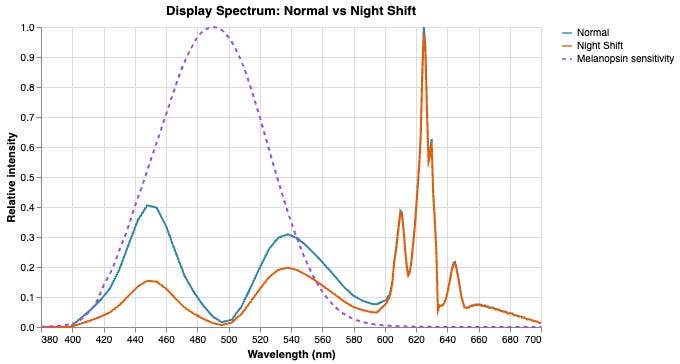
Blue Light Filters Are Ineffective for Sleep Improvement, Says Visual Neuroscientist
A visual neuroscientist explains that blue light filters are ineffective for improving sleep, arguing that controlling total luminance (brig
 neuroai.science·4mo ago
Shiitake Mushroom Mycelium Used to Create Sustainable Memristors for Neuromorphic Computing
Researchers have developed sustainable memristors using shiitake mushroom mycelium for high-frequency bioelectronics applications. The study
 journals.plos.org·7mo ago
Study finds jellyfish and sea anemones sleep similarly to humans, supporting early evolution of sleep for neuron repair
A study published in Nature Communications reveals that jellyfish and sea anemones, despite lacking a central nervous system, exhibit sleep
 scim.ag·9d ago
Printed artificial neurons from MoS₂ successfully trigger firing in living mouse brain cells
Researchers at Northwestern University have successfully printed artificial neurons from molybdenum disulfide (MoS₂) on flexible plastic tha
 mdsc.pe·3d ago
Glasgow Researchers Develop Affordable Optical Brain Imaging Technology
Researchers in Glasgow have developed a new optical brain imaging technology that combines the affordability and portability of EEG with the
 spectrum.ieee.org·10mo ago
Comments
Sign in to join the conversation.
No comments yet. Be the first.