
























New Nuclear Clock Research Promises Next Leap in Timekeeping Precision
By
Darren Orf
Summary
Two new independent studies are heralding a new era of timekeeping with the development of nuclear clocks, which use the nucleus itself rather than atomic electron transitions to keep time. This follows nearly 80 years of atomic clock evolution since the first was built by the U.S. National Bureau of Standards (now NIST), with researchers having achieved atomic clocks capable of measuring time down to the 19th decimal point. Nuclear clocks promise even greater precision and stability than atomic clocks.
Source

 Twitter / XNew Nuclear Clock Research Promises Next Leap in Timekeeping Precisionpopularmechanics.com
Key quotes
· 3 pulledNearly 80 years ago, the atomic clock—first built by the U.S. National Bureau of Standards (now known as National Institute of Standards and Technology, or NIST)—revolutionized timekeeping.
One research group even created an aluminum ion clock capable of measuring time down to the 19th decimal point.
Now, two new independent studies are heralding a new era of timekeeping—that of nuclear clocks, timekeeping devices
You might also wanna read


Physicists Build First Functional Clocks Powered by Atomic Nuclei Using Thorium-229
Physicists have achieved a major breakthrough in timekeeping by building the world's first functional clocks powered by atomic nuclei rather
 sciencealert.com·9d ago
NIST Develops Most Accurate Clock, Setting New Record
Researchers at the National Institute of Standards and Technology (NIST) have developed the most accurate clock in the world, paving the way
nist.gov·11mo ago
Understanding Leap Seconds: How Timekeeping Adjusts for Earth's Rotation
The article discusses the history and technical aspects of leap seconds in Coordinated Universal Time (UTC), explaining how they are used to

The first ticking ‘nuclear clocks’ are here — what can they do?
The first ticking ‘nuclear clocks’ are here — what can they do?

NIST Gaithersburg Atomic Clock Failure Causes -10ms Time Step on Internet Time Servers
On December 6, 2025, the primary atomic time source (a cesium beam atomic clock) at NIST's Gaithersburg campus failed, causing a -10 millise
 groups.google.com·6mo ago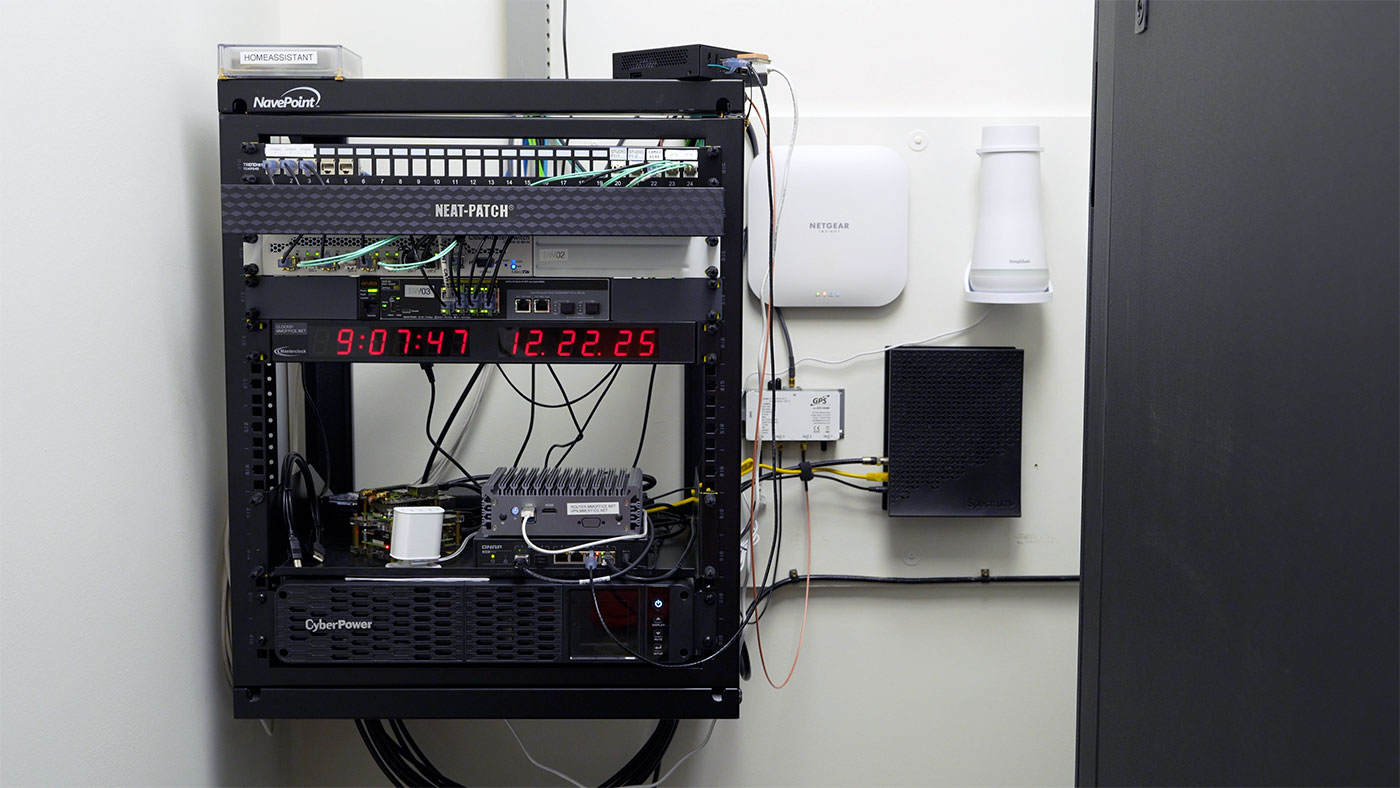
NIST Timing Facility Recovers from Power Outage, Maintains 5 Microsecond Accuracy
NIST's Boulder facility experienced a power outage lasting multiple days after a backup generator failure, causing their main ensemble clock
Comments
Sign in to join the conversation.
No comments yet. Be the first.