
























DNA Analysis Reveals Ancient Mediterranean Bones Among Hundreds of Skeletons at India's Roopkund Lake
By
Elizabeth Rayne
Summary
Roopkund Lake, also known as "Skeleton Lake," is a high-altitude Himalayan lake in India that reveals hundreds of human skeletons when its ice melts each spring. For decades, the origin of these remains was a mystery. Recent scientific analysis of the bones has revealed that the skeletons belong to multiple distinct groups of people who died at different times spanning over 1,000 years. Surprisingly, DNA analysis shows that one group of individuals has genetic ties to the island of Crete in the Mediterranean, while others are of South Asian descent. This discovery challenges earlier theories of a single catastrophic event and raises new questions about how ancient Mediterranean people ended up in this remote Himalayan location.
Source
 Twitter / XDNA Analysis Reveals Ancient Mediterranean Bones Among Hundreds of Skeletons at India's Roopkund Lakepopularmechanics.com
Key quotes
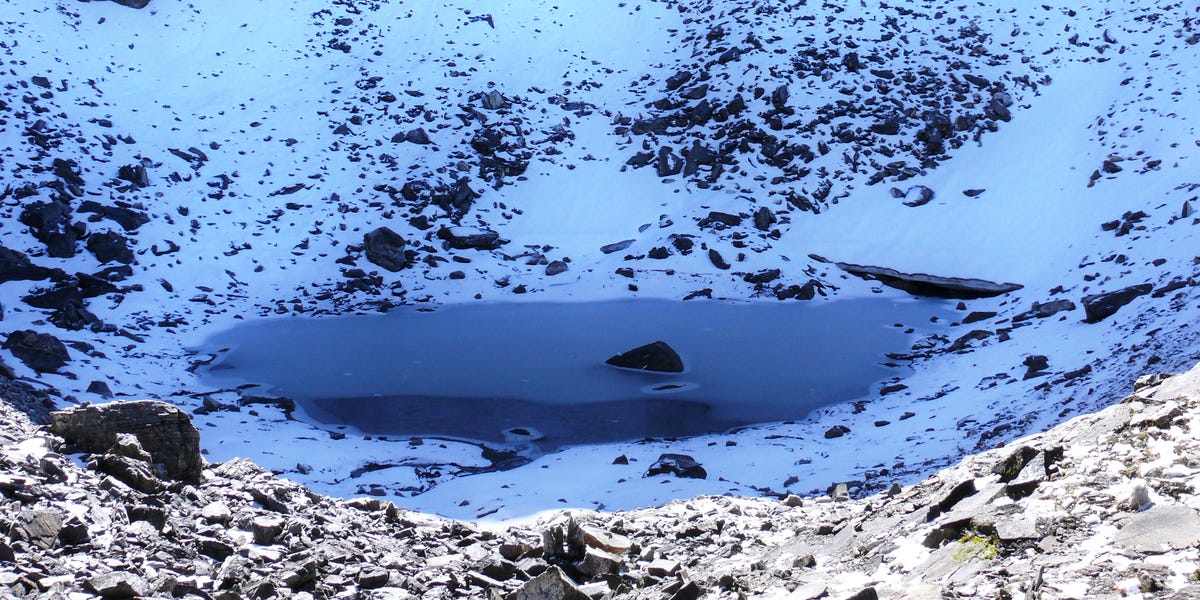
· 3 pulledThe last vestige of a melted glacier, Roopkund Lake glitters like a sapphire set among the Himalayas.
Hari Kishan Madhwal had no idea what this breathtaking landscape was hiding.
So why did researchers find bones from the island of Crete there?
You might also wanna read

120,000-year-old fossils reveal dramatic genetic diversity loss in European fallow deer
Researchers analyzed 120,000-year-old fallow deer fossils from the Neumark-Nord site in central Germany, revealing that modern fallow deer p

Ancient DNA reveals a family ossuary and long-distance migration on the Pacific coast before the Inca Empire
7,000-year-old headless skeletons found in Slovakian settlement ditch, likely part of burial ritual
Archaeologists in Slovakia discovered a ditch containing 7,000-year-old headless human skeletons at the entrance to a Stone Age settlement.
 livescience.com·16d ago
DNA studies reveal complex migration history in Britain beyond traditional Anglo-Saxon, Celtic, and Viking narratives
Population genomics studies reveal that Britain's genetic history is far more complex than traditional narratives of Anglo-Saxons, Celts, an
 theconversation.com·26d ago
Scientists discover 5-million-year-old whale graveyard spanning hundreds of miles in the Indian Ocean
Scientists have discovered a vast deep-sea whale graveyard called the Diamantina Zone necropolis in the Indian Ocean, stretching for hundred
livescience.com·14d ago
David Reich's Genetics Lab Rewrites Human History Through Ancient DNA Analysis
The article profiles David Reich's ancient genetics lab at Harvard Medical School, which is revolutionizing our understanding of human histo
 laphamsquarterly.org·10mo ago
Comments
Sign in to join the conversation.
No comments yet. Be the first.