
























Scaling Observability Platform with Custom Pipeline and HyperDX UI
Read how we scaled our observability platform from 19PB to 100PB and 500 trillion rows by replacing OpenTelemetry with a native ClickHouse-to-ClickHouse pipeline, embracing wide events and cutting…
Read the full articleYou might also wanna read

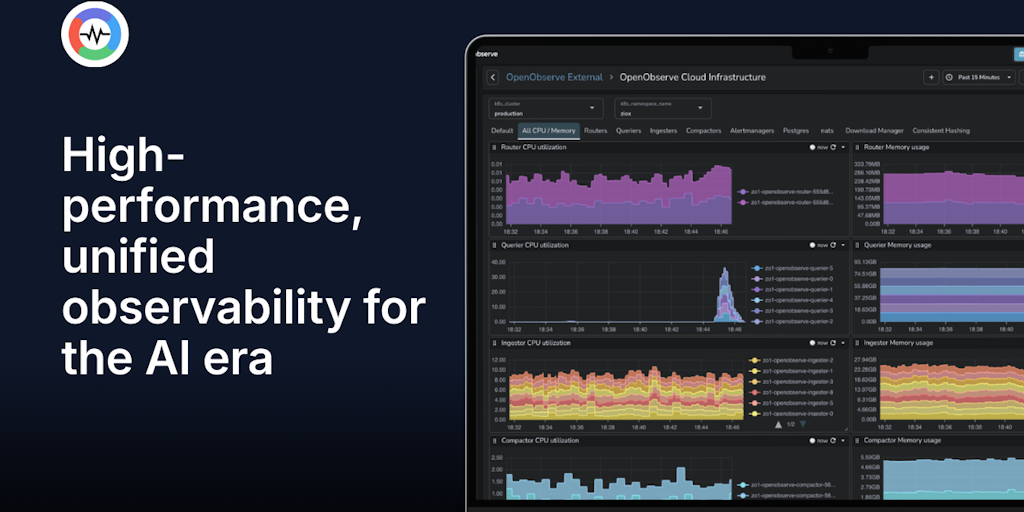
OpenObserve: Open-Source Observability Platform as Datadog Alternative
Fast, scalable and cost-effective open-source observability platform. Monitor logs, metrics & traces with 140x lower storage costs than Elas
 Product Hunt·5mo ago
Observability for Developers: OpenTelemetry, Distributed Tracing, and Modern Monitoring
Build true observability: instrument apps with OpenTelemetry, use distributed tracing and structured logging to find root causes fast.
You built a Datadog alternative. Now scale it.
Build a Datadog alternative part 2: add alerts, dashboards, and retention policies. Complete your observability stack today.

The Data Plane Reality: OTel Scales, While Topology UX Lags
OpenTelemetry won the architectural standards battle. At scale, though, telemetry breaks more like plumbing than code. It breaks quietly, ac
How Startups Can Build a Full Observability Stack for Under $200 a Month
A software engineer argues that early-stage startups with small teams are overspending on monitoring tools like Datadog, which can cost over
Why Modern Apps Need Observability: A Guide to the LGTM Stack
Observability is the ability to understand a system's internal state purely from its outputs — including logs, metrics, and traces — without
Comments
Sign in to join the conversation.
No comments yet. Be the first.