
























The inner game advantage: Why emotional intelligence and self-awareness matter more than AI skills
By
Joe Hudson
Summary
Joe Hudson explores how the rise of AI is fundamentally reshaping work, arguing that the biggest competitive advantage in the AI era is not technical skill but inner qualities like self-awareness, emotional intelligence, and the ability to navigate uncertainty. Drawing from his experience as a coach to tech leaders, Hudson presents a playbook for thriving amid the upheaval by developing what he calls "inner game" capabilities — mindset, presence, and adaptive resilience — rather than just chasing the latest AI tools.
Source
 Twitter / XThe inner game advantage: Why emotional intelligence and self-awareness matter more than AI skillslennysnewsletter.com
Key quotes
· 3 pulledThe biggest upheaval of work we'll see in our lifetime isn't about what tools you use — it's about who you become in the process.
In a world where AI can do more and more of the technical work, the human skills — empathy, judgment, self-awareness — become your only durable advantage.
Most people are trying to win the outer game of AI adoption. The real winners will be those who master the inner game first.
You might also wanna read

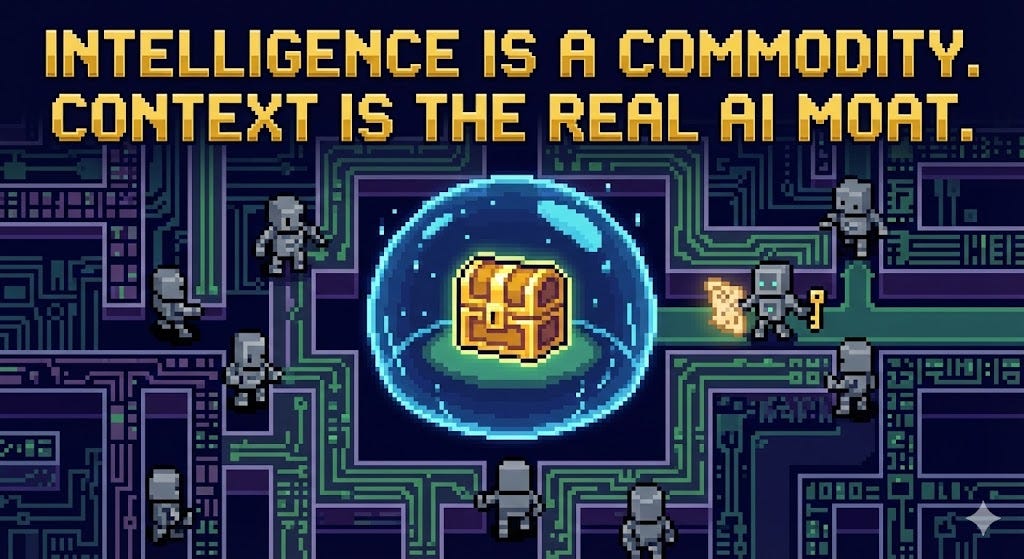
Context as the Competitive Advantage in an AI-First Society
The article discusses the author's experience at an AI Socratic Madrid meetup and presents a thesis that in the AI-first society, intelligen
 adlrocha.substack.com·3mo ago
Meta-Cognitive Regulation Emerges as Key Skill for AI-Era Professionals
The article argues that as generative AI becomes more prevalent, the most critical skill for professionals is not better prompting but meta-
 towardsdatascience.com·22d ago
Meta-Cognitive Regulation Emerges as Key Skill for AI-Era Professionals
The article argues that as generative AI becomes more prevalent, the most critical skill for professionals is not better prompting but meta-
towardsdatascience.com·22d ago
Why Human Judgment Becomes a Competitive Advantage in an AI-Driven Marketing World
The article argues that as AI democratizes execution and operational output in marketing, human judgment, strategic clarity, and decision-ma
 forbes.com·8d ago
Redefining Identity Beyond Professional Titles in the Age of Automation
The article explores the psychological impact of technological advancement on professional identity, arguing that as AI and automation make
jry.io·3mo ago
AI's intelligence is built on human interaction — and automation threatens to destroy its own foundation
The article challenges the dominant narrative of AI-driven efficiency, arguing that AI systems don't truly "think" but rather remember patte
 theideasletter.org·1mo ago
The Rising Value of Taste in an AI-Driven World Where Competent Output Is Cheap
The article argues that in an era where AI and large language models have made competent output cheap and easily accessible, the true compet
 rajnandan.com·2mo ago
Comments
Sign in to join the conversation.
No comments yet. Be the first.