
























Rooting for a team this World Cup? It’s good for you—and society.
From the article
Rooting for a team this World Cup? It’s good for you—and society. kas3204 Tue, 07/07/2026 - 14:45 By Kate Selker July 8, 2026 At the end of June, FIFA (Fédération Internationale de Football Association) reported that 4.6 million people had showed up in stadiums across North America to watch the World Cup so far. Five and a half million fans turned out to public festivals across the United States, Mexico, and Canada. And the United States' match against Paraguay was among the most-watched soccer games in U.S. broadcast history, with twenty-five million television viewers across platforms and channels. This month, millions more will come together in city centers, small town bars, and living rooms to watch worldwide. In our politically divided world, partisan rivals are cheering for the same thing at the same time. Harvard Kennedy School Professor Todd Rogers studies this phenomenon. After reading the book Fans Have More Friends , he launched the Fandom and Social Connection Initiative. He and his team study why fandom is good for us personally, societally, and politically. Roughly three in four Americans say they’re a fan of a team in one of three major sports, with 63% saying that fandom is part of their identity. Rogers, the Weatherhead Professor of Public Policy, reports that research shows correlations between fandom and well-being—fans are more likely to say they have friends, to volunteer, to be happy, and engage in their communities. Now, he and his team are looking for the causal evidence—does being a fan promote these qualities? Or are happier people, for instance, just more likely to be fans? Across the field and the aisle Rogers discussed ongoing work with HKS doctoral student Audrey Feldman. “So far we’re nailing that it helps you be more connected and it depolarizes,” he says. “Shared fandom is just about as powerful as anything we know at depolarizing counter-partisans.” The world of sports, he explains, offers fans easy opportunities to build relationships across lines of difference. “It’s politically diverse, racially diverse, and economically diverse. We have done research with Fox Sports data on the fan bases of every NFL team, and every fan base of every NFL team is politically diverse—depending on which team you’re looking at, by a 2-to-1 ratio or better,” Rogers explains. “There aren’t many institutions that are widespread, deeply important to people, and diverse. This may be one of the last standing social institutions that have those attributes.” Rogers’ research suggests that fandom has these social and personal benefits for four reasons: it’s an excuse for people to spend time together it provides a sense of shared identity it offers a foundational conversation topic it offers a sense of routine and ritual The World Cup, he points out, is “an easy thing to talk about—everywhere I go, people are wearing gear, and we talk about it. We get to meet each other from very different places…the idea is shared events, conversation, and then connection and broader exposure to diverse people.” So as polarization and social disconnection rise to the level of a “ loneliness epidemic ” in some nations, Rogers says fandom could serve as a medicine. Referencing HKS Professor Robert Putnam’s groundbreaking book on social isolation, he explains, “We may bowl alone , but we watch together. From rivals to friends “Another thing that’s special about fandom,” Rogers says, “as opposed to a lot of other interventions that we have to help people connect or to depolarize or to just engage people in civic life, is that people find it fun.” “People love being fans,” he adds, “and so it’s not like eating your broccoli, it’s like eating chocolate cake—and now we’re finding that eating chocolate cake is about as healthy as anything we know. It’s like a vitamin.” “Shared fandom is just about as powerful as anything we know at depolarizing counter-partisans.” Todd Rogers Rogers’ research is exploring just how potent that “vitamin” is in connecting people who consider themselves rivals. He and his team asked American sports fans to imagine their most intense rival. Then they asked them questions about that person. Their answers were surprising—and seemed at first contradictory. Sports fans imagined their rivals as less moral, and even as “worse human beings” than people who weren’t sports fans. But when asked who they’d rather be friends with, respondents said their rivals. “We did the same study with English Premier League fans and found that they also would prefer to be friends with a fan of their rival versus someone who’s not a fan at all,” he says. His theory on this seeming contradiction is that the initial negativity fans had toward their rivals gives way to playfulness, or a show of anger belies a sense of connection. “The vast majority of fans like trash talking with their rivals—it’s part of the fun. It doesn't mean they detest them; it means they like to perform contempt, and they’d actually rather hang out with them,” Rogers explains. “Most fans, the vast majority of fans, love their fandom—and they also like their rivals.” — Footage by Oğuzhan Demir/Anadolu Agency/Getty Images; photograph by Patricia De Melo Moreira/AFP/Getty Images More from HKS Americans find common ground around food, sports, music, and film. What can culture teach us about politics? Featuring Anthony Foxx March 27, 2025 Tennis legend and activist Billie Jean King honored at Harvard Kennedy School King described the “Battle of the Sexes” and shared what President Obama told her in the Oval Office. April 30, 2026 Goals and realities: What World Cup performances can teach us about development in African countries December 9, 2022 Featured People Todd Rogers Weatherhead Professor of Public Policy
Continue reading on misinforeview.hks.harvard.eduYou might also wanna read


On This Special July 4, Celebrate With America's Diverse, Inspiring World Cup Team
National Memo·5d ago

World Cup Delivers Strong U.S. Ratings Windfall for Fox, Telemundo, and Peacock
The FIFA World Cup tournament has delivered unexpectedly strong viewership ratings for Fox Sports, Telemundo, and Peacock in the U.S., despi
 Variety·2d ago
Japan Fan's Meltdown Goes Viral at 2026 World Cup
Yahoo News New Zealand·3d ago
Japan Fan's Meltdown Goes Viral at 2026 World Cup
Yahoo News New Zealand·3d ago

Seattle's passionate soccer fans rally behind US Women's National Team in World Cup win over Australia
The article describes Seattle's vibrant soccer culture and passionate fan support ahead of the US Women's National Team's 2-0 World Cup vict
 theguardian.com·18d ago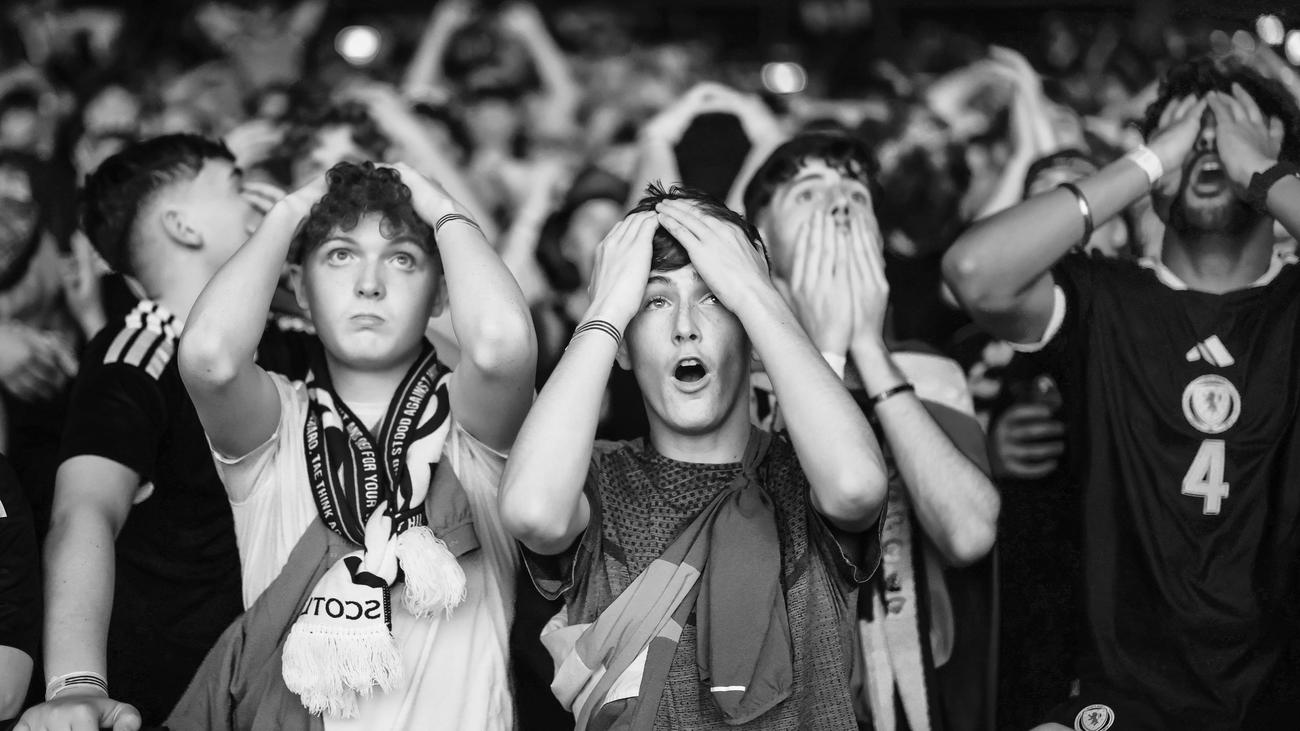
Sociologist Robert Gugutzer explains the social dynamics of public viewing at the 2024 European Championship
Sociologist Robert Gugutzer discusses his research on public viewing (Public Viewing) during the 2024 European Championship (EM 2024). He ex
 zeit.de·21d ago
Comments
Sign in to join the conversation.
No comments yet. Be the first.