
























Study reveals how immunotherapy can drive immune evasion in pancreatic cancer through Treg cell activity and MHC-I suppression
By
Ingunn M. Stromnes
Summary
This study investigates mechanisms driving immunotherapy resistance in pancreatic ductal adenocarcinoma (PDA). Using murine models, the researchers found that PD-L1 blockade (a common immunotherapy) causes epigenetic silencing of Tap1, a peptide transporter essential for MHC-I expression. This allows tumor cells to evade the immune system. Regulatory T cells (Tregs) prevent conventional CD4 T cells from eliminating these MHC-I-deficient tumor escape variants, thereby promoting immune evasion and metastasis. The research reveals a key mechanism by which immunotherapy can paradoxically drive immune evasion in pancreatic cancer.
Source

 Twitter / XStudy reveals how immunotherapy can drive immune evasion in pancreatic cancer through Treg cell activity and MHC-I suppressionscim.ag
Key quotes
· 3 pulledRegulatory T cells prevented CD4 conventional T cells (Tconv cells) from eliminating tumor escape variants with defective MHC-I expression, which promoted immune evasion and metastasis.
PD-L1 blockade caused epigenetic silencing of Tap1, a peptide transporter essential for interferon-γ (IFN-γ)–induced class I major histocompatibility complex (MHC-I) expression, increasing the survival of tumor escape variants.
Mechanisms driving immunotherapy resistance in pancreatic cancer are poorly defined.
You might also wanna read


T cell-myeloid reprogramming overcomes immune resistance in colorectal cancer models
This article presents a scientific study on colorectal cancer (CRC) immunotherapy resistance. It shows that during anti-PD-1 treatment, tumo

ETS1 Identified as Dual Driver of Metastasis and Immune Evasion in Squamous Cell Carcinoma
This study identifies the transcription factor ETS1 as a master regulator of a hybrid epithelial-mesenchymal transition (hEMT) program in up
 aacrjournals.org·1mo ago
Explainable machine learning-guided integrated multiomics analysis reveals macrophage-driven immune suppression in breast cancer
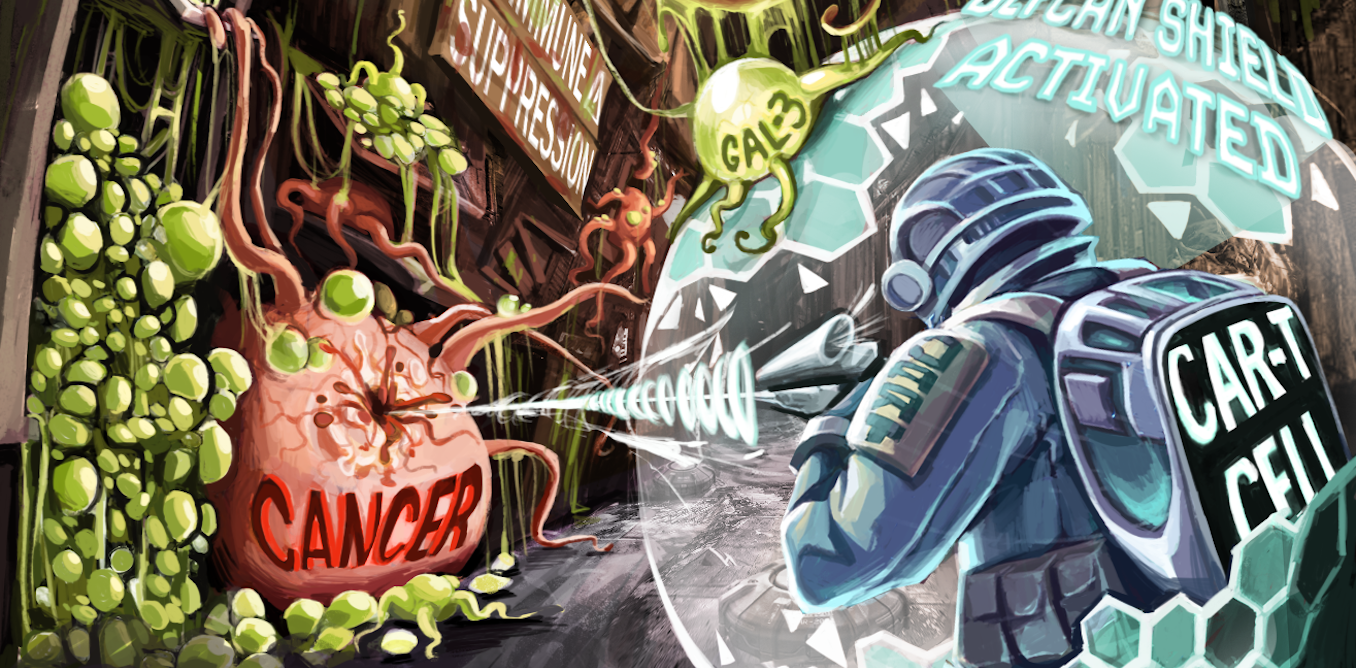
Sugar shields help immune cells infiltrate tumors' hostile microenvironment to fight cancer
Cancer is not just a mass of rogue cells but a strategically organized "gated community" with its own tumor microenvironment that can keep t
 theconversation.com·17d ago
Johns Hopkins Study Finds Anti-Parasitic Drug Slows Pancreatic Cancer in Mice
Johns Hopkins Medicine researchers have discovered that an anti-parasitic drug can prevent the initiation, progression, and metastasis of pa
 hopkinsmedicine.org·8d ago
Comments
Sign in to join the conversation.
No comments yet. Be the first.