
























Fusogenic neurosurgery helps paralyzed pigs walk again, but human trials face significant hurdles
By
@newscientist
Summary
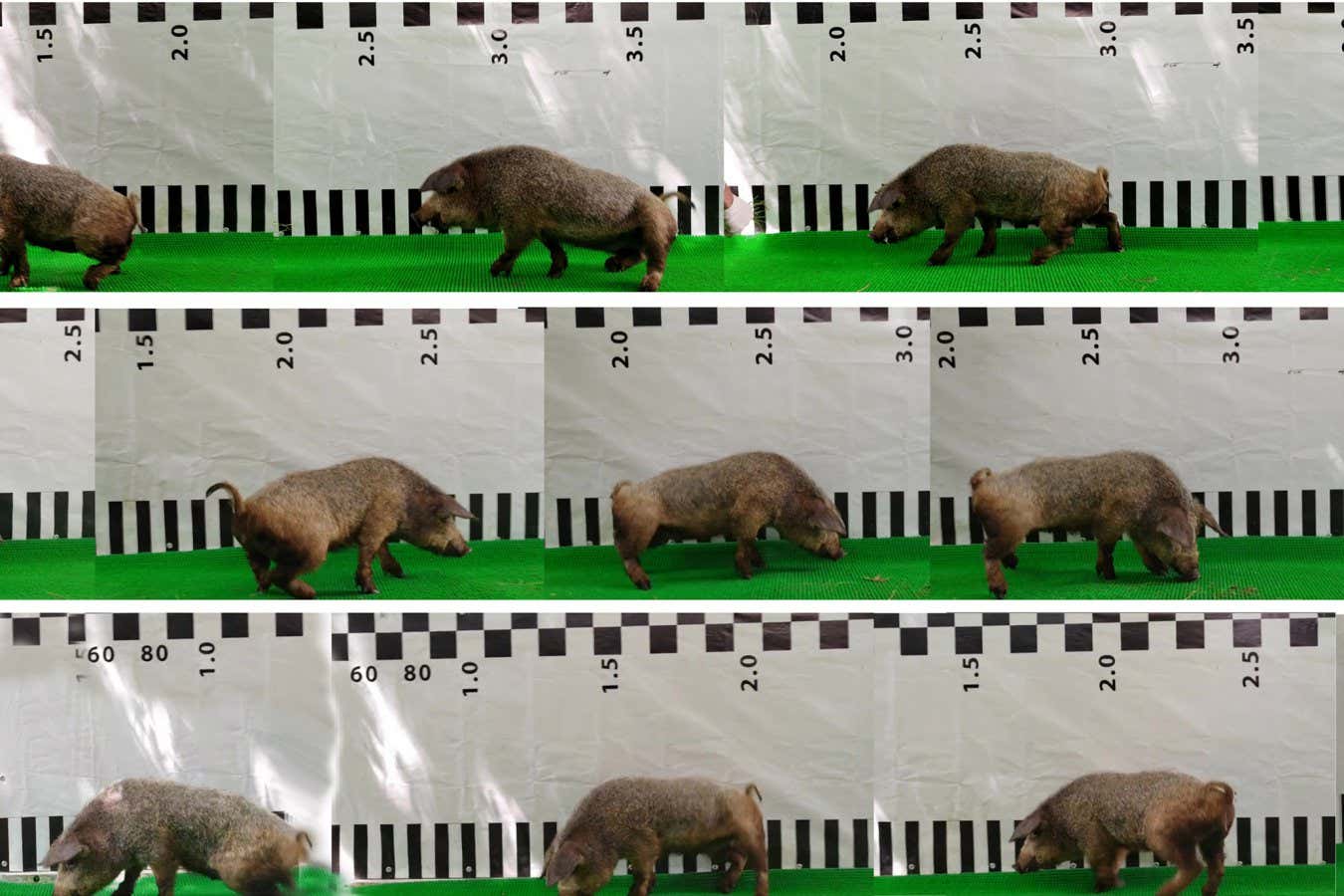
A new surgical technique called 'fusogenic neurosurgery' has allowed pigs with completely severed spinal cords to walk again, performed by a Russian research team led by Michael Lebenstein-Gumovski at the Sklifosovsky Institute. The procedure involves fusing severed spinal cord ends using a polymer-based approach. While the results are promising, columnist Helen Thomson expresses skepticism about whether the technique will successfully translate to humans, noting the involvement of controversial neurosurgeon Sergio Canavero (known for his head transplant claims). The research may eventually lead to human trials and potentially even full head or brain transplants, though significant hurdles remain.
Source
 Twitter / XFusogenic neurosurgery helps paralyzed pigs walk again, but human trials face significant hurdlesnewscientist.com
Key quotes
· 3 pulledMore than 15 million people live with a spinal cord injury.
The feat was performed by a team led by Michael Lebenstein-Gumovski at the Sklifosovsky Institute for Emergency Medicine in Russia.
Columnist Helen Thomson is intrigued but sceptical of whether the technique can be successful in humans
You might also wanna read

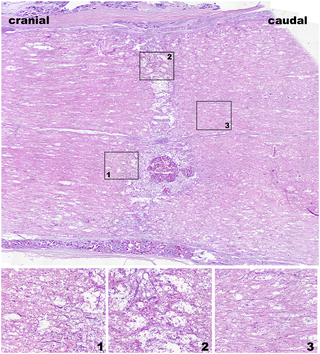
Fusogen sealant restores spinal cord function and morphology after complete transection in porcine model
This study investigates the use of a fusogen sealant (polyethylene glycol-chitosan conjugate) to repair completely transected spinal cords i
 journals.plos.org·1d ago
Lab-grown brain-spinal cord model suggests potential reversal of permanent nerve damage
This article discusses a scientific breakthrough where researchers developed a lab-grown brain-spinal cord model (assembloid) to study nerve
 cam.ac.uk·26d ago
Polylaminin polymer improves motor function recovery after spinal cord injury in rat model
This study investigates the use of polylaminin, a biomimetic polymer form of laminin, for treating spinal cord injury (SCI) in rats. While l
 researchgate.net·9mo ago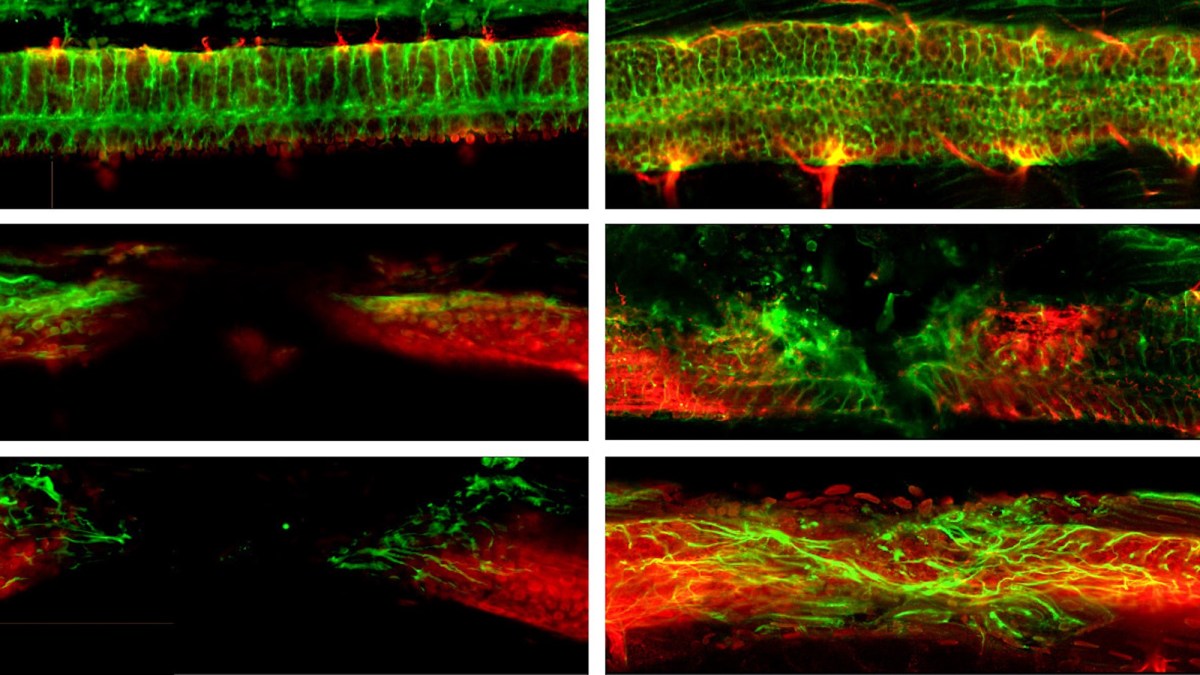
Injectable nanorobots fused with stem cells show promise for spinal cord injury repair
Researchers at ETH Zurich have developed injectable nanorobots fused with stem cells that respond to electromagnetic signals, showing promis
 popsci.com·16d ago
Brazilian Researchers Develop Polylaminin Drug That May Reverse Spinal Cord Injuries
Brazilian researchers have developed a groundbreaking drug called polylaminin, derived from placental protein laminin, that shows promise in
 www1.folha.uol.com.br·9mo ago
Cambridge study using lab-grown brain circuits suggests nerve regeneration may be reversible
A new study from the University of Cambridge, published in Cell Reports, used lab-grown brain circuits (organoids) to investigate nerve rege
 discovermagazine.com·15d ago
Comments
Sign in to join the conversation.
No comments yet. Be the first.