
























Researchers Develop 3D Printed Magnetoelectronics for Self-Sensing Mechatronic Parts
By
Kerry Stevenson
Summary
Researchers have developed fully 3D printed magnetoelectronics that enable printed parts to sense their own motion, rotation, proximity, closure, and deformation without requiring external bolted-on sensors. The approach combines multi-material extrusion and soft robotics, integrating both magnetic features and conductive elements directly into printed structures. This breakthrough allows for interactive appliances and self-aware 4D mechatronics, where parts can detect their own state and movement.
Source
 bskyResearchers Develop 3D Printed Magnetoelectronics for Self-Sensing Mechatronic Partsfabbaloo.com
Key quotes
· 3 pulledResearchers report fully 3D printed magnetoelectronics that let printed parts sense their own motion and state, enabling interactive appliances and self aware 4D mechatronics.
The team describes additively manufactured structures that include both magnetic features and conductive elements so a part can detect rotation, proximity, closure, or deformation without bolted on sensors.
This approach combines multi material extrusion and soft robotics.
You might also wanna read

Innovative Approach Embeds Electronic Components in 3D Printed Objects
3D printers have revolutionized the ability to create physical objects from digital designs, but adding smart features like digital processo
spectrum.ieee.org·1y ago

Designing a Custom 3D-Printed Ergonomic Laptop Setup: Iterative Improvements and Lessons Learned
The article details the author's personal journey of iteratively designing and 3D printing an ergonomic laptop setup. After previous version
 ntietz.com·5mo ago
Researchers Develop Materials for Light-Based Computer Chips to Improve Efficiency and Speed
Researchers are developing light-based computers that use photons instead of electricity, which could offer greater energy efficiency and fa
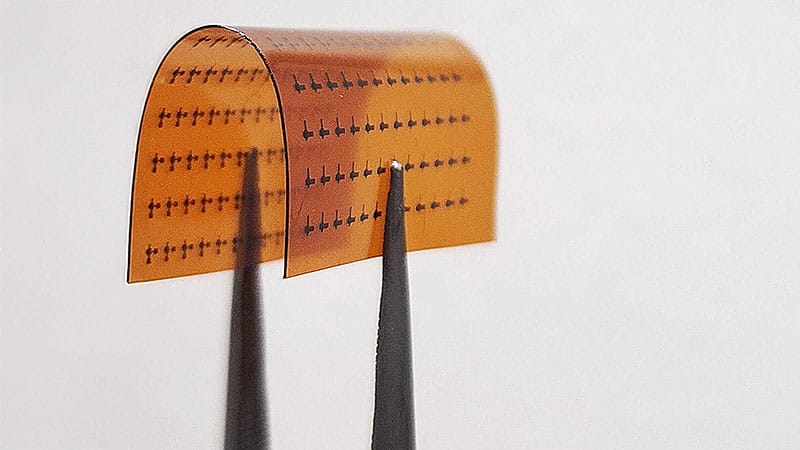
Printed artificial neurons from MoS₂ successfully trigger firing in living mouse brain cells
Researchers at Northwestern University have successfully printed artificial neurons from molybdenum disulfide (MoS₂) on flexible plastic tha
 mdsc.pe·1d ago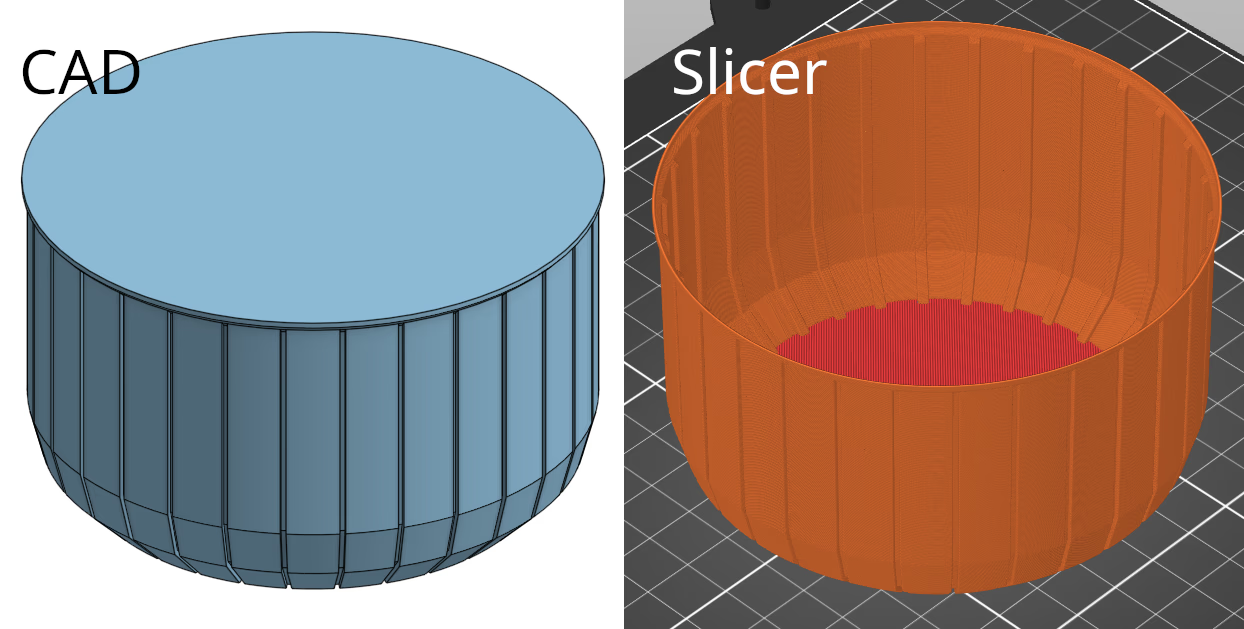
Advanced Applications of 3D Printing Vase Mode: Beyond Decorative Objects
This technical article explores advanced applications of 3D printing's vase mode beyond its conventional uses. The author compiles scattered
 vorpal.se·7mo ago
Challenges in Robot Development: Integrating Growth and Healing Abilities
The article discusses the limitations of current robots in terms of self-repair, physical development, and material integration for growth a
science.org·11mo ago
Comments
Sign in to join the conversation.
No comments yet. Be the first.