
























RCSI researcher Dr Chris Greene awarded £300,000 Lister Prize for blood-brain barrier and schizophrenia research
Dr Chris Greene, a researcher at RCSI in Dublin, has been awarded the prestigious 2026 Lister Prize Fellowship, receiving £300,000 in flexible funding over five years to advance research into the blood-brain barrier and its role in schizophrenia. The Lister Prize is one of the most notable awards for early-career biomedical researchers in the UK and Ireland, awarded by the Lister Institute of Preventive Medicine.
Key quotes
Dr Chris Greene, StAR Research Lecturer in the Department of Physiology and Medical Physics and FutureNeuro at RCSI, has been named a 2026 Lister Prize Fellow, receiving £300,000 to support pioneering research into the blood-brain barrier.
The Lister Prize is one of the most prestigious awards available to early-career biomedical researchers in the UK and Ireland.
Awarded by the Lister Institute of Preventive Medicine, the prize provides recipients with £300,000 in flexible funding over five years, enabling them to pursue ambiti
From the article
You might also wanna read


James Dyson Award 2025 Winners: Therapeutic Parkinson's Keyboard and AI Water Sensor
The 2025 James Dyson Award winners have been announced, with two innovative inventions taking top honors. The global sustainability winner i
 Dezeen·8mo ago
AI tool used to identify and fund promising climate research at UK universities
An article about how Imperial College London developed an AI tool to identify promising climate-related research close to commercialization.
 science.org·10mo ago
Glasgow Researchers Develop Affordable Optical Brain Imaging Technology
Researchers in Glasgow have developed a new optical brain imaging technology that combines the affordability and portability of EEG with the
 spectrum.ieee.org·11mo ago
.png?width=1200&auto=webp&trim=0%2C0%2C489%2C0)
Donegal woman awarded PhD in infant neuroscience from Trinity College Dublin
Damon Runyon Invests Nearly $1.4 Million to Support Physician-Scientists in Cancer Research
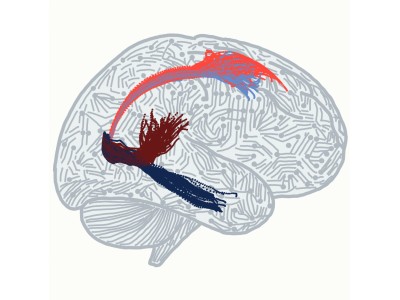
Neuroscientist challenges decades-old model of how vision and thinking work in the brain
Neuroscientist Nuttida Rungratsameetaweemana is challenging the long-held conventional view that vision is a passive, feed-forward process w
 engineering.columbia.edu·5d ago
Neuroscientist challenges decades-old model of how vision and thinking work in the brain
Neuroscientist Nuttida Rungratsameetaweemana is challenging the long-held conventional view that vision is a passive, feed-forward process w
engineering.columbia.edu·5d ago
Comments
Sign in to join the conversation.
No comments yet. Be the first.