
























Quickest Change Detection for UAV-Based Sensing
Source
IEEEQuickest Change Detection for UAV-Based Sensingieee.orgYou might also wanna read


Chinese research team develops HG-STR algorithm for autonomous drone swarm targeting
Chinese researchers have developed a new algorithm called HG-STR (Heterogeneous Graph Spatio-Temporal Reasoning) that enables drone swarms t
 scmp.com·1mo ago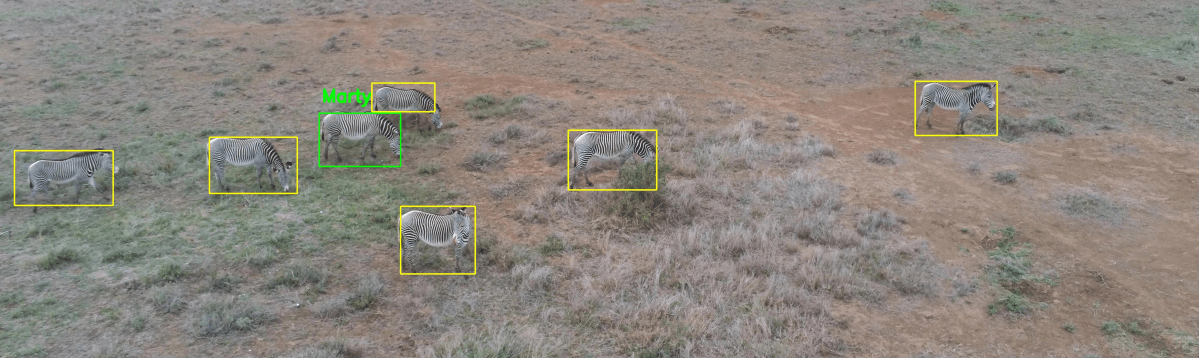
RAPID: A drone-based computer vision system for re-identifying individual patterned animals in the wild
The article presents a research story about developing a computer vision system called RAPID (Real-time Automated Photo Identification of in
 methodsblog.com·13d ago
Transforming Static Innovation Radars with Agentic Research Tools for Continuous Trend Auditing
This article discusses the shortcomings of traditional static innovation radars used by organizations for environmental scanning and trend a
 bradenkelley.com·1mo ago
MIT's Gleanmer chip enables low-power 3D mapping for tiny autonomous robots
MIT researchers have developed a new chip called Gleanmer that enables tiny, low-power autonomous robots to construct detailed 3D maps of th
 MIT·15d ago
MIT's Gleanmer chip enables low-power 3D mapping for tiny autonomous robots
MIT researchers have developed a new chip called Gleanmer that enables tiny, low-power autonomous robots to construct detailed 3D maps of th
news.mit.edu·15d agoMIT's Gleanmer chip enables low-power 3D mapping for tiny autonomous robots
MIT researchers have developed a new chip called Gleanmer that enables tiny, low-power autonomous robots to construct detailed 3D maps of th
MIT·15d ago
Beyond Autopilot, The Real-Time Safety Innovation Redefining Autonomous Drone Operations

Researchers build million-p-bit probabilistic computer by networking FPGAs, breaking single-chip limit
Researchers have built a programmable probabilistic computer using networked FPGAs that achieves one million p-bits (probabilistic bits), br
 arxiv.org·9d ago
Comments
Sign in to join the conversation.
No comments yet. Be the first.