
























Study finds physics-based weather models outperform AI for predicting extreme weather events
By
Isabelle Dumé
Summary
Researchers from the University of Geneva and Karlsruhe Institute of Technology found that physics-based weather models outperform AI-based models at predicting extreme weather events, particularly those with no precedent in training data. The study compared outputs from different forecasting systems and concluded that while AI models are fast and efficient for routine weather prediction, they struggle with record-breaking extremes like the 2020 Siberian heatwave, where physics-based models proved more reliable.
Source
 bskyStudy finds physics-based weather models outperform AI for predicting extreme weather eventsphysicsworld.com
Key quotes
· 3 pulledArtificial intelligence (AI)-based weather models are not as good as physics-based forecasting systems at predicating extreme weather events
After comparing the outputs of different models...
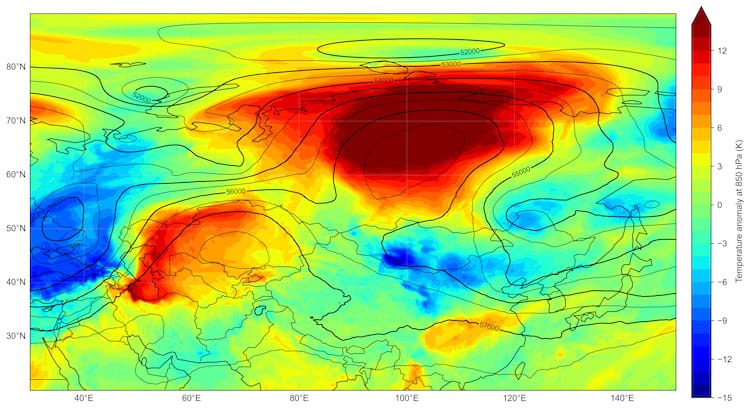
Extreme heat: Temperature anomalies during the 2020 Siberian heatwave, an event that shattered historical records and triggered severe wildfires
You might also wanna read
AI Weather Model Is More Accurate, Less Expensive Than Traditional Forecasting
A.I. Weather Models Fell Short in Predicting Northeastern Blizzard


Google Deploys AI Weather Forecasting Model to Gemini and Search Products
Google is transitioning its AI weather forecasting model from experimental research to commercial deployment, integrating it into products l
 The Verge·7mo ago
WeatherNext 2: Advanced AI Model for More Accurate Global Weather Forecasting
WeatherNext 2 is an advanced AI-powered weather forecasting model that delivers more efficient, accurate, and higher-resolution global weath
 blog.google·7mo ago
I have just published a new research paper titled: “AI Driven Urban Heat Equity Atlas Integrating Machine Learning for Climate Risk Assessment.” This research applies artificial intelligence and machi

General Physics Transformer Achieves Foundation Model Capabilities for Multiple Physical Systems
Researchers present the General Physics Transformer (GPhyT), a physics foundation model trained on 1.8 TB of diverse simulation data that ca
 arxiv.org·9mo ago
Comments
Sign in to join the conversation.
No comments yet. Be the first.