
























PgDog raises funding to build a horizontal scaling proxy for PostgreSQL
By
Lev Kokotov
Summary
PgDog is building a proxy layer for PostgreSQL to solve its horizontal scaling limitations. The company argues that alternative databases like MongoDB and DynamoDB exist primarily because Postgres struggles with very large tables (100TB+) and high query volumes (1M QPS). Their solution, PgDog, acts as a connection pooler, load balancer, and sharding proxy that sits in front of Postgres, allowing developers to scale horizontally without changing their application code. The proxy can be deployed anywhere via Docker by simply changing the DATABASE_URL.
Source

 Hacker NewsPgDog raises funding to build a horizontal scaling proxy for PostgreSQLpgdog.dev
Key quotes
· 3 pulledPostgres is the only database you need.
The reason DBs like Mongo or Dynamo exist is because Postgres has a scaling problem.
Same old Postgres, just with a proxy in front of it, to make it horizontally scalable.
You might also wanna read


AWS Launches ExtendDB: Open Source DynamoDB-Compatible Adapter with PostgreSQL Backend Support
AWS has announced ExtendDB, an open-source DynamoDB-compatible adapter that allows developers to use the DynamoDB API with alternative stora
 infoq.com·27d ago
PostgreSQL Connection Pooling Explained: How It Works and Why It Matters
PostgreSQL Connection Pooling Explained: How It Works and Why It Matters

How PostgreSQL survived near-death to become a cornerstone of modern cloud infrastructure
This feature article chronicles the unlikely survival and rise of PostgreSQL, tracing its origins from Michael Stonebraker's Postgres projec
 theregister.com·11d ago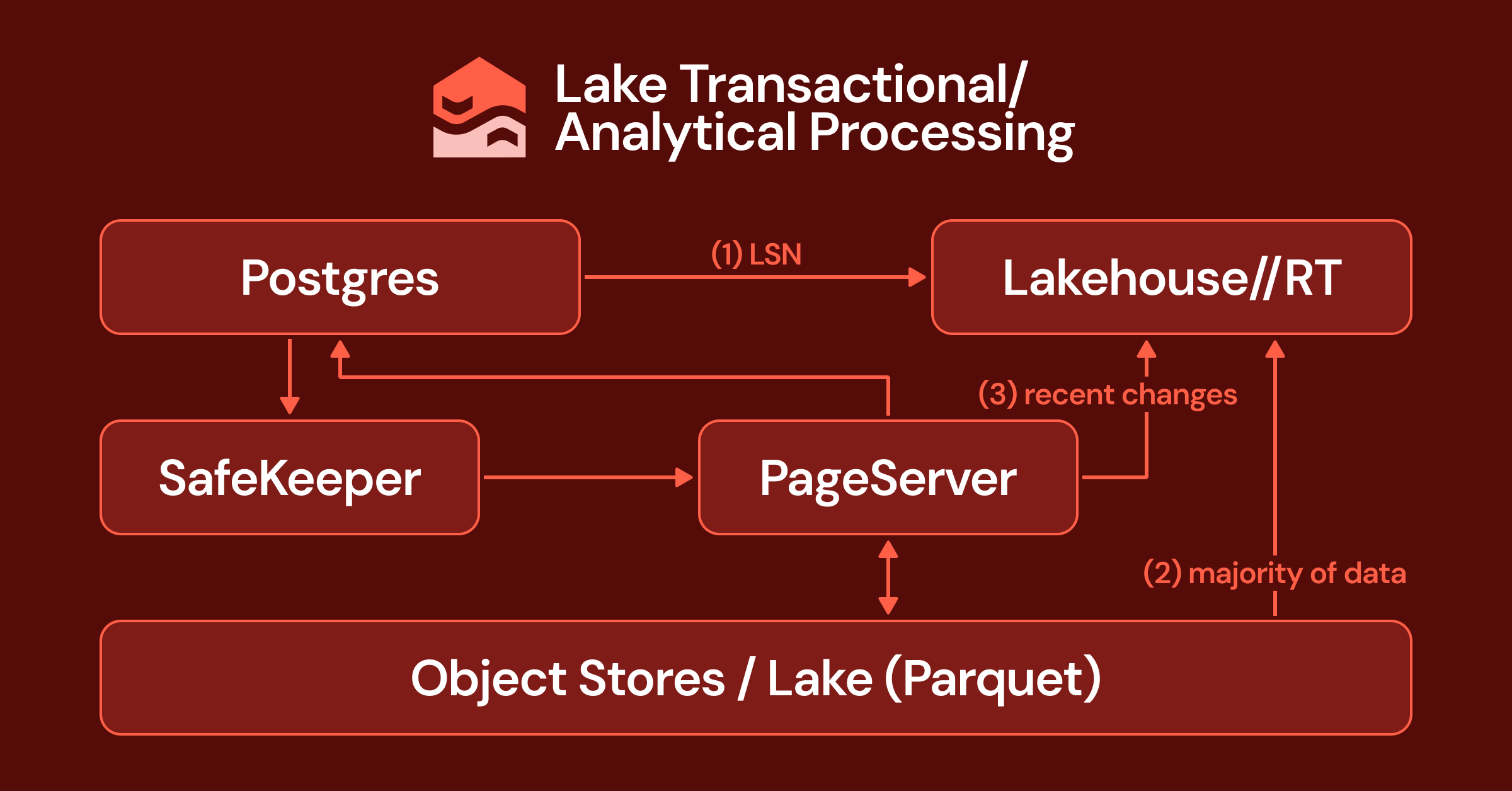
Rethinking database architecture: From monolithic storage to Lakebase and LTAP
The article discusses the evolution of database architecture, starting from the author's PhD experience at UC Berkeley where OLTP databases
 databricks.com·4d ago
Rethinking database architecture: From monolithic storage to Lakebase and LTAP
The article discusses the evolution of database architecture, starting from the author's PhD experience at UC Berkeley where OLTP databases
databricks.com·4d ago
PostgreSQL positioned as a solution to AI-driven datacenter energy demands
This article discusses how AI workloads and datacenter expansion are driving an energy crisis, and positions Postgres (PostgreSQL) as a solu
theregister.com·1mo ago
Comments
Sign in to join the conversation.
No comments yet. Be the first.