
























HKU Researchers Develop Brain-Inspired Transistor That Operates Near Absolute Zero
Summary
Researchers at the University of Hong Kong have developed a brain-inspired transistor that operates at temperatures near absolute zero. This neuromorphic hardware mimics the behavior of brain cells (neurons) and could potentially advance quantum computing and deep-space exploration systems by enabling efficient computation in extreme低温 environments.
Source
 bskyHKU Researchers Develop Brain-Inspired Transistor That Operates Near Absolute Zeroscitechdaily.com
Key quotes
· 2 pulledA single transistor that behaves like a brain cell in the deep freeze could help unlock the next generation of quantum computers and space exploration systems.
Researchers at the University of Hong Kong (HKU) have developed a new type of brain-inspired electronic hardware that can operate at temperatures close to absolute zero.
You might also wanna read

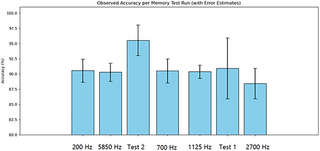
Shiitake Mushroom Mycelium Used to Create Sustainable Memristors for Neuromorphic Computing
Researchers have developed sustainable memristors using shiitake mushroom mycelium for high-frequency bioelectronics applications. The study
 journals.plos.org·7mo ago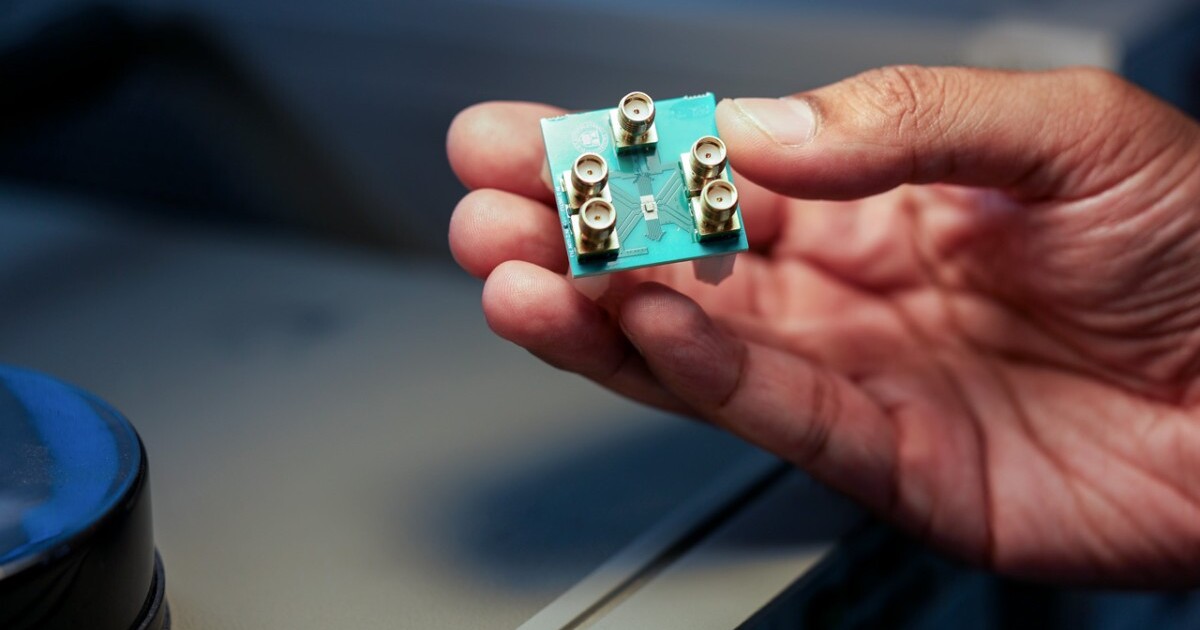
Cornell Researchers Develop Analog 'Microwave Brain' Chip for Ultrafast Signal Processing
Cornell University researchers have developed a novel analog electronic chip called a 'microwave brain' that processes ultrafast data and wi
 newatlas.com·10mo ago
Un-0: An Image Generator Powered by Coupled Oscillators and Physical Computing
The article introduces Un-0, an image generator built on a simulated system of coupled oscillators — a fundamentally different computing app
 unconv.ai·22h ago
Un-0: An Image Generator Powered by Coupled Oscillators and Physical Computing
The article introduces Un-0, an image generator built on a simulated system of coupled oscillators — a fundamentally different computing app
unconv.ai·22h ago
Breakthrough in Neuromorphic Photonic Computing with GHz-Scale PSNN Chip
The article discusses a groundbreaking advancement in neuromorphic photonic computing with the development of a photonic spiking neural netw
 arxiv.org·10mo ago
Neuromorphic Computing: The Future of AI
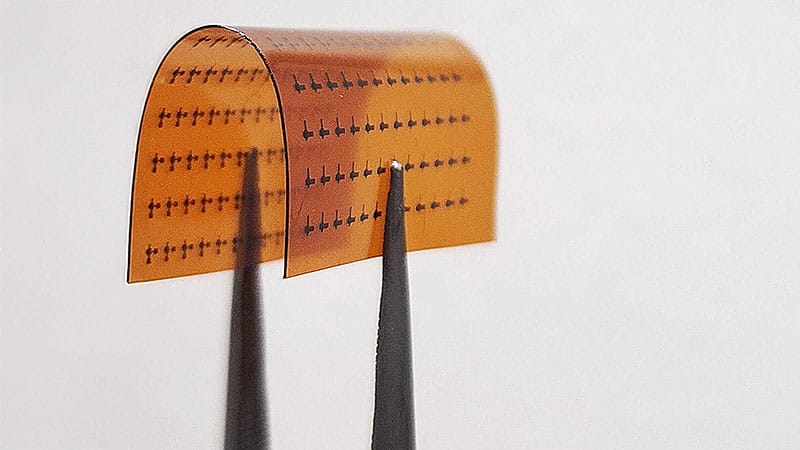
Printed artificial neurons from MoS₂ successfully trigger firing in living mouse brain cells
Researchers at Northwestern University have successfully printed artificial neurons from molybdenum disulfide (MoS₂) on flexible plastic tha
 mdsc.pe·2d ago
Comments
Sign in to join the conversation.
No comments yet. Be the first.