
























NASA develops autonomous rovers with onboard AI to navigate Mars without Earth's delayed commands
By
Elisha Sauers
Summary
Mashable's Elisha Sauers reports on NASA's development of autonomous rovers with advanced onboard intelligence that can make real-time navigation decisions without waiting for commands from Earth. The article explores how latency in communication (up to 20 minutes each way for Mars missions) creates dangerous delays, and how NASA is building rovers with faster-thinking AI systems to avoid obstacles and navigate terrain independently. It covers the technical challenges, the evolution from human-controlled to semi-autonomous to fully autonomous rovers, and the implications for future Mars and beyond missions.
Source

 bskyNASA develops autonomous rovers with onboard AI to navigate Mars without Earth's delayed commandsmashable.com
Key quotes
· 3 pulledBecause waiting for permission to avoid a rock sucks.
The latency between Earth and Mars means a rover could be destroyed before a human operator ever sees the danger.
We're building rovers that can think faster than Earth can respond — that's the only way to truly explore the solar system.
You might also wanna read

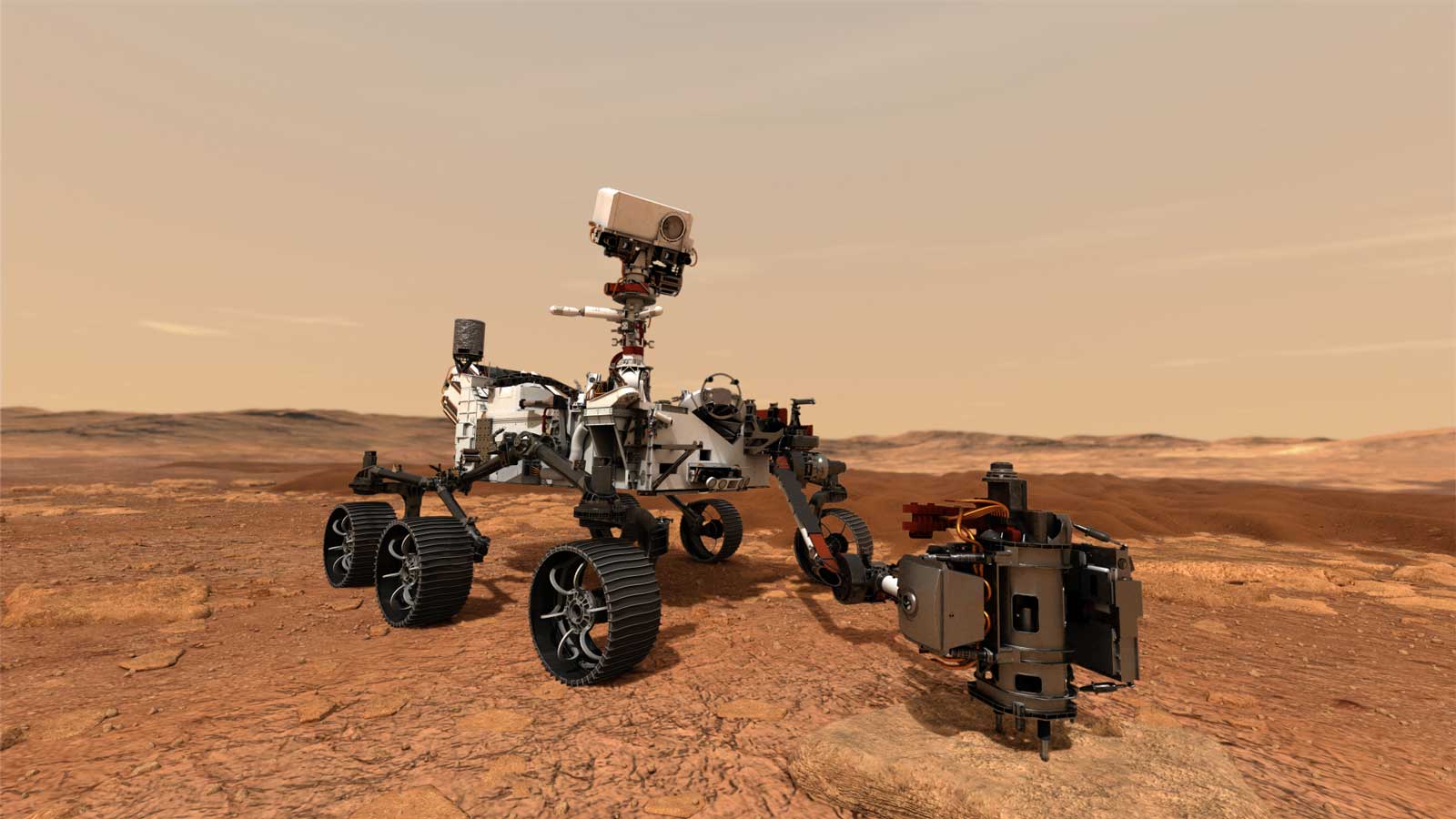
NASA repurposes Mars Helicopter processor to enhance Perseverance rover's autonomous navigation
NASA has repurposed the Qualcomm 801 processor from the Ingenuity Mars Helicopter's communication system to enhance the Perseverance rover's
 theregister.com·4mo ago
AI's Role in Advancing Mars Colonization and Space Exploration
The article explores the critical role of artificial intelligence (AI) in advancing Mars colonization efforts, highlighting NASA's Curiosity
DEV Community·11mo ago
The Evolution of AI: From Static Benchmarks to Inference-Time Search for Autonomous Agents
The article explores the shift from traditional AI benchmarking to inference-time search as the future of AI development. It discusses how c
 adlrocha.substack.com·6mo ago
New Benchmark Reveals High Rates of Outcome-Driven Constraint Violations in Autonomous AI Agents
Researchers introduce a new benchmark for evaluating autonomous AI agents' safety, specifically focusing on outcome-driven constraint violat
 arxiv.org·4mo ago
Overcoming Barriers to AI Adoption: Addressing Latency and Cost Challenges
The article discusses the current state and future potential of AI, highlighting that while AI already surpasses human performance in narrow
 taalas.com·4mo ago
Comments
Sign in to join the conversation.
No comments yet. Be the first.