
























Membrane-Associated Biomolecules Enable Synthetic Cell Signaling: A Comprehensive Review
By
Chelsea Dack
Summary
This review article examines the role of membrane-associated biomolecules—including proteins, nucleic acids, and synthetic analogues—in enabling communication and signaling in bottom-up synthetic cells. It covers how these membrane-bound compartments (such as lipid vesicles, polymersomes, and proteinosomes) are engineered to mimic natural cellular signaling pathways, with applications in biosensing, therapeutics, and tissue engineering. The article provides a comprehensive overview of reconstituting native cellular machinery and designing synthetic alternatives for cell-cell communication.
Source

 bskyMembrane-Associated Biomolecules Enable Synthetic Cell Signaling: A Comprehensive Reviewchemistry-europe.onlinelibrary.wiley.com
Key quotes
· 3 pulledBottom-up synthetic cells are biomimetic compartments designed to reproduce selected features of living systems.
Membrane architectures include polymersomes, proteinosomes, and most commonly small, large, or giant unilamellar lipid vesicles (SUVs/LUVs/GUVs, 20 nm to 100 µm), which closely resemble natural membranes.
Membrane-associated proteins and nucleic acids are transforming synthetic cell communication, unlocking applications in biosensing, therapeutics, and tissue engineering.
You might also wanna read

International Collaboration Advances Synthetic Cell Research
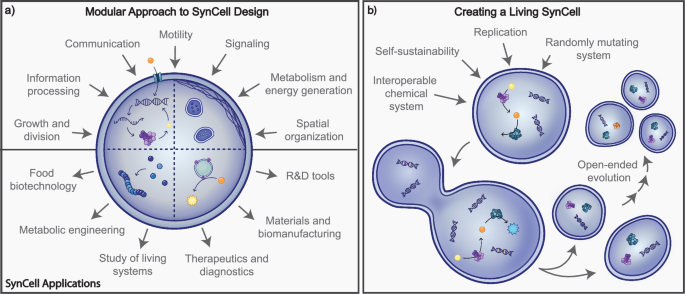
The article discusses the emerging field of synthetic cell (SynCell) research, which aims to build artificial cells from molecular component
 nature.com·9mo ago
Gillaspy to move into new rural leadership role

Proximal State Nudging: A Shared Autonomy Algorithm to Combat Skill Atrophy from AI Assistance
This paper introduces Proximal State Nudging (PSN), a shared autonomy algorithm designed to reduce skill atrophy — the gradual decline of hu
 arxiv.org·2h ago
‘An emotional day’: Welcoming home new Athletic Director Shawn Eichorst

STAGE Center Seeks Graduate TAs to Lead Quantum Game Development for Science Education
The STAGE Center is seeking Teaching Assistants (senior graduate students) to lead undergraduate and early graduate students in creating qua
 stagecenter.uchicago.edu·3h ago
Grid-like neural codes in entorhinal cortex track cognitive development and fluid intelligence from ages 8 to 25
This study investigates how grid-cell-like neural codes in the entorhinal cortex (EC) develop from ages 8 to 25, providing a neural basis fo
Comments
Sign in to join the conversation.
No comments yet. Be the first.