
























How Mechanical Watches Work: An Interactive Guide to Watch Movements
By
Bartosz Ciechanowski
Summary
This interactive article explains the inner workings of a mechanical watch movement. It covers how mechanical watches operate without batteries or electronics, using purely mechanical components like gears, springs, and escapements. The article features an interactive 3D demonstration that readers can manipulate to explore the mechanism from different angles.
Source
 Hacker NewsHow Mechanical Watches Work: An Interactive Guide to Watch Movementsciechanow.ski
Key quotes
· 3 pulledIn the world of modern portable devices, it may be hard to believe that merely a few decades ago the most convenient way to keep track of time was a mechanical watch.
Unlike their quartz and smart siblings, mechanical watches can run without using any batteries or other electronic components.
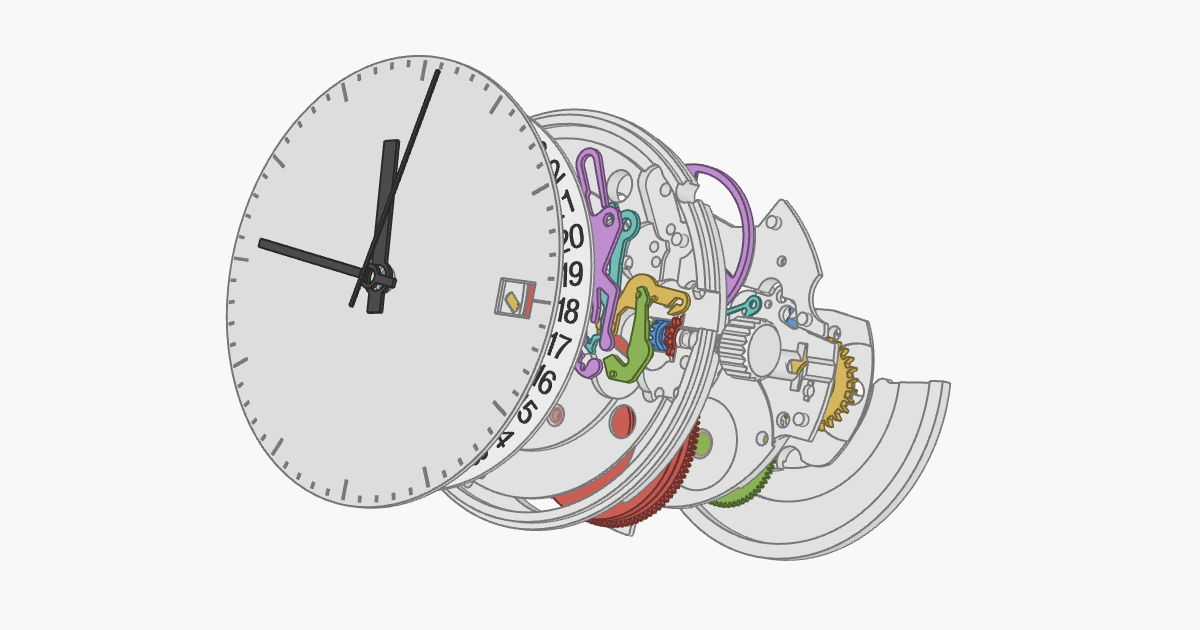
You can drag the device around to change your viewing angle, and you can use the slider to peek at what's going on inside.
You might also wanna read


The enduring appeal of mechanical watches: craftsmanship, auctions, and collector culture
A detailed exploration of the watch industry and horology culture, examining the enduring appeal of mechanical timepieces in a digital age.
 ft.trib.al·1d ago
Solar vs. Mechanical Field Watches: A Practical Comparison of Accuracy, Maintenance, and Daily Wear
A detailed comparison of solar-powered vs mechanical field watches based on hands-on testing over 10+ years. The article examines accuracy,
 twobrokewatchsnobs.com·10d ago
10 Hidden Apple Watch Features and Tips to Maximize Your Experience
The article covers 10 lesser-known tips, tricks, and hidden features of the Apple Watch, helping users maximize their experience with Apple'
 bgr.com·9d ago
We need to relearn how to use AI when it’s on our bodies
 The Verge·10mo ago
A glossary of watch-collecting jargon for the horologically perplexed
Ben Schott, known for his miscellanies, provides a glossary of watch-collecting terminology for the uninitiated. The article explains niche
ft.trib.al·13h ago
Researchers Develop 3D Printed Magnetoelectronics for Self-Sensing Mechatronic Parts
Researchers have developed fully 3D printed magnetoelectronics that enable printed parts to sense their own motion, rotation, proximity, clo
Comments
Sign in to join the conversation.
No comments yet. Be the first.