
























Kaizen: The Japanese Philosophy of Continuous Improvement
Unknown ([email protected])8mo ago
From the article
Kaizen Explained: How Continuous Improvement Builds Lasting Success The word Kaizen has become synonymous with excellence, innovation, and progress. Originating in Japan, Kaizen represents the philosophy of continuous improvement —a mindset that believes small, consistent changes can lead to remarkable long-term results. From the factory floors of Toyota to modern startups and even personal development systems, Kaizen has shaped global industries and lives. Let’s explore the roots, principles, process, and applications of this transformative Japanese philosophy. What is Kaizen? Kaizen (改善) is a Japanese term that translates to “change for the better” or “continuous improvement.” It is not just a business tool—it’s a way of thinking that encourages constant progress in processes, culture, and personal performance. Kaizen emphasizes that improvement doesn’t need to come from massive overhauls. Instead, it’s about small, incremental changes made consistently by everyone—from top management to floor workers. “Kaizen is everyday improvement — everybody, everywhere.”— Masaaki Imai, Founder of the Kaizen Institute The History of Kaizen Post-War Origins (1940s–1950s) Kaizen emerged in Japan after World War II , during a period of reconstruction. Japanese industries were struggling, and the nation sought ways to rebuild efficiently. In the late 1940s, American quality experts like W. Edwards Deming and Joseph Juran introduced quality control techniques and productivity principles to Japanese companies. The Japanese adopted these ideas but added their own cultural values of teamwork, discipline, and long-term focus—thus giving birth to Kaizen . Toyota and the Kaizen Revolution The Toyota Motor Corporation became the global symbol of Kaizen. The company embedded continuous improvement into its Toyota Production System (TPS) —a lean manufacturing model that revolutionized industrial efficiency. By empowering workers to suggest small improvements daily, Toyota achieved: Reduced waste (Muda) Improved quality Faster production Higher employee engagement This success made Kaizen a core component of Lean Manufacturing and Total Quality Management (TQM) worldwide. Global Spread (1980s–Present) In 1986, Masaaki Imai published “Kaizen: The Key to Japan’s Competitive Success.” The book introduced the concept globally, inspiring organizations across the USA, Europe, and Asia to adopt Kaizen practices. Today, Kaizen is used in: Manufacturing (Toyota, Honda, Canon) Healthcare Software development (Agile, DevOps) Service industries Personal growth and time management Core Principles of Kaizen Kaizen is guided by five foundational principles: These principles encourage an organizational culture of problem-solving , responsibility, and teamwork. The Kaizen Process: PDCA Cycle At the heart of Kaizen lies the PDCA cycle (Plan-Do-Check-Act), developed by Deming and embraced by Japanese industries. 1. Plan Identify an opportunity for improvement. Analyse current conditions, gather data, and set achievable goals. 2. Do Implement the proposed change on a small scale—this could be a process tweak, a new tool, or a behavioural change. 3. Check Review the outcomes. Measure performance and compare it with previous results. 4. Act If the change is successful, standardize it. If not, revise the plan and try again. This continuous loop drives long-term success. The 5S System: A Key Tool of Kaizen Kaizen is closely linked with the 5S methodology , a framework for workplace organization and efficiency. The 5S framework transforms chaotic workspaces into disciplined, safe, and productive environments . Benefits of Implementing Kaizen Kaizen fosters an environment where everyone becomes an innovator . Kaizen in Daily Life Kaizen isn’t limited to companies—it’s a life philosophy . In personal development, Kaizen encourages you to make tiny, manageable improvements every day. Examples include: Walking 5 minutes more each day for health. Saving ₹100 extra every week for financial growth. Learning a new word daily for self-education. This mindset eliminates procrastination and builds sustainable habits. Kaizen vs. Innovation Both Kaizen and Innovation are essential. Kaizen keeps operations lean and efficient, while Innovation drives leaps forward. Real-World Examples of Kaizen Toyota – Every employee can stop the production line to fix a problem. Over 1 million improvement suggestions are implemented annually. Canon – Workers contribute small ideas to enhance product assembly efficiency. Honda – Uses Kaizen to refine its production flow and quality testing. Amazon – Adopts continuous improvement in logistics, packaging, and customer service inspired by Kaizen. Challenges in Kaizen Implementation While Kaizen sounds simple, organizations often struggle due to: Resistance to change Poor leadership support Lack of employee involvement Focusing on quick wins instead of long-term improvement Overcoming these requires strong communication , leadership commitment, and a supportive culture. Kaizen is not just a process—it’s a philosophy of life . By focusing on continuous improvement, we learn that success doesn’t come from one big leap, but from thousands of small, deliberate steps. Whether in a factory, an office, or daily personal routines, Kaizen transforms ordinary habits into extraordinary results . Its legacy continues to inspire businesses and individuals worldwide. 👋 Thank You for Reading! We appreciate your time and interest in renewable energy, EVs, and cutting-edge tech. Your curiosity helps drive a sustainable future forward. 📱 Follow Us on Social Media: 🌐 Visit our website
Continue reading on omkarmhatre.inYou might also wanna read


Finding creative balance in the AI era through a Japanese cooking principle
Takuya reflects on maintaining creativity and mental well-being as a developer, content creator, and artist in the rapidly evolving AI era.
 Takuya Matsuyama·1mo ago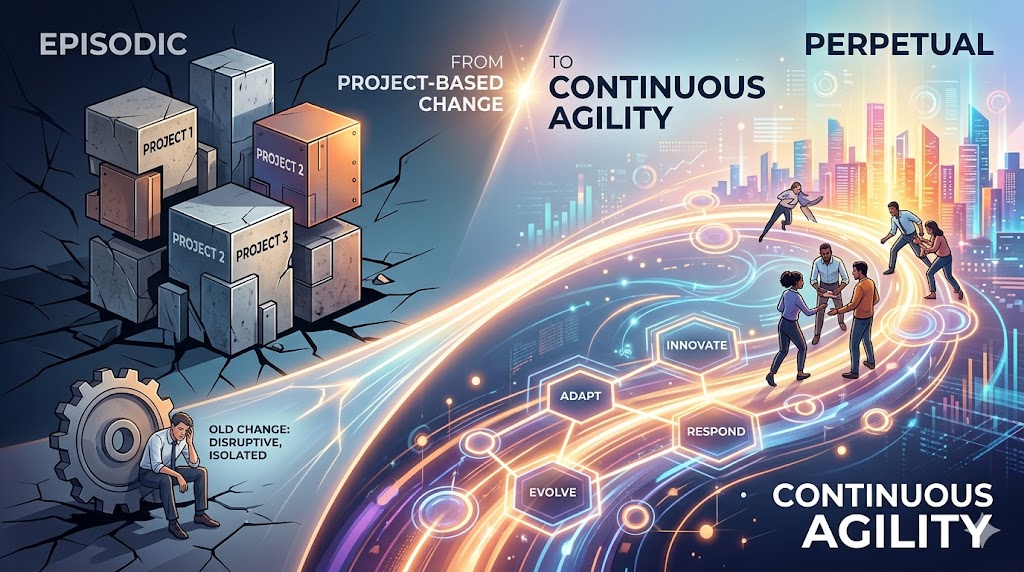
From Episodic Change to Continuous Agility: Rethinking Organizational Transformation
This article challenges the traditional view of organizational change as a finite project with a "post-change" plateau. Instead, it argues t
 bradenkelley.com·1mo ago
A maturity model for assessing Digital Green Lean leadership and culture in manufacturing
This article presents a maturity model for assessing leadership and culture in the context of 'Digital Green Lean' manufacturing. It explore
doi.org·16d ago

Achieving operational excellence with AI
MIT Technology Review·6d ago

Why AI won't accelerate your business processes as much as you expect
The article argues that organizations are overly focused on process optimization, especially during market downturns, and that AI is being b
 frederickvanbrabant.com·1mo ago
経産省、ソフトバンク主導の国産AI新会社に3873億円の支援決定
経済産業省が2026年6月30日、ソフトバンク主導で設立された国産AI新会社に対して3873億円の支援を決定した。この大型支援は、日本のAI産業競争力強化を目的としており、政府が国産AI開発に本格的に乗り出す姿勢を示している。ソフトバンクが主導する新会社は、国内のAI技術開発とイ
 47news.jp·8d ago
Comments
Sign in to join the conversation.
No comments yet. Be the first.