
























Building Faster Parsers Through Data-Oriented Design: Flat Arrays Over Pointer Trees
By
Arshad Yaseen
Summary
This article presents a data-oriented design approach to building high-performance parsers, using the author's experience creating Yuku — a JavaScript/TypeScript parser written in Zig that outperforms established parsers. The core thesis is that parser performance depends less on grammar handling and more on how the resulting tree is represented in memory. The author advocates designing data structures first (using flat arrays of indices rather than pointer-based trees), which simultaneously solves memory layout, allocation, and serialization challenges. The piece provides detailed technical guidance on applying this methodology to any parser or compiler frontend in a native language.
Source
 Twitter / XBuilding Faster Parsers Through Data-Oriented Design: Flat Arrays Over Pointer Treesarshad.fyi
Key quotes
· 3 pulledDesign the data structure first, let the machine's access patterns dictate it.
A parser is usually taught as a problem of grammars, but once the grammar is correct, almost all of the performance and most of the engineering difficulty live somewhere else, in how the resulting tree is represented in memory.
Flat arrays of indices instead of a pointer tree makes a parser fast and collapses memory layout, allocation, and serialization into one decision.
You might also wanna read


Using Indices Instead of Pointers for Memory-Efficient Data Structures in Programming
The article discusses a programming technique learned from Zig language creator Andrew Kelley, which involves using indices instead of point
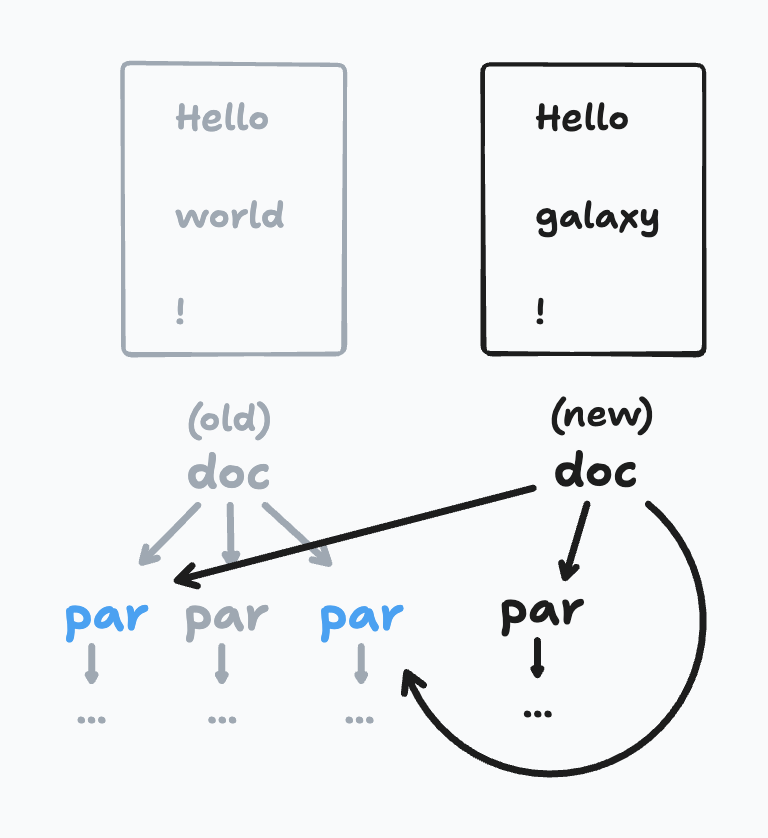
Applying Garbage Collection Concepts to Solve Bidirectional Parsing Problems
The author reflects on how their past experience working on garbage collection in the J9 Java VM continues to be valuable in their current w

Understanding Memory Layout Calculations in Zig Programming
The article explores memory layout calculations in the Zig programming language, inspired by Andrew Kelley's talk on Data Oriented Design. I
 raymondtana.github.io·5mo ago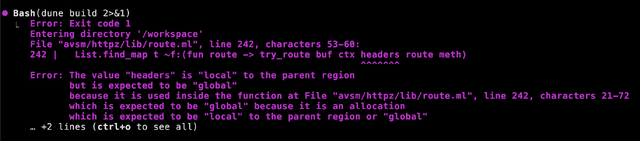
Building a Zero-Allocation HTTP/1.1 Parser with OxCaml for High-Performance Research Infrastructure
The article details the development of 'httpz', a high-performance HTTP/1.1 parser built using OxCaml that achieves zero heap allocation. Th
 anil.recoil.org·4mo ago
Optimizing Substring Search in Zig with SIMD for 60% Faster Performance
The article explores the implementation of a SIMD (single instruction, multiple data) algorithm in the Zig programming language to achieve a
 aarol.dev·10mo ago
The Evolution of Performance Optimization: From CPU Instructions to Data Structure Design
The article discusses how performance optimization has evolved from focusing on micro-level instruction optimization to data structure desig
 tedinski.com·7mo ago
Comments
Sign in to join the conversation.
No comments yet. Be the first.