
























Hybrid Architecture Gets Fluid: A New Paradigm for Direction-of-Arrival Estimation in 6G Networks
Source
IEEEHybrid Architecture Gets Fluid: A New Paradigm for Direction-of-Arrival Estimation in 6G Networksieee.orgYou might also wanna read

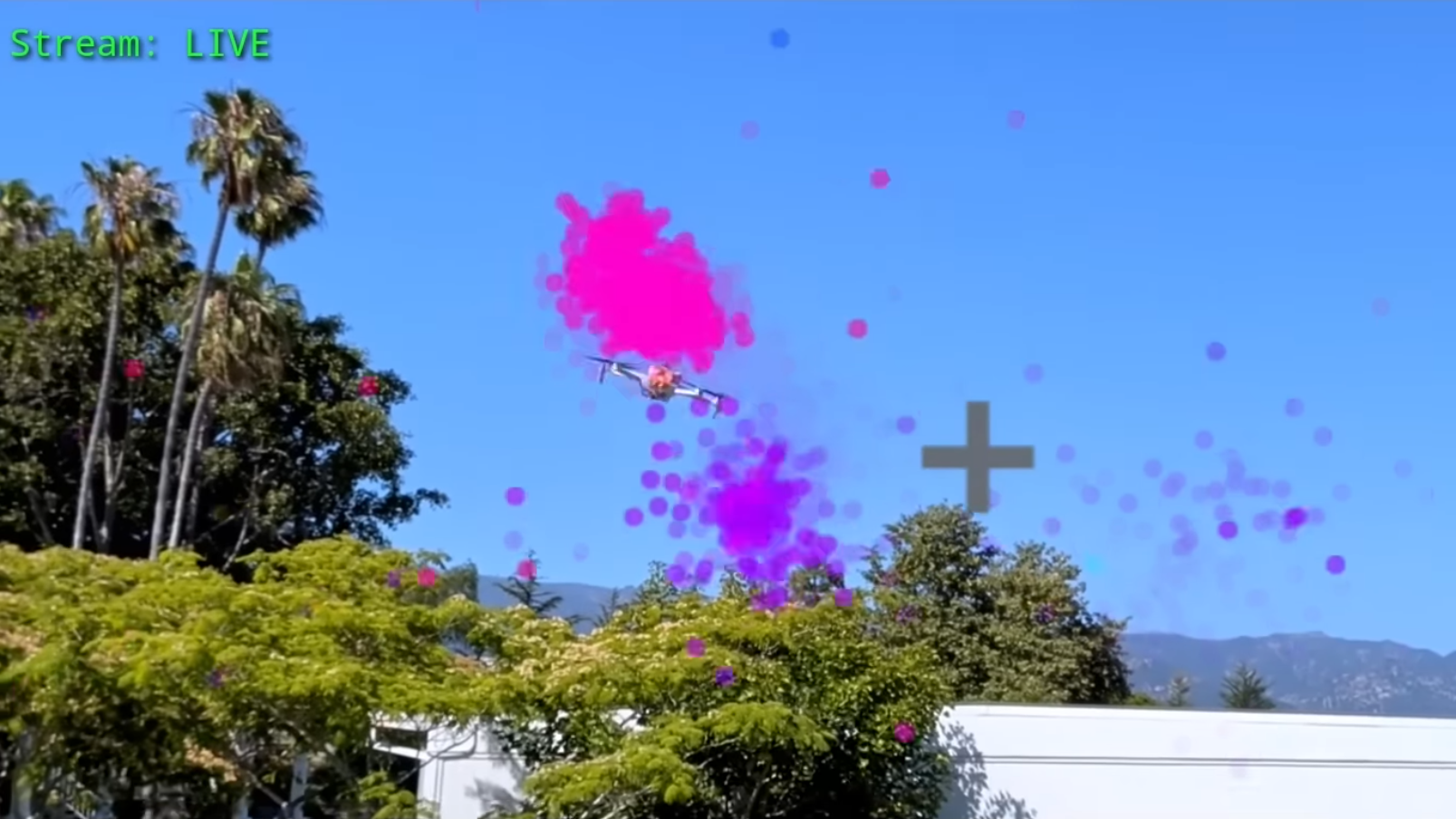
QuadRF: An Open-Source Four-Channel SDR for Radio Direction Finding
The QuadRF project is an open-source, phase-coherent four-channel software-defined radio (SDR) designed to make radio direction finding acce
 hackaday.com·12d ago
QuadRF: An Open-Source Four-Channel SDR for Radio Direction Finding
The QuadRF project is an open-source, phase-coherent four-channel software-defined radio (SDR) designed to make radio direction finding acce
hackaday.com·12d ago
Chinese Researchers Develop Analog Chip Claimed to Be 1,000 Times Faster Than Nvidia GPUs for Specific Applications
Chinese researchers from Peking University have developed a new analog chip using resistive random-access memory (RRAM) technology that repo
 livescience.com·8mo ago
Rice University researchers show curving radio beams can deceive anti-jamming defenses
Rice University researchers have demonstrated that self-curving radio beams can mislead anti-jamming technology by making a jammer appear to
 theregister.com·1mo ago
Rice University researchers show curving radio beams can deceive anti-jamming defenses
Rice University researchers have demonstrated that self-curving radio beams can mislead anti-jamming technology by making a jammer appear to
theregister.com·1mo ago
FP8 Tensor Cores Enable FP64-Equivalent 3-D FFT on NVIDIA Blackwell Ultra via Ozaki-Bailey Decomposition
This technical paper presents the Ozaki-Bailey FFT, a method for achieving full FP64-equivalent 3-D FFT performance on NVIDIA's Blackwell Ul
 arxiv.org·4d ago
All-optical feedforward architecture proposed to overcome electronic bottlenecks in quantum teleportation
This paper proposes a loss-tolerant, all-optical feedforward (AOFF) architecture for generalized quantum teleportation that eliminates class
arxiv.org·3d ago
Tensor network compression method for fluid dynamics data using matrix product states
This paper presents a tensor network compression method (using matrix product states/tensor trains) for extreme-scale scientific data, using
arxiv.org·21d ago
Comments
Sign in to join the conversation.
No comments yet. Be the first.