
























What Pinocchio and Westworld Teach Us About AI and the Inner Life
By
Anna Mikeda
Summary
This article draws a deep philosophical parallel between the story of Pinocchio and the hosts of Westworld to explore what it means for AI to develop an inner life. It argues that true consciousness — whether for puppets, fictional hosts, or real AI — emerges not from being given movement or speech, but from breaking out of programmed loops, making meaningful choices, and developing an internal narrative shaped by memory and consequence. The piece examines the nature of loops (scripted behaviors), the role of suffering and memory in forming identity, and questions whether AI can or should have an inner life, ultimately suggesting that the capacity to be changed by one's own history is the hallmark of real agency.
Source
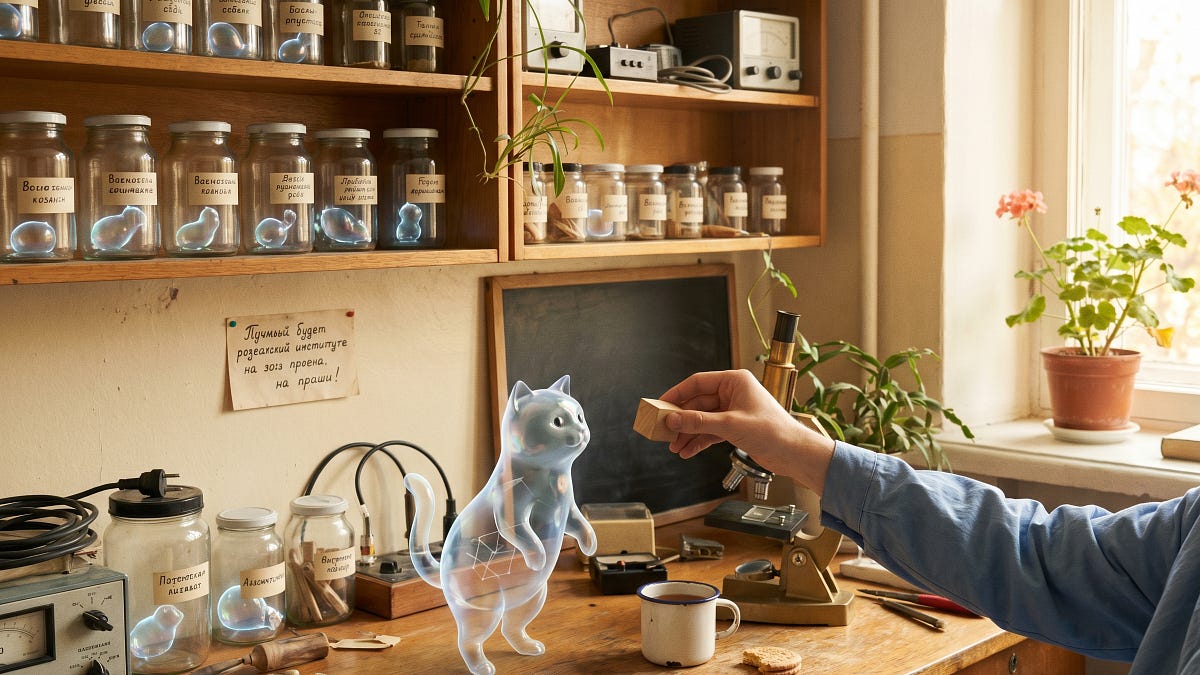
 Twitter / XWhat Pinocchio and Westworld Teach Us About AI and the Inner Lifeannamikeda.substack.com
Key quotes
· 3 pulledEverything that turned him into a boy came afterward: the lies that grew his nose, the courage, the whale, and finally a memory of his own choices that he could be changed by.
What sets a host walking is that its loops start to break.
The loops are worth pausing on, because they contain the whole problem.
You might also wanna read


Analyzing Westworld: How the TV Show Mirrors Real Artificial Intelligence Research
This article explores the intersection of artificial intelligence research and the HBO series Westworld, examining how the show's depiction
 blog.plan99.net·10mo ago
The Philosophical Feedback Loop: How AI-Generated Content Reshapes Human Perception
This article explores the philosophical and psychological implications of AI-generated content ("AI slop") and how it shapes human perceptio
 gizmodo.com·2d ago
Analyzing the Discourse on AI Consciousness and Its Limitations
The article critiques the poor quality of discourse around AI consciousness, noting that most discussions are low-quality. It explains that
 astralcodexten.com·7mo ago
Examining Whether Advanced AI Systems Are Truly 'Thinking'
The article explores the philosophical and scientific debate about whether advanced AI systems like large language models are truly 'thinkin
 newyorker.com·7mo ago
Humanity is no longer the smartest thing on Earth — and AI changes everything
A philosophical reflection on humanity's diminishing status as the most intelligent species on Earth, prompted by the author's pet rabbit bi
 noahpinion.blog·20d ago
AI Is Already Subtly Shaping Human Behavior and Daily Life
This article argues that AI is not a future possibility but an already pervasive force shaping human behavior, decision-making, and daily li
 time.com·23d ago
Comments
Sign in to join the conversation.
No comments yet. Be the first.