
























How Schools Are Funding Literacy Programs, Even With Tough Budgets
By
Josh Walsh
3mo agoen
Source
kidsreadnow.orgHow Schools Are Funding Literacy Programs, Even With Tough Budgetskidsreadnow.orgIf you’ve ever looked at a literacy program and thought “we can’t afford this,” there’s a good chance you you just didn’t know where to look. Budget season is hard. District funds get committed early. State allocations run out. And when a program looks like another line item, it’s easy to set it aside. But many schools that run strong literacy programs don’t find one big source of funding, rather they find paths that work together for their situation. Here are four places worth looking. Download Kids Read Now Funding Guide Title I Funds If your school serves a high percentage of students who qualify for free or reduced lunch, Title I funding is likely your first and best option. Title I, Part A is specifically designed to support academic achievement in high-poverty schools, and summer reading programs are an eligible use of those funds. The key question is whether your district still has allocation available for this school year. Many do. If you’re not sure, your district’s federal programs coordinator can tell you quickly. Literacy Grants Several grants are designed specifically for literacy programs. Deadlines vary, and some spring cycles are already closing. But a few are still worth checking: Dollar General Literacy Foundation (dgliteracy.org). One of the most accessible literacy-specific grants available, with multiple cycles per year. NEA Foundation Student Success Grants (neafoundation.org). Open to public school educators. Believe in Reading (believeinreading.org/grant-guidelines). Focused on early and summer reading. If you’ve already missed a deadline, bookmark these for the next cycle. Some award multiple times per year. Community and Civic Organizations This is the most overlooked category, and it doesn’t follow a school fiscal calendar at all. Local Rotary clubs, Kiwanis, United Way chapters, and similar organizations fund education initiatives year-round. They’re often looking for exactly this kind of program: community-based, measurable impact, local kids. A short presentation or a one-page summary is usually enough to start a conversation. Local foundations and businesses are also worth a conversation. Many have small grant programs that never get promoted widely. Your community foundation is a good first call if you’re not sure where to start. Parent and Community Cost-Share Some schools fund programs like this through a combination of PTA support and direct parent contribution. This works best when the per-student cost is modest and the value is clear. It’s not the right fit for every district. But for schools where parent engagement is strong, it’s a realistic path that doesn’t require a grant application or a budget approval. Not Sure Where to Start? Every district is different. What works for one school may not apply to yours. If you’re trying to figure out which of these options fits your situation, we can help you think it through. Reach out to the Kids Read Now team and we can walk you through what we’ve seen work for schools like yours. Let's Talk About Your School
You might also wanna read


Experts warn AI agents could overwhelm research grant systems
Experts warn that the rise of sophisticated AI agents poses an "existential threat" to research grant awarding systems. As autonomous AI sys
 insidehighered.com·4h ago
UC study maps Christchurch's Antarctic workforce for the first time
New research from the University of Canterbury maps the full scale of Christchurch's Antarctic workforce for the first time. Published in An
 canterbury.ac.nz·4h ago
New NIST director Arvind Raman to lead standards work across AI, quantum and cybersecurity
edtechinnovationhub.com·5h ago

Schools in England to receive £400m inclusion fund after SEND reform proposals
edtechinnovationhub.com·5h ago
MIT OpenCourseWare: SICP Video Lectures by Abelson and Sussman (1986)
MIT OpenCourseWare offers a complete set of 20 professionally produced video lectures by Hal Abelson and Gerald Jay Sussman for the classic
ocw.mit.edu·5h ago
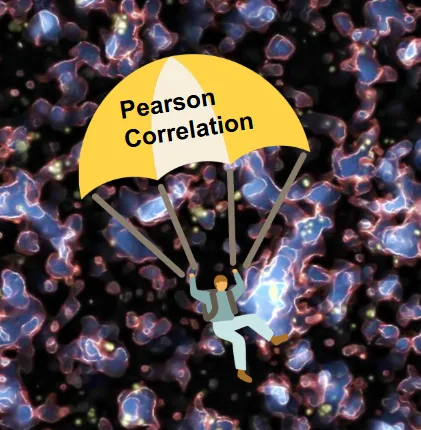
New Method Uses Correlation Drop to Pinpoint the Start of Cosmic Reionization
This article discusses a new astrophysical method to constrain the start of the Epoch of Reionization (EoR) — the period when the first star
 astrobites.org·5h ago
Comments
Sign in to join the conversation.
No comments yet. Be the first.