

























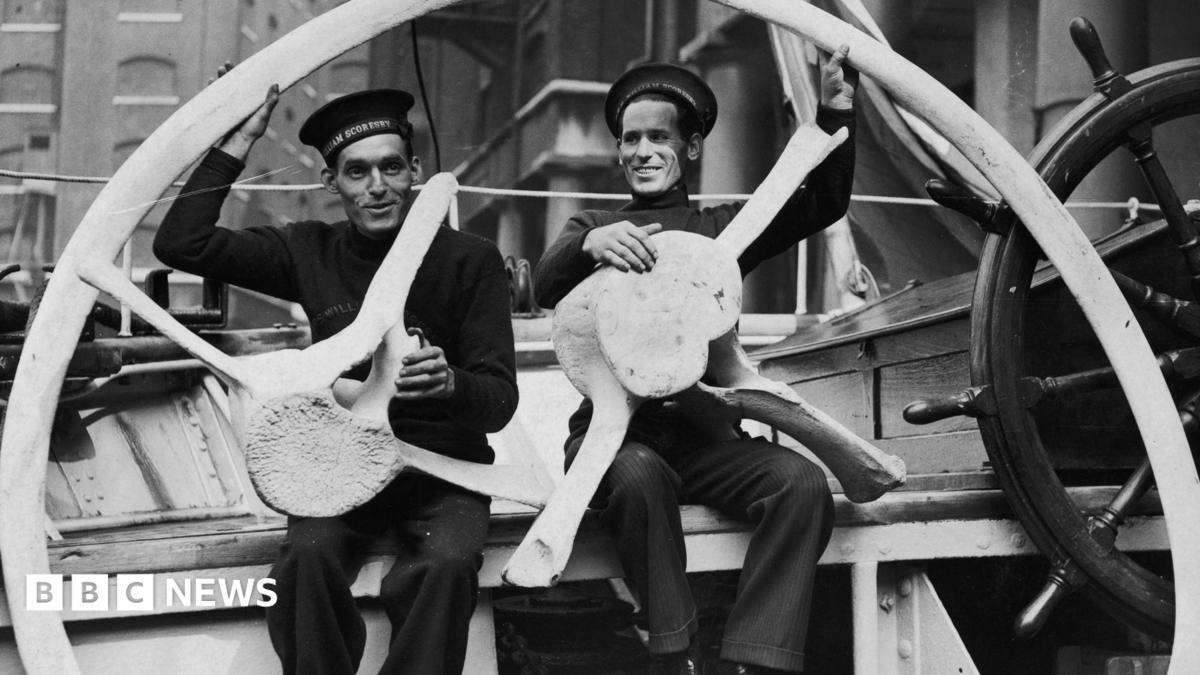
Century-old research ship William Scoresby laid groundwork for El Niño tracking
By
Gill Sennett, Paul Johnson
Summary
A century ago, the Royal Research Ship William Scoresby departed from Hull on a voyage to the southern oceans to research whale stocks, particularly around the Falkland Islands. The ship's work laid foundational understanding of Pacific currents, including the Humboldt current, which has been crucial for tracking phenomena like El Niño. The article highlights how these forgotten voyages contributed significantly to modern climate science.
Source
 bskyCentury-old research ship William Scoresby laid groundwork for El Niño trackingbbc.co.uk
Key quotes
· 2 pulledThat and its complementary current, the Humboldt current, the cold-water current, have been a subject of a lot of examination over the years
One of the reasons we know quite a lot about it is that the foundations for our understanding of these currents in the Pacific, a lot of them were laid by a research ship called the William Scoresby
You might also wanna read


Upcoming El Niño could be the strongest on record, posing risks for a warming world
The article discusses the phenomenon of El Niño, which was first observed by Peruvian fishermen centuries ago when anchovies would disappear
 economist.com·5d ago
Study quantifies extreme weather impacts on marine predator breeding in Tasmanian climate hotspot
This scientific study examines how extreme weather events (EWEs) impact the breeding success of marine predators in Tasmania, Australia—a gl
 scim.ag·7h ago
Study quantifies extreme weather impacts on marine predator breeding in Tasmanian climate hotspot
This scientific study examines how extreme weather events (EWEs) impact the breeding success of marine predators in Tasmania, Australia—a gl
scim.ag·7h ago
U.S. removal of ocean sensors disrupts Canadian research ahead of El Niño
The U.S. decision to remove ocean sensors from its shores is creating a significant gap in Canadian marine research, particularly as El Niño
 timescolonist.com·6d ago
The coming El Niño could be the strongest ever recorded, posing risks for a warming world
A brief article from The Economist's Science & technology section discusses the historical origin of the term "El Niño" (named by Peruvian f
economist.com·4d ago
The coming El Niño could be the strongest ever recorded, posing risks for a warming world
A brief article from The Economist's Science & technology section explains the origin of the term "El Niño" (named by Peruvian fishermen aft
economist.com·4d ago
Unprecedented Reversal in Southern Ocean Circulation Detected by International Scientists
An international team of scientists detected a major reversal in ocean circulation in the Southern Ocean for the first time, with significan
icm.csic.es·11mo agoComments
Sign in to join the conversation.
No comments yet. Be the first.