
























ForceBand: A Low-Cost sEMG Wristband for Force-Aware Robot Learning from Human Demonstrations
Summary
This paper presents ForceBand, a low-cost sEMG (surface electromyography) wristband system that captures human muscle activity during manipulation tasks and translates it into force-enriched demonstrations for robot policy learning. The system enables force-aware robot learning directly from human demonstrations, addressing the challenge of teaching robots to perform forceful manipulation tasks (like pushing, pulling, twisting) that require precise force control. The research involves collaboration between Amazon FAR, University of Maryland, and Johns Hopkins University.
Source
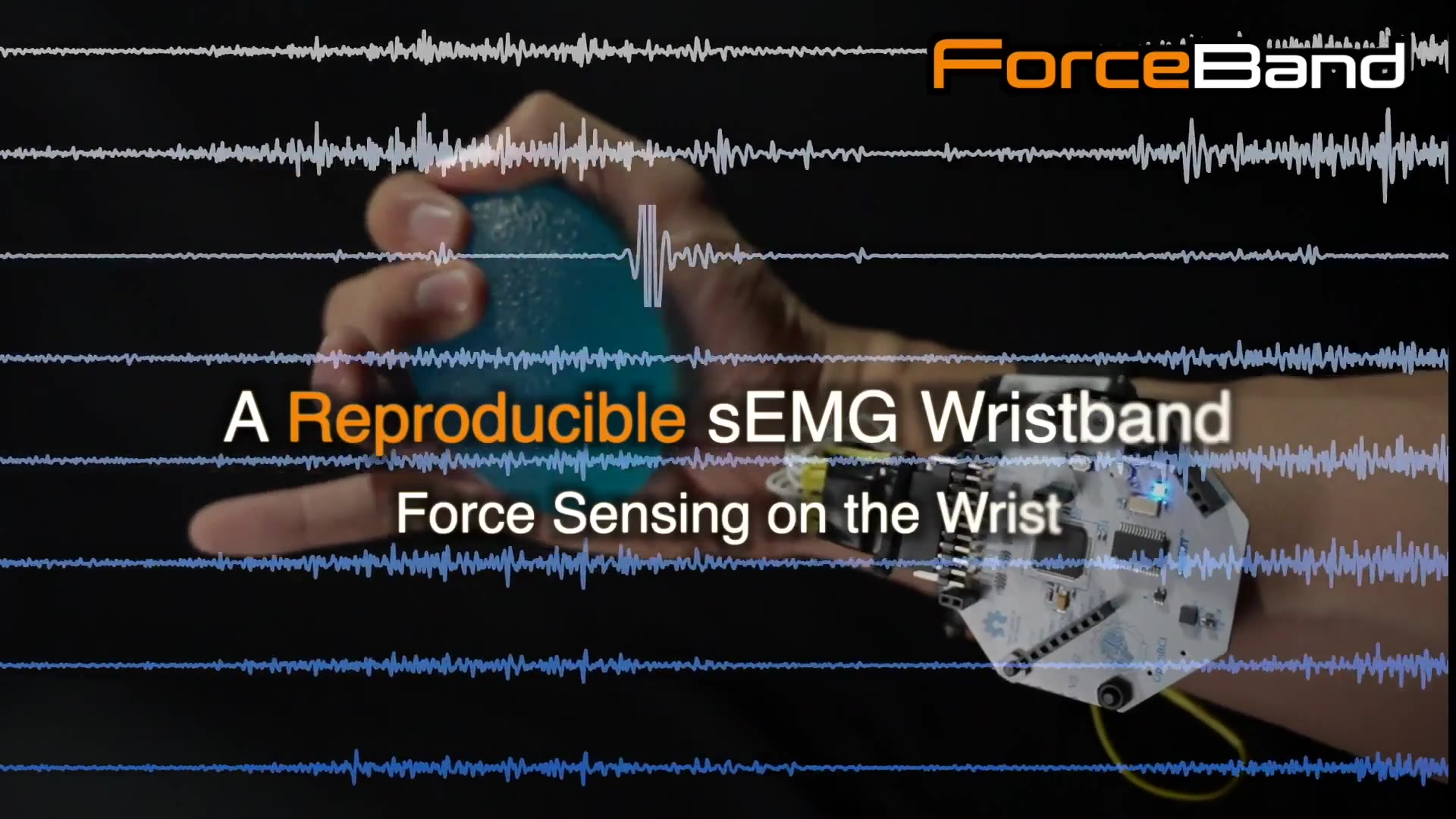
 Twitter / XForceBand: A Low-Cost sEMG Wristband for Force-Aware Robot Learning from Human Demonstrationsforceband-emg.github.io
Key quotes
· 3 pulledForceBand captures human muscle activity during manipulation tasks and translates it into force-enriched demonstrations for robot policy learning.
The system enables force-aware robot learning directly from human demonstrations, addressing the challenge of teaching robots to perform forceful manipulation tasks.
This research represents a collaboration between Amazon FAR, University of Maryland, and Johns Hopkins University.
You might also wanna read

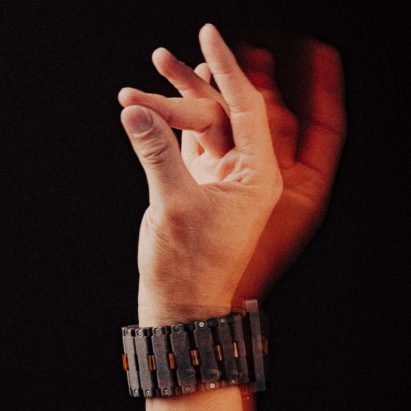
Meta develops wristband using muscle-reading tech to replace keyboard and mouse
Meta has developed a gesture-sensing wristband prototype that uses surface electromyography (sEMG) to read muscle movements at the wrist, en
 Dezeen·11mo ago
Wristband enables wearers to control a robotic hand with their own movements
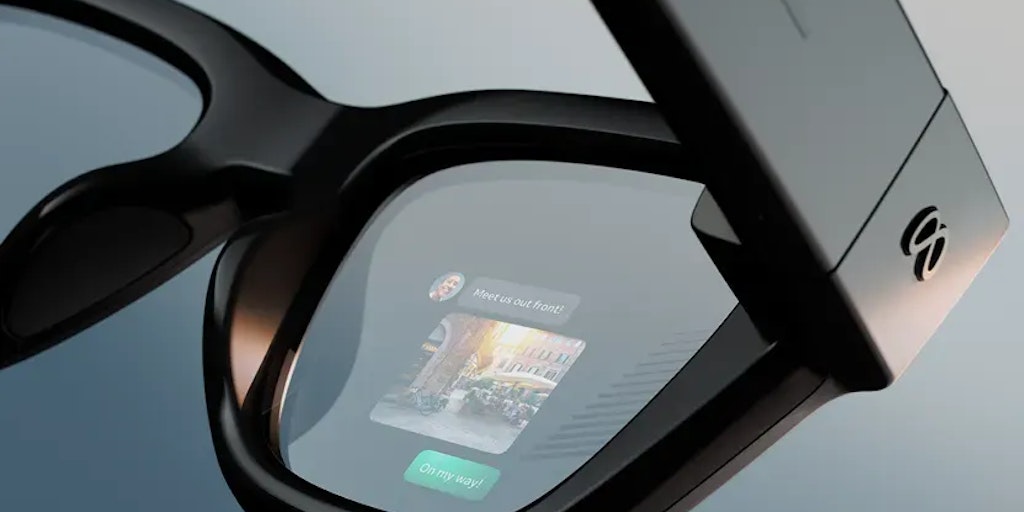
Meta Introduces Neural Band Technology for Ray-Ban Smart Glasses Control
Meta has introduced a new evolution of its Ray-Ban smart glasses featuring an in-lens display and a revolutionary Meta Neural Band wristband
 Product Hunt·1mo ago
A neural blueprint for human-like intelligence in soft robots
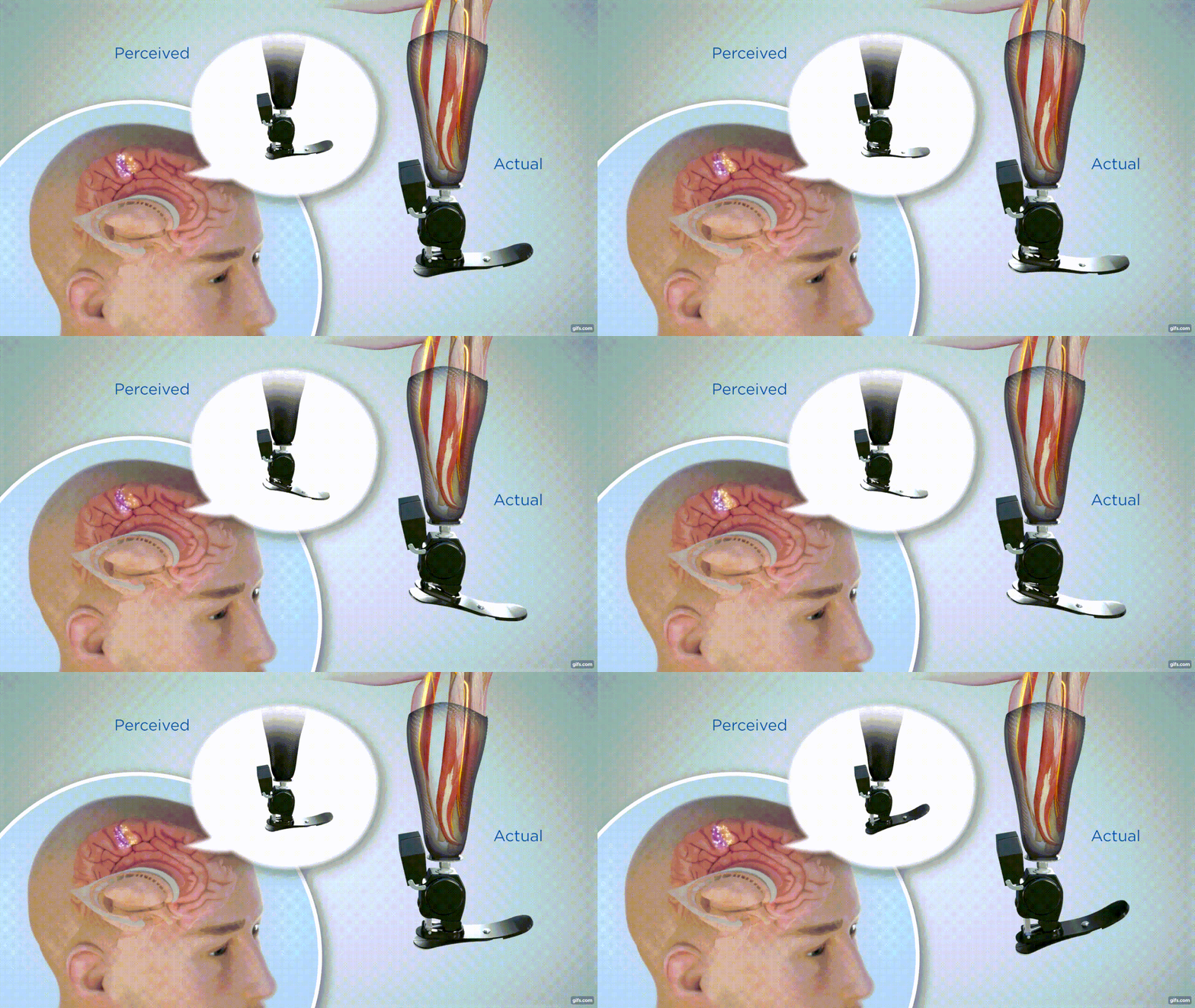
MIT Media Lab's AMI Project: Restoring Proprioception in Prosthetic Limbs
The article describes the Agonist-antagonist Myoneural Interface (AMI) project from MIT Media Lab, which aims to restore proprioception in p
 media.mit.edu·5mo ago
Researchers develop mechanical memory using slap-bracelet-like structures for scalable bit addressing
Researchers led by Pedro Reis at EPFL and Martin van Hecke at AMOLF have developed a practical method for writing mechanical bits using stru
Researchers develop mechanical memory using slap-bracelet-like structures for scalable bit addressing
Researchers led by Pedro Reis at EPFL and Martin van Hecke at AMOLF have developed a practical method for writing mechanical bits using stru
Comments
Sign in to join the conversation.
No comments yet. Be the first.