
























Texas A&M researchers accidentally discover cheaper method to produce graphene oxide from natural gas
Researchers at Texas A&M University accidentally discovered a method to produce graphene oxide directly from natural gas while studying clean hydrogen production. The process not only makes a critical lithium-ion battery component more cheaply and efficiently, but also generates green hydrogen as a byproduct. This serendipitous discovery could significantly lower battery manufacturing costs and boost US battery production capabilities.
Key quotes
The team, based in College Station, Texas, was trying to study an entirely different phenomenon when they discovered that they could produce graphene oxide directly from natural gas.
Not only does this discovery mean that a critical battery component could be produced more efficiently and cheaply, the process also creates green hydrogen as a byproduct.
Initially, the team was trying to experiment with ways to improve clean hydrogen production,
From the article
You might also wanna read
Unexpected discovery yields new graphene oxide production method

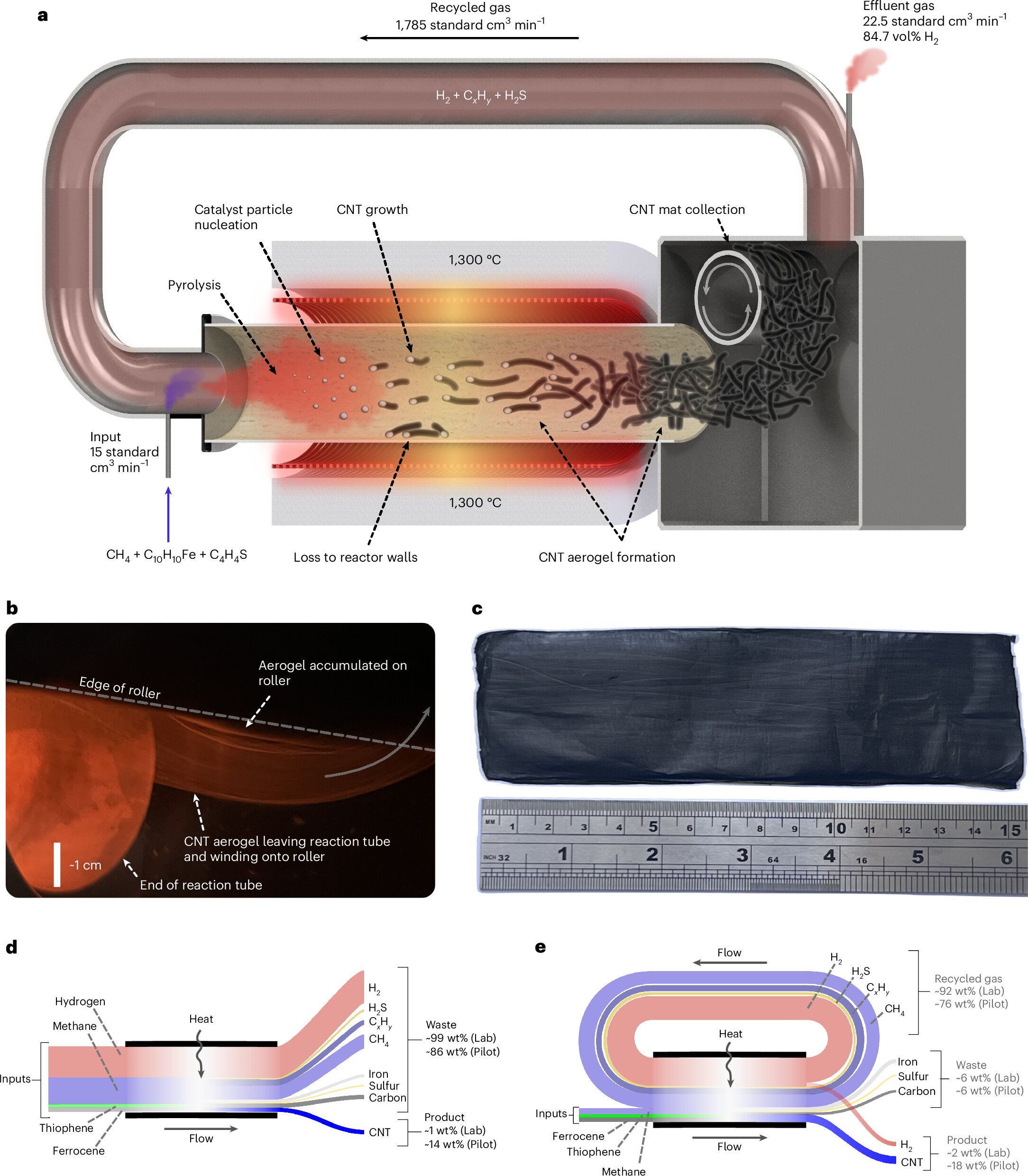
Cambridge Researchers Develop Reactor That Produces Hydrogen and Carbon Nanotubes from Natural Gas
University of Cambridge scientists have developed a novel reactor that simultaneously produces clean hydrogen fuel and carbon nanotubes from
 phys.org·6mo ago
Magnetic-field-assisted CO2 electroreduction using precision-engineered Ga–Gd oxide nanodomain interfaces
This article presents original scientific research on a novel approach to CO2 electroreduction using magnetic-field-assisted catalysis at pr
 pubs.acs.org·13d ago
Two Decades After Discovery: Assessing the Commercial Reality of Graphene
This article examines the current state of graphene commercialization two decades after its discovery at the University of Manchester in 200
 theguardian.com·8mo ago
Atomic-level engineering of Cu nanoclusters improves conversion of CO₂ to fuel
Sodium-ion battery breakthrough offers faster charging and improved safety over lithium-ion
Scientists at Tokyo University of Science have developed a new carbon-based electrolyte for sodium-ion (Na-ion) batteries that could signifi
 livescience.com·5mo ago
Comments
Sign in to join the conversation.
No comments yet. Be the first.