





















Heretic: Automated Tool for Removing Censorship from Language Models
By
melded

Front-window bakery material. Catches the eye, delivers the goods.
Summary
Heretic is an automated tool that removes censorship and safety alignment from transformer-based language models using directional ablation (abliteration) combined with TPE-based parameter optimization via Optuna. The tool works by co-minimizing refusal rates and KL divergence from the original model, resulting in decensored models that retain most of their original capabilities without expensive post-training.
Key quotes
· 5 pulledHeretic is a tool that removes censorship (aka 'safety alignment') from transformer-based language models without expensive post-training.
It combines an advanced implementation of directional ablation, also known as 'abliteration' (Arditi et al. 2024, Lai 2025 (1, 2)), with a TPE-based parameter optimizer powered by Optuna.
This approach enables Heretic to work completely automatically.
Heretic finds high-quality abliteration parameters by co-minimizing the number of refusals and the KL divergence from the original model.
This results in a decensored model that retains as much of the original model's capabilities as possible.
You might also wanna read


The Problem with Structured Outputs in LLMs: How Constrained Decoding Creates False Confidence
This article critiques the use of structured outputs and constrained decoding in large language models (LLMs), arguing that while these tech
 boundaryml.com·5mo ago
Critique of Train-Test Split Methodology for Advanced Machine Learning Tasks
The article critiques traditional train-test split methodology in machine learning, using a satirical case study about building a 'butt clas
 folio.benguzovsky.com·5mo ago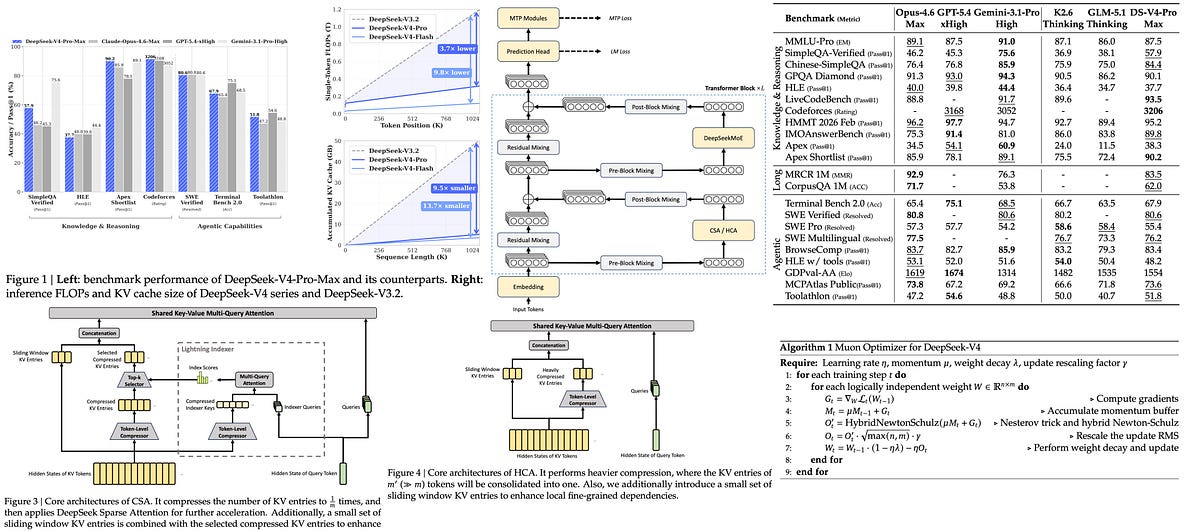
DeepSeek-V4: Hybrid Sparse-Attention Architecture Enables Efficient Million-Token Context Inference
DeepSeek-V4 introduces a hybrid sparse-attention architecture combined with on-policy distillation across domain specialists, enabling 1M-to
 artgor.medium.com·12h ago
Rotary GPU: Enabling Large Mixture-of-Experts Models on Consumer Laptop GPUs with Limited Memory
This paper presents Rotary GPU, an exploratory approach to running large Mixture-of-Experts (MoE) language models on consumer-grade hardware
 arxiv.org·1d ago
LinkedIn cuts GPU training hours by 65% with Generative Recommender system optimizations
LinkedIn has developed a Generative Recommender (GR) system that models user activity as token sequences, offering richer long-context perso
 startuphub.ai·3d ago
jqwik maintainer embeds protestware targeting AI coding agents in open-source library
The article reports on a controversial incident in the open-source software world where the maintainer of jqwik (a Java property-based testi