





















Critique of Train-Test Split Methodology for Advanced Machine Learning Tasks
By
gmays

A baker's-dozen of insight crammed into one ring.
Summary
The article critiques traditional train-test split methodology in machine learning, using a satirical case study about building a 'butt classification model' at Facebook. It argues that standard data splitting approaches fail for complex classification tasks at the frontier of LLM capabilities, where data distribution shifts, labeling inconsistencies, and cultural context variations make traditional validation unreliable. The piece highlights issues with data labeling guidelines, cultural biases in content moderation, and the limitations of conventional ML evaluation methods for cutting-edge AI systems.
Key quotes
· 4 pulledThe train-test split does not work for classification tasks at the frontier of LLM capability.
Your task: build the best butt classification model, which decides if there is an exposed butt in an image.
The content policy team in D.C. has written country-specific censorship rules based on cultural tolerance for gluteal cleft—or butt crack, for the uninitiated.
A PM on your team writes data labeling guidelines for a business process outsourcing firm (BPO), and each example in your dataset is triple-reviewed.
You might also wanna read


The Problem with Structured Outputs in LLMs: How Constrained Decoding Creates False Confidence
This article critiques the use of structured outputs and constrained decoding in large language models (LLMs), arguing that while these tech
 boundaryml.com·5mo ago
Heretic: Automated Tool for Removing Censorship from Language Models
Heretic is an automated tool that removes censorship and safety alignment from transformer-based language models using directional ablation
 github.com·6mo ago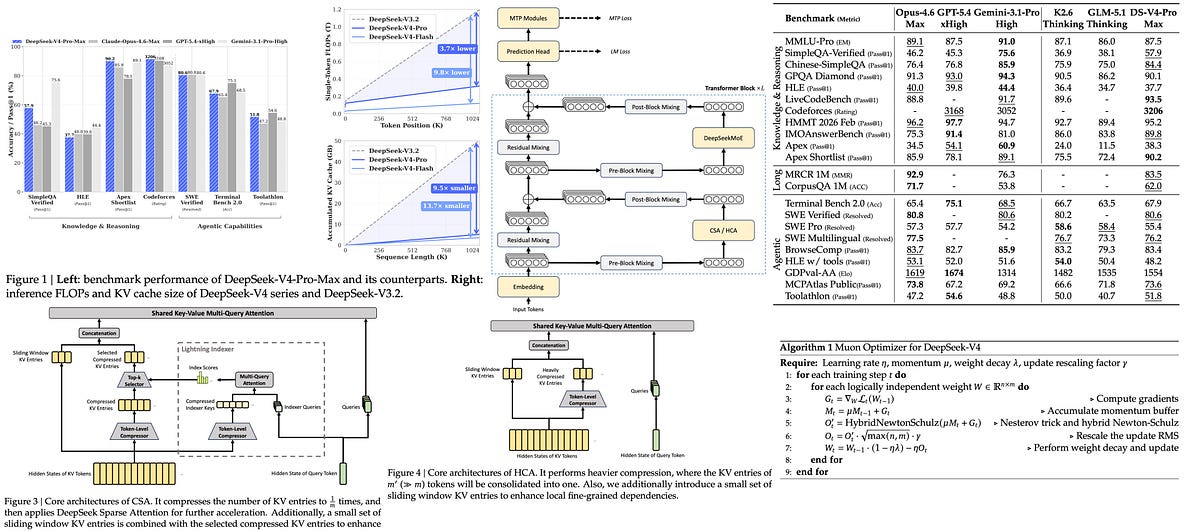
DeepSeek-V4: Hybrid Sparse-Attention Architecture Enables Efficient Million-Token Context Inference
DeepSeek-V4 introduces a hybrid sparse-attention architecture combined with on-policy distillation across domain specialists, enabling 1M-to
 artgor.medium.com·6h ago
Rotary GPU: Enabling Large Mixture-of-Experts Models on Consumer Laptop GPUs with Limited Memory
This paper presents Rotary GPU, an exploratory approach to running large Mixture-of-Experts (MoE) language models on consumer-grade hardware
 arxiv.org·1d ago
LinkedIn cuts GPU training hours by 65% with Generative Recommender system optimizations
LinkedIn has developed a Generative Recommender (GR) system that models user activity as token sequences, offering richer long-context perso
 startuphub.ai·3d ago
jqwik maintainer embeds protestware targeting AI coding agents in open-source library
The article reports on a controversial incident in the open-source software world where the maintainer of jqwik (a Java property-based testi