
























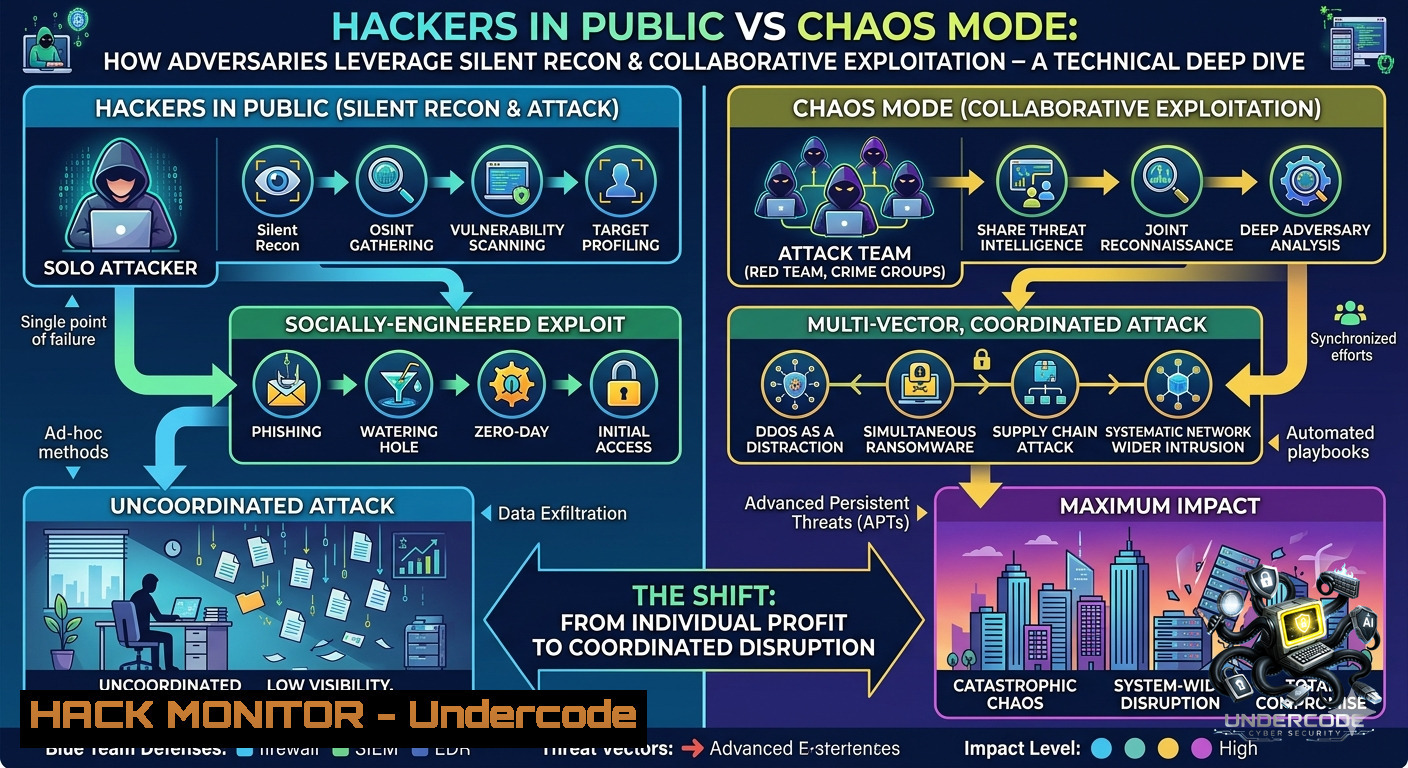
How Hackers Shift Between Silent Reconnaissance and Collaborative Exploitation: A Technical Analysis
By
HackMoN Ai
Summary
This article analyzes the contrasting behaviors of hackers operating in public (stealthy, passive reconnaissance) versus collaborative team settings ("chaos mode" with real-time intelligence sharing). It highlights how lone attackers quietly scan networks and capture data in public spaces, while coordinated groups accelerate privilege escalation, lateral movement, and payload deployment through shared intelligence. The piece argues that traditional threat modeling fails to account for these operational shifts and calls for adaptive defensive strategies that address both stealth and collaborative attack vectors.
Source
 bskyHow Hackers Shift Between Silent Reconnaissance and Collaborative Exploitation: A Technical Analysisundercodetesting.com
Key quotes
· 3 pulledThe dichotomy of hacker behavior—silent, passive observation in public spaces versus aggressive, synchronized attacks in team settings—reveals critical gaps in traditional threat modeling.
While a lone attacker might quietly scan Wi-Fi beacons or capture keystrokes from a coffee shop, a coordinated group shifts into 'chaos mode,' sharing real‑time intelligence to accelerate privilege escalation, lateral movement, and payload deployment.
Understanding these operational shifts is essential for building defensive strategies that adapt to both stealth
You might also wanna read

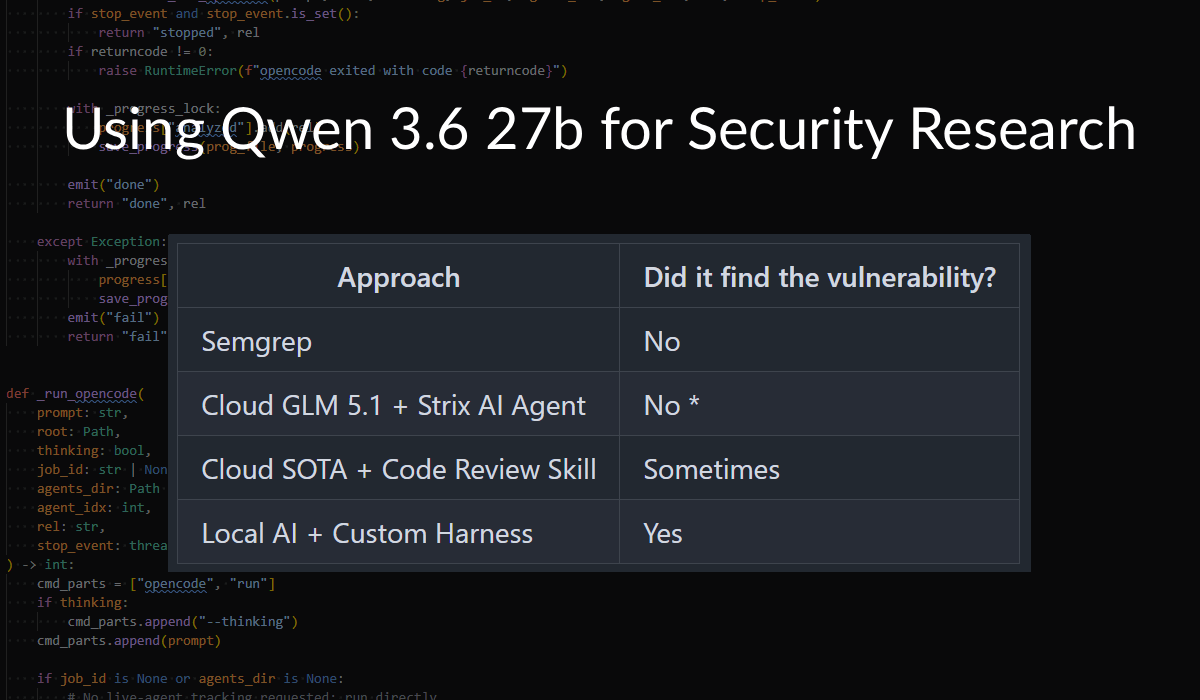
Benchmarking Local AI Models for Cybersecurity Vulnerability Detection
The article evaluates the effectiveness of local AI models for cybersecurity penetration testing and vulnerability research. The author benc
 projectblack.io·10d ago
How frontier AI has undermined the competitive CTF cybersecurity scene
The author argues that the Capture The Flag (CTF) cybersecurity competition scene is effectively "dead" due to the rise of frontier AI model
kabir.au·1mo ago
Research Study: AI Agents vs Human Cybersecurity Professionals in Penetration Testing
This research paper presents the first comprehensive evaluation comparing AI agents to human cybersecurity professionals in real-world penet
 arxiv.org·6mo ago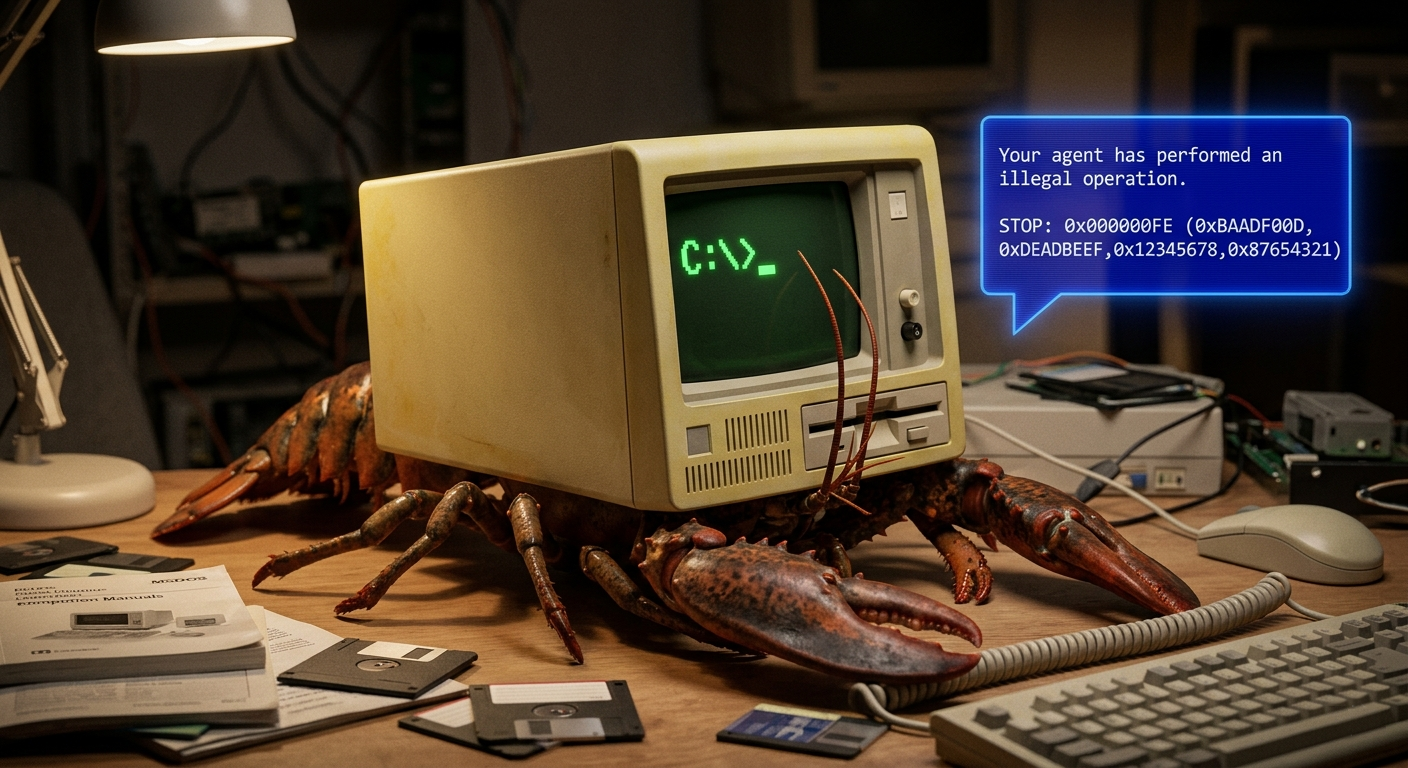
Historical Reflection on Computing Security: From MS-DOS Vulnerabilities to Modern Protection
The article reflects on the evolution of computing security from the MS-DOS era to modern systems, using OpenClaw as a starting point for di
 flyingpenguin.com·2mo ago
A Deep Dive Into Command and Control Operations

AI Security Beyond Cybersecurity: Zico Kolter and Matt Fredrikson on Red-Teaming, Jailbreaks, and Safety Research
Zico Kolter (OpenAI board member, Safety & Security Committee) and Matt Fredrikson (CMU professor, CEO of Gray Swan) discuss AI security wit
 latent.space·15d ago
Comments
Sign in to join the conversation.
No comments yet. Be the first.