
























GKNet: Graph Kalman Filtering and Model Inference via Model-Based Deep Learning
From the article
You might also wanna read


Dynestyx: A Probabilistic Programming Library for State-Space Models and Dynamical Systems
The article introduces dynestyx, a probabilistic programming library designed specifically for state-space models (SSMs) used in Bayesian an
 arxiv.org·21d ago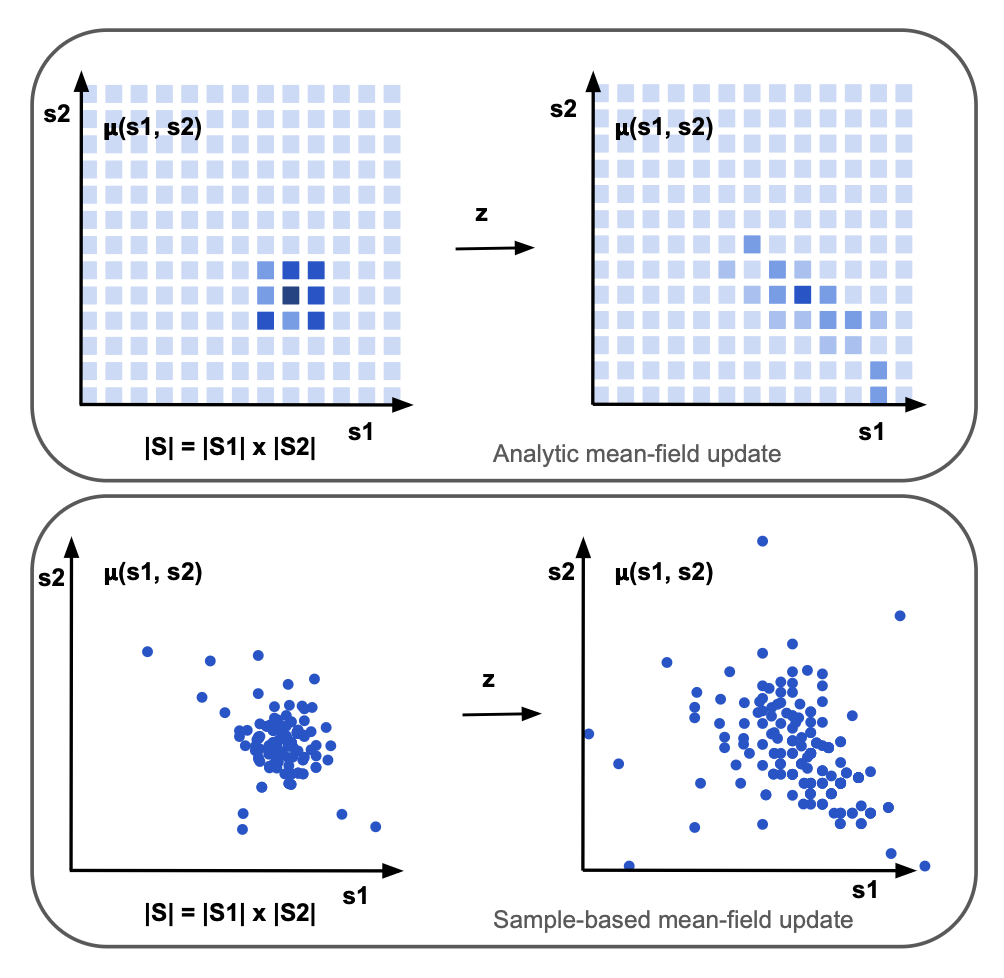
Recurrent Structural Policy Gradient: A Method for Partially Observable Mean Field Games
This article introduces Recurrent Structural Policy Gradient (RSPG), a hybrid structural method for learning history-dependent policies in P

ICESEE v1.0.0: An Open-Source Python Framework for Ensemble Kalman Filtering in Ice Sheet Modeling
ICESEE (ICE Sheet statE and parameter Estimator) is a Python-based, open-source data assimilation framework for ice sheet and Earth system m
 doi.org·20d ago
Ultrafast FPGA-based inference and online learning using Kolmogorov-Arnold Networks
This post explains the author's Master's thesis on designing hardware architectures for ultrafast inference and online learning using Kolmog
 aarushgupta.io·29d ago
Mathematical Unification of Decision Trees and Diffusion Models via Global Trajectory Score Matching
This paper establishes a mathematical correspondence between decision trees and diffusion models, unifying these two seemingly disparate mod
arxiv.org·1mo ago
Exploring Time Series Forecasting on Graph Structured Entities
The article discusses time series forecasting on graph structured entities, utilizing machine learning and generative models. It emphasizes
kumo.ai·1y ago
Comments
Sign in to join the conversation.
No comments yet. Be the first.