

























Fossil fuels account for 40% of shipping tonnage but half of maritime fuel use, reshaping the alternative fuel debate
By
Michael Barnard
Summary
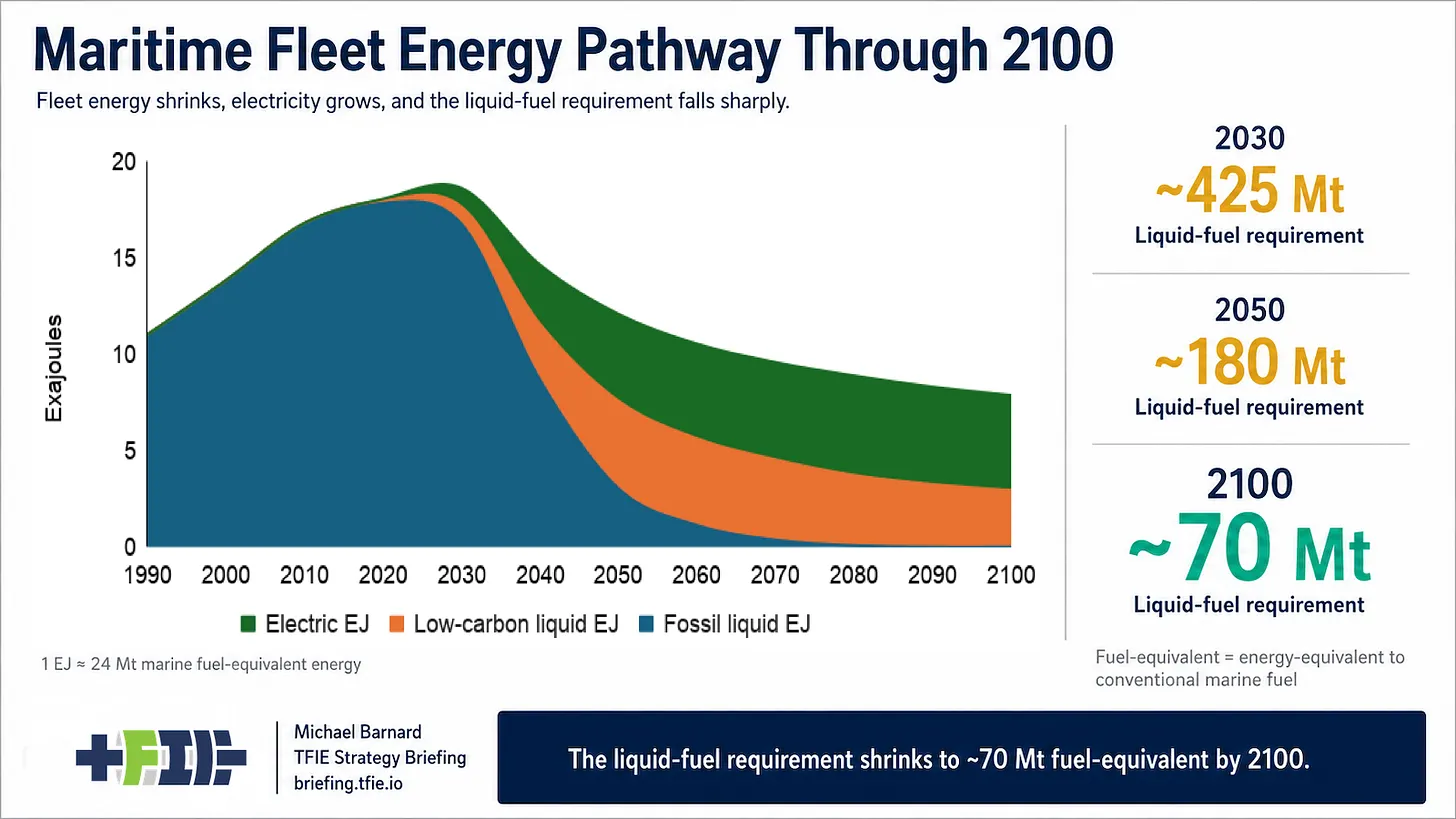
The article argues that the maritime shipping industry's fuel transition debate is misguided because it focuses on replacing current bunker fuel volumes without accounting for the fact that fossil fuels make up about 40% of shipping tonnage but consume roughly half of maritime fuel energy. As the world transitions away from fossil fuels, demand for shipping these fuels will drop significantly, reducing overall maritime fuel needs. This changes the equation for what alternative fuels (ammonia, methanol, hydrogen, etc.) are actually required. The article advocates for first shrinking the fuel pool through reduced fossil fuel shipping demand, then strategically deploying electrons and scarce low-carbon fuels only where they are most needed.
Source
 Hacker NewsFossil fuels account for 40% of shipping tonnage but half of maritime fuel use, reshaping the alternative fuel debatecleantechnica.com
Key quotes
· 3 pulledMaritime fuel debates usually start with the wrong object. They look at today's bunker fuel demand, line up replacement molecules, and ask whether ammonia, methanol, hydrogen, LNG, biofuels, or synthetic fuels can scale far enough to replace it.
Fossil fuels are about 40% of maritime tonnage but roughly half of freight energy, which changes the shipping fuel transition.
Shipping's transition starts by shrinking the fuel pool, then using electrons and scarce liquids only where they fit.
You might also wanna read


BHP and GCMD test waste fat biofuel blend to cut shipping emissions by up to 79%
BHP and Singapore's Global Centre for Maritime Decarbonisation (GCMD) have successfully tested a biofuel blend made from used cooking oil an
 seekingalpha.com·18d ago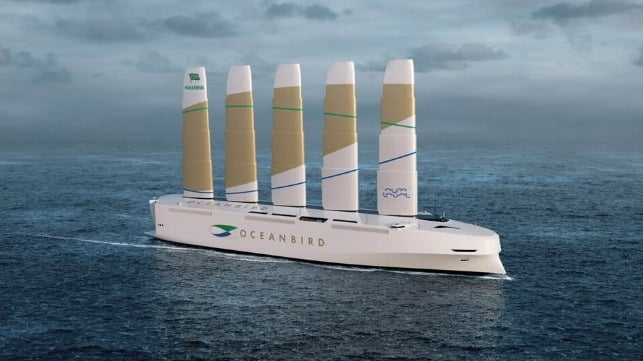
Wind-Assisted Cargo Ships Gain Traction as Shipping Industry Seeks Decarbonization
The article discusses the resurgence of wind-assisted and sail-powered cargo ships as a viable solution for decarbonizing the shipping indus
 maritime-executive.com·1d ago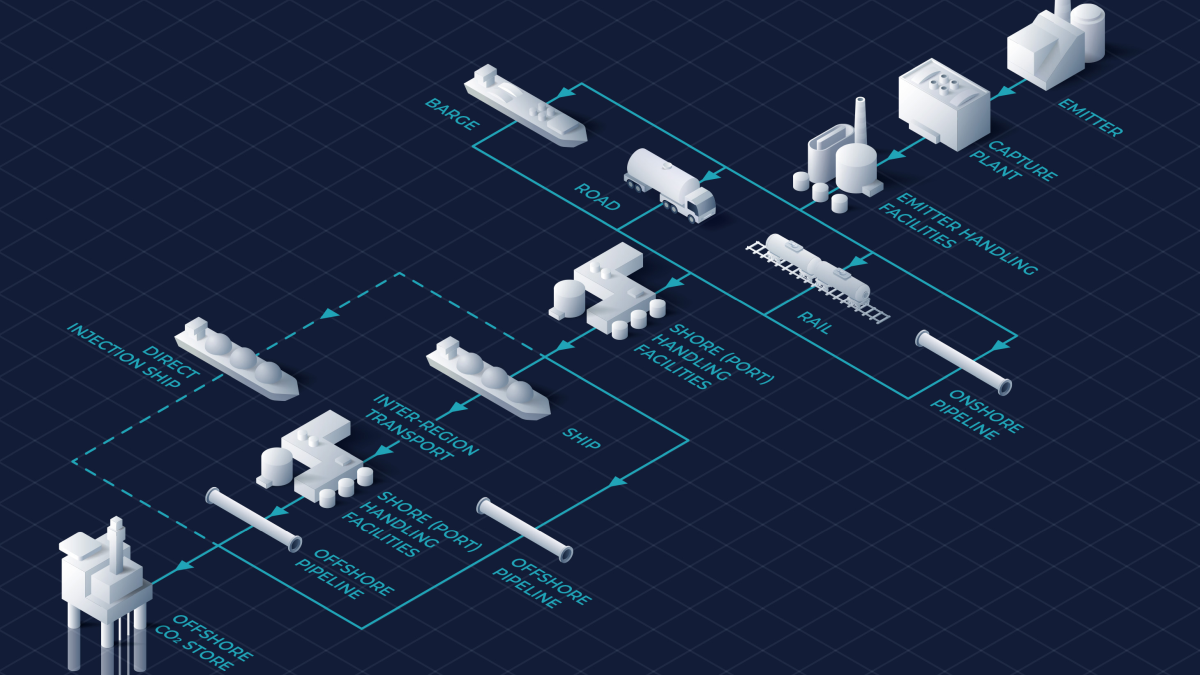
Europe will need 65 CO2 ships and 33 ports for carbon capture infrastructure by 2050, forecast says
A forecast from Subsea7 subsidiary and energy consultancy Xodus predicts that Europe will need approximately 65 CO2 carriers and infrastruct
 rivieramm.com·4d ago
How the Strait of Hormuz standoff flipped the energy security debate
Iran's influence over the Strait of Hormuz has shifted the energy security debate, revealing that fossil fuels—not renewables—are the primar
 cnbc.com·14d ago
How the Strait of Hormuz standoff flipped the energy security debate
Iran's influence over the Strait of Hormuz has shifted the energy security debate, revealing that fossil fuels—not renewables—are the primar
cnbc.com·14d agoHow the Strait of Hormuz standoff reframes fossil fuels as energy security risk
Iran's influence over the Strait of Hormuz has shifted the energy security debate, challenging the traditional view that fossil fuels provid
cnb.cx·16d agoHow the Strait of Hormuz standoff reframes fossil fuels as energy security risk
Iran's influence over the Strait of Hormuz has shifted the energy security debate, challenging the traditional view that fossil fuels provid
cnb.cx·16d ago