
























Fluid-Driven Reactions Restore Fault Strength Between Earthquakes
By
Marcos Moreno
7d agoen
Source
 EosFluid-Driven Reactions Restore Fault Strength Between Earthquakeseos.org
How a water-bearing fault gains strength over time. Starting from loose mineral grains separated by open pore space (left), grain contacts first grow as the fault sits locked (center); when fluids are present, a chemical reaction grows new mineral rims that cement neighboring grains together (right). This fluid-driven cementation raises the fault’s cohesion and, counterintuitively, its potential to fail in an earthquake. Credit: Affinito et al. [2026] , Figure 6c
You might also wanna read


Keeping PACE with Ocean Change
NASA·12h ago
Keeping PACE with Ocean Change
NASA·12h ago
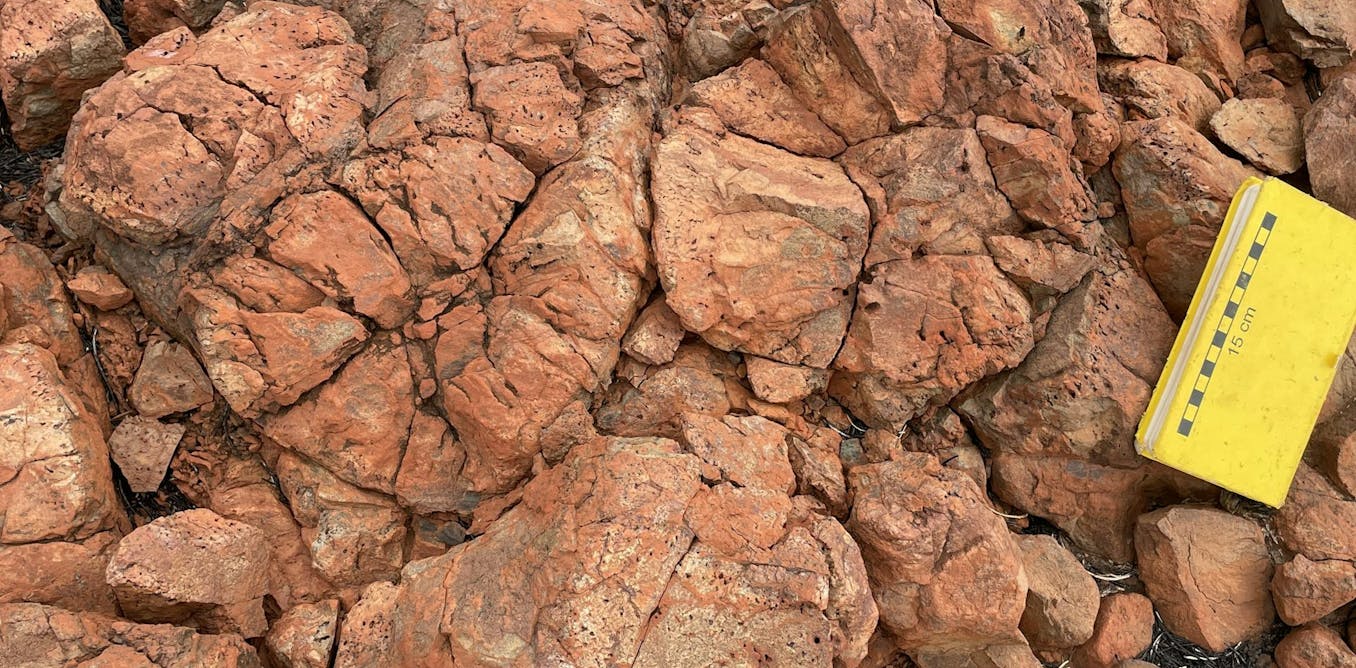
3.1-billion-year-old pillow basalts in Australia's Pilbara Craton reveal ancient water cycle evidence
A first-person account of visiting the Pilbara Craton in Western Australia, where 3.1 billion-year-old pillow basalts reveal evidence of Ear
 theconversation.com·14h ago
The Largest Ice Thickness Survey of Alaska’s Glaciers
Eos·22h ago
Application of Thallium Isotopes in Geochemistry: Reference Compilation
This is a reference list and metadata page for a scientific work on thallium isotopes, specifically their application in geochemistry and en
 cambridge.org·1d ago
Confronting Salty Problems in the Coastal Plain
Eos·1d ago
Comments
Sign in to join the conversation.
No comments yet. Be the first.