
























Federal Enforcement of Disparate Impact Is Receding—the Data Relied Upon Is Not
From the article
Over the past year and a half, the federal government has pulled back its disparate-impact regulations and enforcement while confirming that employers should retain the data upon which disparate-impact analysis depends. The data obligations and uses were not retired when the theory lost favor with the federal government. Instead, the federal government has now repurposed data (through substantial requests) to show intentional discrimination on an individual or systemic basis, which points toward even more serious allegations and enforcement activity. Quick Hits The federal government’s shift in enforcement priorities does not amend Title VII, and disparate impact remains actionable under federal and state laws, particularly for private plaintiffs and state regulators. In rescinding the disparate-impact provisions of federal Title VI regulations, federal agencies expressly kept the data-retention expectation and stated that the data can still prove intentional discrimination. The same statistics that once supported a disparate-impact claim are now positioned as evidence of intent—the discrimination theory the EEOC says it is prioritizing. Disparate Treatment, Disparate Impact, and Adverse Impact Analyses Disparate treatment and disparate impact are the two theories of discrimination under Title VII of the Civil Rights Act of 1964. Disparate treatment is intentional: an employer treats a person less favorably because of a protected characteristic. Disparate treatment is proven through direct or indirect evidence, including data. Disparate impact is effects-based, relying on data to show a facially neutral practice falls more harshly on a protected group, meaning it can be unlawful without proof of intent. Adverse-impact analysis is not a third theory. It is a statistical method for measuring whether outcomes differ across groups. The method is often treated as applying only to disparate-impact claims, because the four-fifths rule and validation practices were developed in the selection-procedure context. But the statistics produced by an adverse-impact analysis are not tied to a single theory. A pronounced disparity that an employer cannot explain can serve as circumstantial evidence of intentional discrimination as readily as it can establish the impact element of a disparate-impact claim. An Enforcement Shift Is Not a Change in the Law Under Title VII, the disparate impact framework is codified: once a plaintiff identifies a particular practice that causes a disparate impact, the burden shifts to the employer to show the practice is job-related and consistent with business necessity, after which the plaintiff may still prevail by identifying a less discriminatory alternative. That architecture has not been repealed, and an agency cannot repeal it. What has changed is the enforcement posture and the executive branch’s interpretation. The U.S. Equal Employment Opportunity Commission’s (EEOC) National Enforcement Plan redirects the agency’s priorities toward intentional discrimination. And on June 9, 2026, the DOJ’s Office of Legal Counsel (OLC) issued a memorandum opinion concluding that the EEOC’s disparate-impact guidelines are inconsistent with Title VII and raise constitutional concerns. The OLC opinion is an executive branch legal position, not a statute and not a judicial decision, and it does not change Title VII. The opinion also does not eliminate disparate impact so much as reframe it, construing the data as an evidentiary tool for identifying practices that carry a strong inference of intentional discrimination. The clearest evidence that the data still matters appears in the federal agency rescission documents. Over roughly seven months, a succession of federal agencies rescinded the disparate-impact provisions of their regulations under Title VI of the Civil Rights Act of 1964. The U.S. Department of Justice (DOJ) acted first, in December 2025, and because it coordinates Title VI enforcement across the government under Executive Order 12250 , its rule anticipated that other agencies would consider following. Several did. Agency Rule / Citation Status / Effective Date Justice (DOJ) 28 CFR part 42 (90 FR 57141) Final, Dec. 10, 2025 (lead/coordinating rule) Interior (DOI) 43 CFR part 17; 91 FR 30239; RIN 1093-AA30 Final, effective May 22, 2026 Transportation (DOT) FR Doc. 2026-11790; 49 CFR part 21 Final, published June 11, 2026 Agriculture (USDA) FR Doc. 2026-12139; 7 CFR part 15 (91 FR 36511) Final, effective June 17, 2026 Labor (DOL) FR Doc. 2026-13371; 29 CFR part 31 Final, effective July 2, 2026 The pattern is uniform. Each rule rests on the same authorities, the Supreme Court of the United States’ decision in Alexander v. Sandoval , its more recent decisions in Loper Bright Enterprises v. Raimondo and Students for Fair Admissions, Inc. v. President and Fellows of Harvard College , and Executive Order 14281, and each concludes that Title VI reaches only intentional discrimination. What matters for employers is what these rules preserved even as they removed disparate-impact liability under Title VI. The U.S. Department of Labor (DOL) rule is the clearest example. While rescinding disparate-impact liability under its Title VI regulations, it left intact the regulatory expectation that recipients maintain the racial and ethnic data available and stated that eliminating the liability “does not preclude the use of data on disparate outcomes to help prove intentional discrimination.” It then drew the distinction directly: using statistical disparity to help establish, as an evidentiary matter, liability for intentional discrimination “materially differs from using it to impose liability for an unintentional disparate impact.” The DOT, USDA, DOJ, and DOI rules used the same language. The repetition across each available rule indicates a deliberate government position rather than an isolated phrase. The DOL rule was more specific. In describing what it was relieving recipients of, it named the apparatus that Title VII’s selection procedure regime uses, ongoing recordkeeping, adverse-impact monitoring, validation studies, and review of less discriminatory alternatives, and cited the Uniform Guidelines on Employee Selection provisions by number. In removing disparate-impact liability from its own Title VI regulations, the agency cataloged the analytical tools employers have long used and identified the data that remains useful for proving and defending against intent. The federal government has not told employers that their data is now safe to disregard. It has indicated that the same statistics that once supported a disparate-impact claim may serve as evidence of intentional discrimination, the theory that the EEOC is prioritizing. The data retains its evidentiary force; what has changed is the theory it tends to support. The DOJ, DOT, USDA, DOL, and DOI rescissions concern Title VI and federally assisted programs, not Title VII employment claims. But the evidentiary logic does not depend on which statute supplies the claim. Disparate outcome data offered as proof of intent operates the same way under either, which is why the same reframing appears in the DOJ’s Title VII opinion and in the agencies’ Title VI rules. Disparate Impact Enforcement Continues Even as federal enforcement recedes, disparate impact theory does not disappear. Private plaintiffs retain an independent right of action under Title VII, unaffected by the EEOC’s enforcement priorities. The employment context differs from the federally assisted program context in an important respect. Under Title VI, the Supreme Court in Alexander v. Sandoval foreclosed a private right of action to enforce disparate impact regulations, which is part of why the Title VI rescissions narrow private exposure in that setting. Title VII contains no equivalent limitation. A reduction in federal enforcement under Title VII does not remove private exposure; it shifts it toward the private bar. State and local fair-employment agencies are a second forum. Many operate under their own statutes, some of which are more protective than federal law, and several jurisdictions have indicated they will continue to apply disparate-impact analysis regardless of the federal posture, with some moving to reinforce it in response to the federal retreat. An employer operating across jurisdictions may want to consider whether calibrating to the federal posture alone leaves state-law exposure unaddressed. The courts are a third forum. An enforcement agency can decline to bring a case; it cannot direct a federal court to read disparate impact out of Title VII. The framework remains in effect—and contested—with a recent public retort offered by a group of former EEOC officials. For employers, the practical consequence follows from these two facts together: the obligation to collect workforce data endures, and that data is now more valuable as evidence, including as evidence of intent. An employer that analyzes its own workforce outside privilege creates a record that may be discoverable, and an unfavorable result in an unprivileged file can become an exhibit. The workable response is not to collect or analyze less, which is neither lawful nor prudent, but to structure the analysis under privilege so exposure can be assessed without generating discoverable material. Next Steps Employers may wish to consider the following: conducting attorney-client privileged analyses of data collection methods and protections, as well as employment decisions, directed by counsel, that identify whether there is a legal risk; treating adverse-impact analysis as privilege-sensitive from the outset, structuring any selection or adverse-impact review as legal work directed by counsel before it begins, rather than addressing privilege after a problem surfaces; not mistaking the federal retreat for reduced risk, given the continued availability of private and state-law disparate-impact claims and the reframing of disparate-outcome data as evidence of intent; accounting for the data’s new evidentiary role, recognizing that demographic and selection data are now positioned as potential proof of intent and may warrant additional care in how it is generated, stored, and analyzed; and monitoring state and local law, which in several jurisdictions is moving to preserve or strengthen disparate-impact analysis, even as federal enforcement recedes.
Continue reading on The National Law ReviewYou might also wanna read

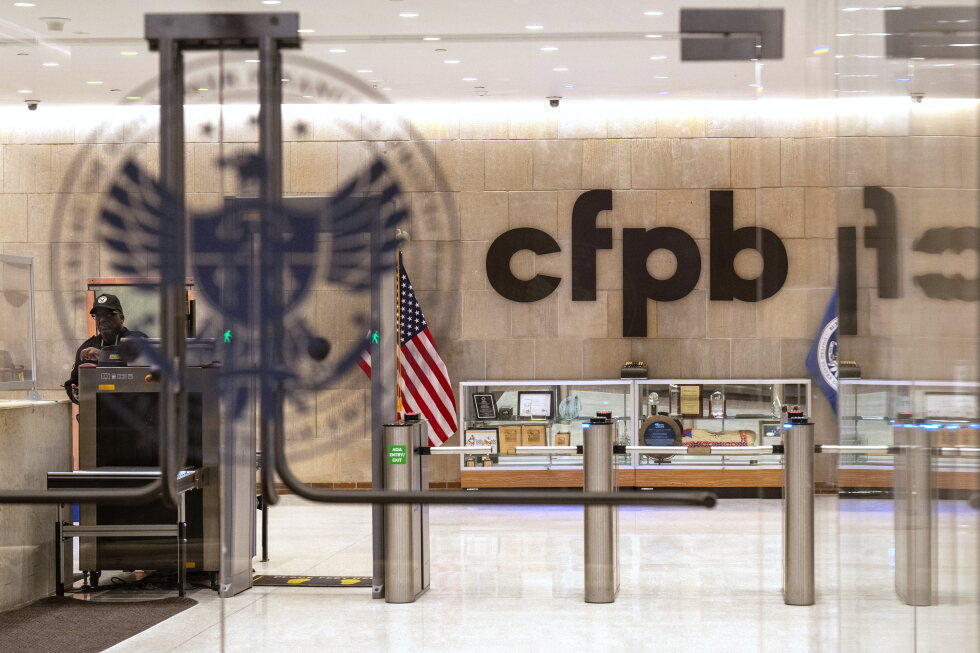
Fair housing groups sue CFPB over rule change removing disparate impact lending protections
Fair housing organizations have filed a federal lawsuit in Washington, D.C., challenging a rule change by the Consumer Financial Protection
 apnews.com·1mo ago
At Trump’s Direction, Federal Agencies Are Abandoning Discrimination Cases
NYT·4d ago
At Trump’s Direction, Federal Agencies Are Abandoning Discrimination Cases
NYT·4d ago
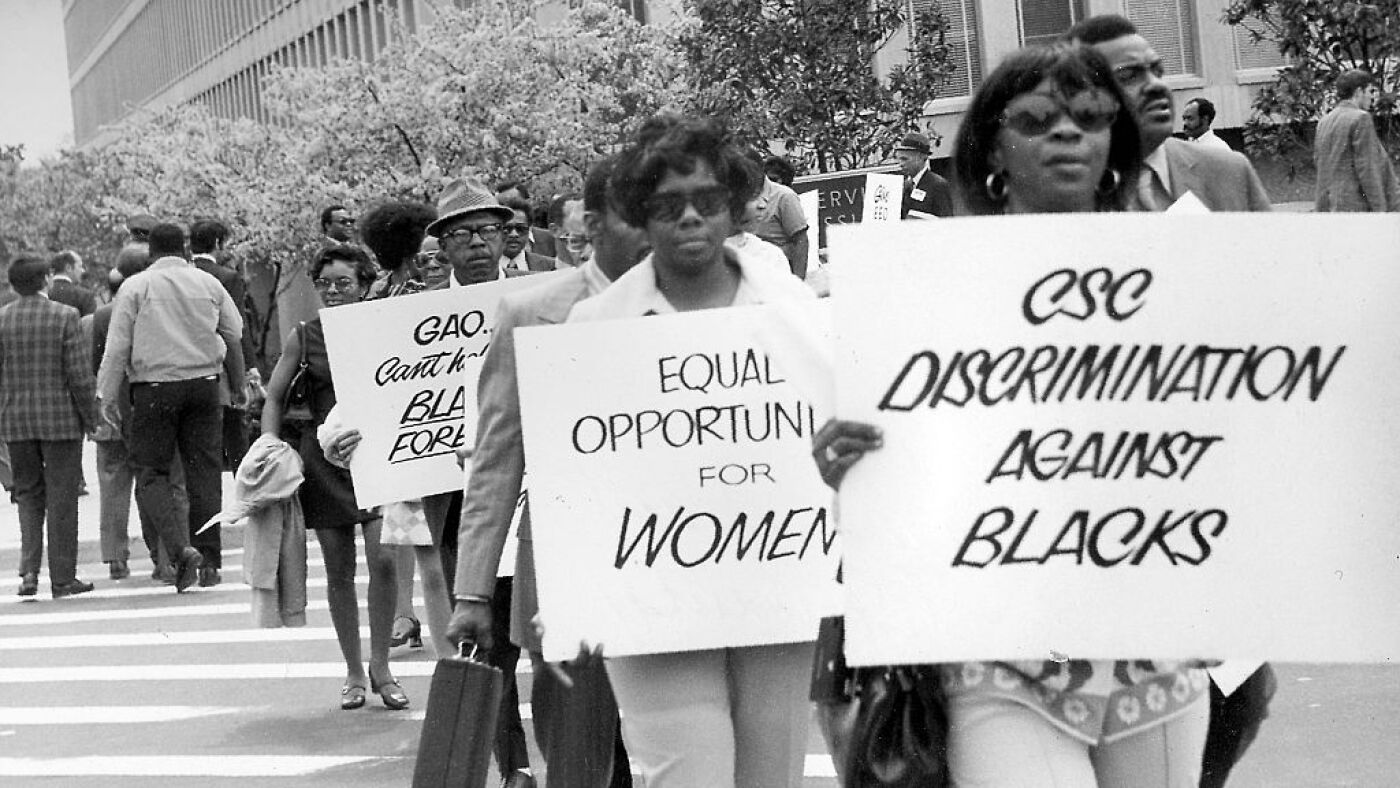
EEOC moves to dismantle long-standing anti-discrimination employment rules
The article reports on the U.S. Equal Employment Opportunity Commission (EEOC) seeking to dismantle or overturn long-standing rules designed
 npr.org·1mo ago
Legal Experts Warn Anti-Discrimination Laws May Not Protect Workers' Genetic Data
This article examines the legal and ethical implications of polygenic risk scoring in the workplace. As genetic testing becomes more common
 nytimes.com·1mo ago
The Law of Health Equity
dc.law.utah.edu·1d ago
Comments
Sign in to join the conversation.
No comments yet. Be the first.