





















Engineers Develop Microscopic Fin Cooling Technology to Reduce Data Center Energy Consumption
By
Ivan Farkas

Baker's choice. Dense with flavour, light on filler.
Summary
Data centers are consuming rapidly increasing amounts of energy due to AI and cloud computing demand. Engineers have developed a novel cooling solution using microscopic fins that significantly improves heat dissipation efficiency, potentially slashing energy use in data centers. The innovation addresses the growing concern that data center energy consumption could account for up to 12% of US grid load by 2028.
Key quotes
· 3 pulledIn the US, server energy usage more than tripled between 2014 and 2023, and may double or even triple once more by 2028, accounting for up to 12 percent of the nation's grid load, according to forecasts.
With the continuously increasing demand for AI and cloud computing services, data centers are growing larger, more numerous, and more energy-hungry.
It's no wonder, with all the servers, storage devices, and other IT equipment they use to process, analyze, and transmit data.
You might also wanna read


Microsoft Develops Microfluidic Cooling Technology for More Efficient Data Centers
Microsoft is developing a microfluidic cooling technology that uses liquid coolant flowing directly into silicon chips to improve heat dissi
 The Verge·8mo ago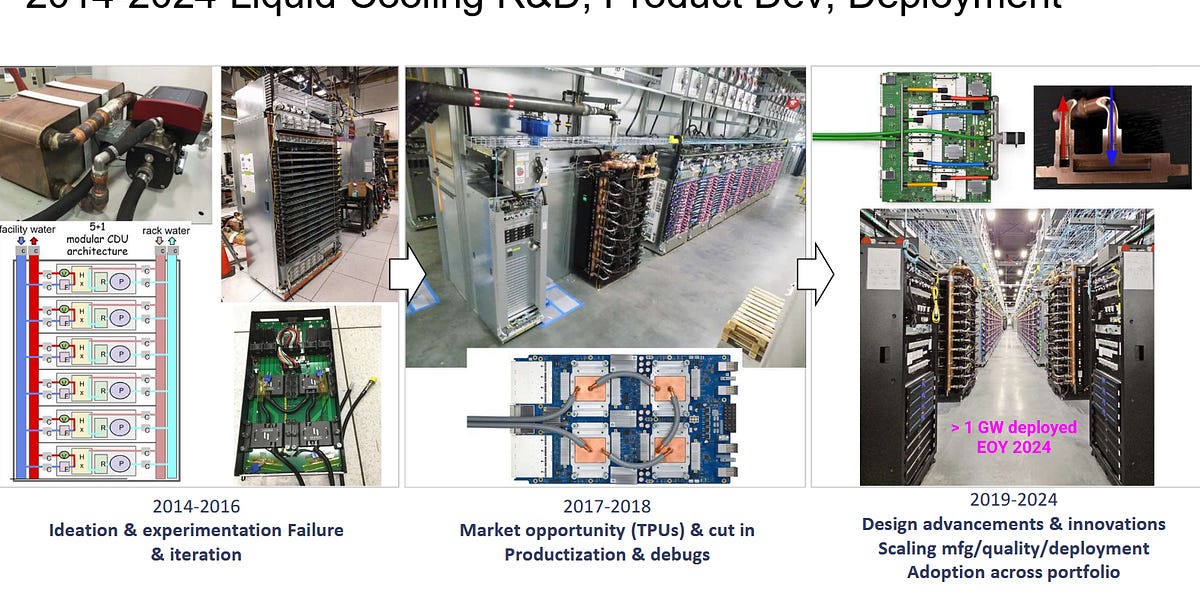
Google Presents Liquid Cooling Solutions for AI Datacenters at Hot Chips 2025
Google presented on liquid cooling technology for datacenters at Hot Chips 2025, highlighting how water's superior thermal conductivity (400
 chipsandcheese.com·9mo ago
Study Finds Data Center Development Correlated with Heat Island Effects
A non-peer-reviewed study by researchers from institutions including the University of Cambridge and Nanyang Technological University has fo
 Dezeen·2mo ago
Stanford's Diamond Thermal Conductivity Breakthrough for Advanced Chip Cooling
The article discusses the critical challenge of heat management in modern computing as transistors become smaller and more densely packed. I
 spectrum.ieee.org·7mo ago
First field measurements show data center waste heat warms nearby neighborhoods by up to 2.2°C
This study presents the first direct field measurements of air temperature impacts from data center waste heat on surrounding residential ne
 asmedigitalcollection.asme.org·29d ago
Fluix AI agents optimize data center cooling and power efficiency
Fluix introduces on-premise AI agents designed to optimize cooling, power, and infrastructure in data centers. The solution aims to help dat
 Product Hunt·1mo ago