
























First reported by pv magazine USA
Unigrid launches first-generation sodium-ion residential energy storage systems
Does Unigrid's Sodium Ion Home Battery Mean Energy Independence from China for the West?
From the article
A lithium-free residential battery from a San Diego startup, inverter bans in Brussels and Washington, and module walls rising everywhere. One would be tempted to think that the US and Europe are making strong progress in the push to cut dependence on China. But the reality is much more nuanced, as India has discovered in the past year. On July 8, California-based Unigrid announced the first deliveries of Na+Casa, its first-generation sodium-ion residential energy storage system. The initial units are already up on walls in Europe; US installations are expected by end-2026, pending North American compliance requirements for the new chemistry. The 9.25 kWh wall-mounted unit, built on Unigrid's proprietary sodium chromium oxide (NCO) cathode, promises 10,000 full-depth cycles — roughly 27 years of daily use — operation from -40°C to 60°C, zero thermal propagation risk, and compatibility with most existing hybrid inverters, a key condition to make an impact. Sodium-ion sidesteps the three choke points where China's grip on lithium-ion is tightest: lithium refining, cobalt, and nickel processing. Unigrid claims to be the first battery firm outside China to export sodium-ion technology at scale, having secured UN38.3 transport certification and shipped commercial volumes since late 2025. With lithium prices hitting a two-year high in early 2026, the timing could hardly be better. A Stepping Stone, Not Break Away Here is the dampener. Unigrid's global manufacturing capacity stood at 100 MWh a year as of late 2025, with a 1 GWh target for 2026. China's battery cell capacity is measured in terawatt-hours. CATL, BYD and HiNa are themselves racing down the sodium-ion curve, with far deeper pockets and faster learning cycles. Unigrid's asset-light 'foundry' model — outsourcing cell production to existing facilities — is capital-smart, but it also means the physical manufacturing may still route through Asian supply chains. And in residential storage, Unigrid joins Chinese-linked sodium-ion entrants like Biwatt and Lithium Valley, both already UL-certified for the US. Sodium-ion might break the materials chokehold, not the manufacturing dependence. Doing that would mean an unaccepotably high price to pay that even European customers may not suffer. The Policy Backing What makes Unigrid's annoubncement interersting is the timing. Technology and policy are finally moving in the same direction. In April-May 2026, the European Commission moved to bar Chinese-made inverters from publicly funded energy projects, effectively designating Chinese suppliers as 'high-risk' after reports of undocumented communication devices found inside grid-connected Chinese inverters. Washington has followed: the FCC is drafting a ban on new foreign inverter models that could be published this year, while the FY2026 NDAA already bars the Pentagon from procuring cells, modules or inverters from foreign entities of concern. Add anti-dumping duties exceeding 270% on evasively routed modules, and the wall around the US market is nearly complete on paper. Not Two, But maybe 5 So is the West 'a couple of years' from complete independence? Not by a long way. On modules, the US is closest: domestic module capacity has scaled rapidly behind tariff walls, though wafers and polysilicon remain overwhelmingly China-linked. Europe is worse off; German module production has shrunk to a niche operation, and the EU's Industrial Accelerator Act defines 'Made in Europe' loosely enough to disappoint its own industry. On inverters, the bans apply to new models — the installed base across both continents already runs on Chinese hardware, and even Western-branded inverters carry Chinese components. On storage, Western non-Chinese cell capacity at scale is a 2028-2030 story at best. A realistic timeline for genuine, full-stack independence is five to seven years — and only if political will survives cost inflation, because decoupling will not come cheap. Where India Stands India's position is paradoxically both stronger and weaker. Stronger on modules: with over 170 GW of module capacity and roughly 35 GW of cell capacity, and ALMM List-II mandating domestic cells from June 1, 2026, India has done on modules and cells what Europe still only talks about. The next frontier — wafers, ingots, polysilicon — is drawing serious capital from Reliance, Adani, Tata Power and Waaree. With a start date of June 2028. However, on storage, seen as the inevitable pairing for renewables from here on, we have a loing way to go. Nearly every battery cell in India's BESS pipeline is imported, mostly from China. The ACC PLI scheme, targeting 50 GWh by 2025, has commissioned just 1.4 GWh — all of it Ola Electric — with zero incentives disbursed as of February 2026. In inverters, Chinese suppliers dominated roughly 85% of central inverter shipments in Q1 2026, led by Sungrow and Sineng, and India has no ALMM-style mandate for inverters, only Class-I local supplier preferences in government procurement. India's tariff-based competitive bidding makes the cheapest kit king, and Chinese cells and inverters are unbeatable on price. But the deeper problem is the absence of an upstream ecosystem — no domestic refining of lithium or cobalt, near-zero production of cathode materials, anodes or electrolytes. Cost is therefore just an excuse to blame our deopendence on China, with no supply chain close enough to meet needs. Which is exactly why sodium-ion deserves India's attention. A chemistry built on salt rather than lithium plays to India's strengths, and the green shoots exist: Unigrid itself partnered with Indian EPC firm Indexel in April 2025 to deploy sodium-ion batteries here, while Udaipur-based Macsen Labs is establishing a sodium-ion pilot line. Reliance owns Faradion, the UK based firm said to have key sodium ion manufacturing IPs. If the ALMM playbook — BCD, PLI, demand mandates, applied in the right sequence from minerals downward — is extended to storage with sodium-ion as a parallel bet, India could leapfrog a lithium race it has already lost, rather than running it a decade behind. BY Arrangement with BessXchange.com
Continue reading on Saur EnergyYou might also wanna read


Move Over, Lithium: Why Sodium-Ion Batteries Are the Big Story of 2026
omkarmhatre.in·6mo ago

Unigrid launches first-generation sodium-ion residential energy storage systems
pv magazine USA·20h ago
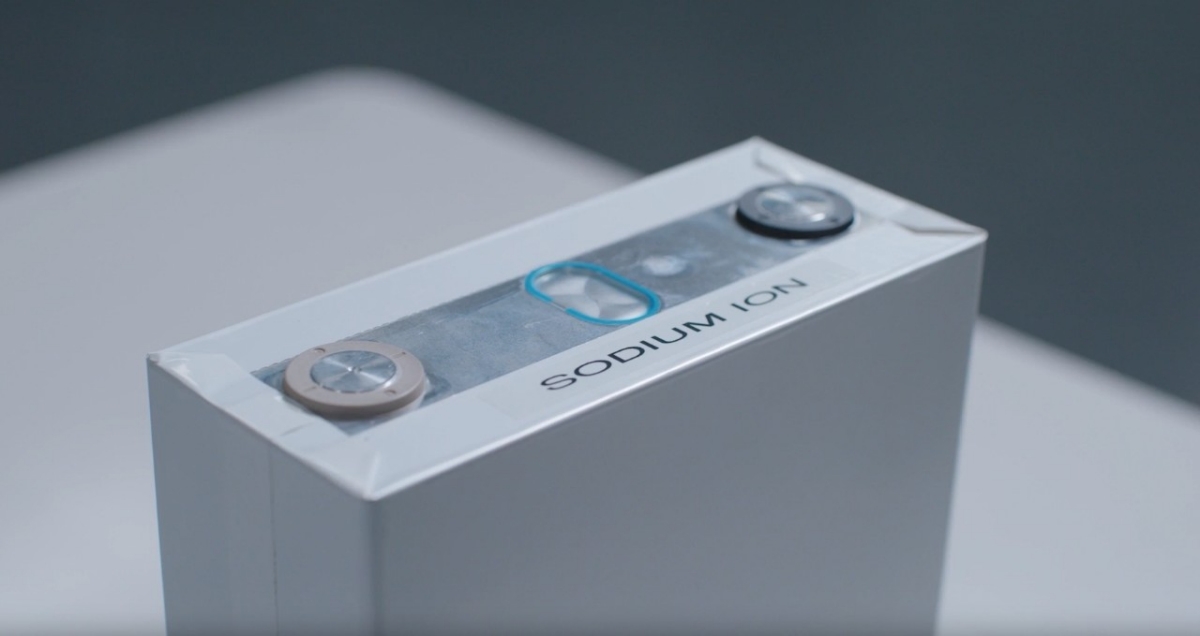
Sodium-ion batteries emerge as a cost-effective alternative for grid-scale energy storage
GM's VP of battery technology argues that sodium-ion batteries are poised to transform grid-scale energy storage due to their lower cost, gr
 news.gm.com·15d ago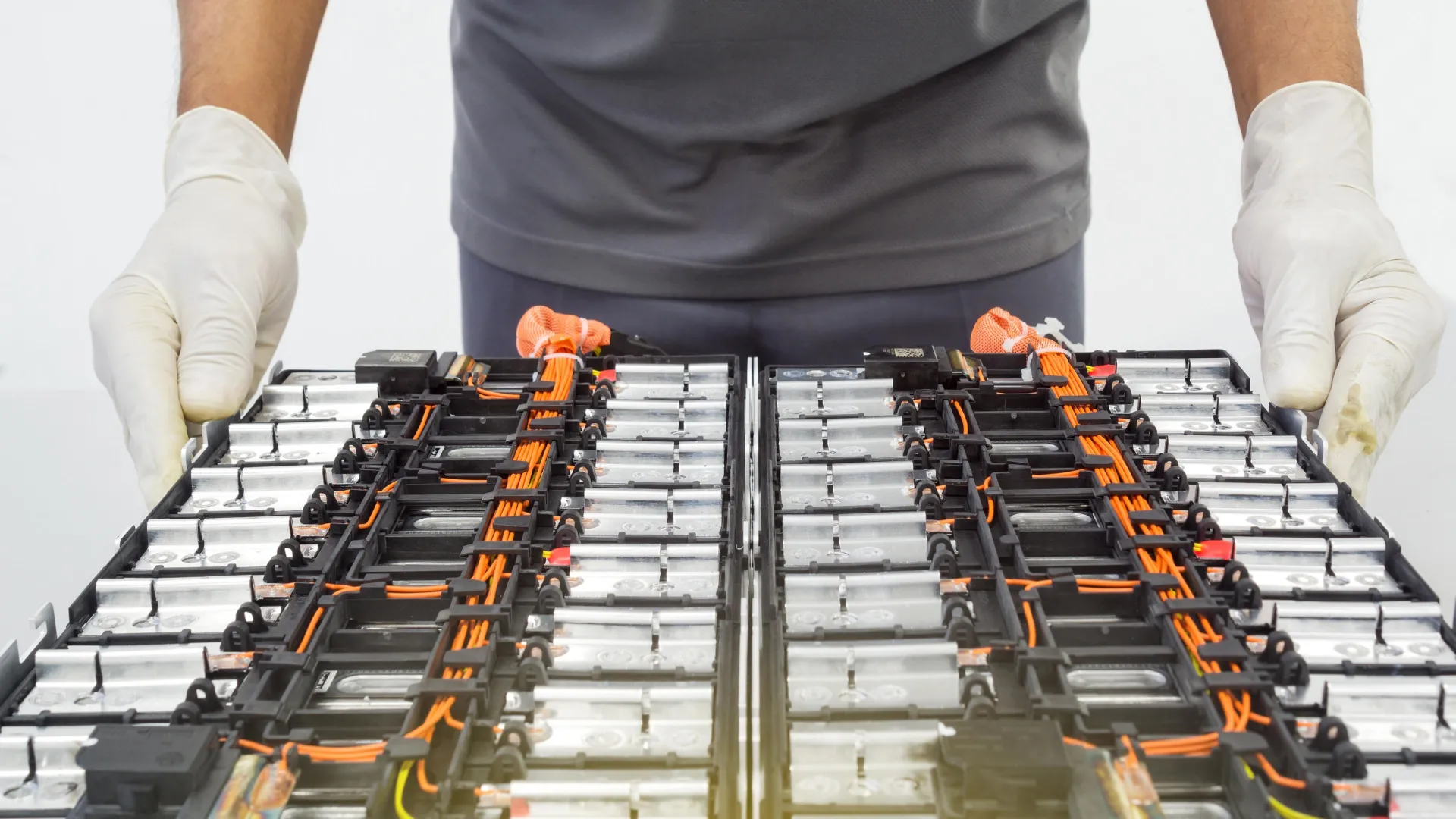
Chinese sodium-ion battery matches Tesla lithium-ion benchmarks in new study
A Chinese sodium-ion battery developed by Hina has achieved performance and manufacturing quality comparable to Tesla's lithium-ion batterie
sciencedaily.com·17d ago
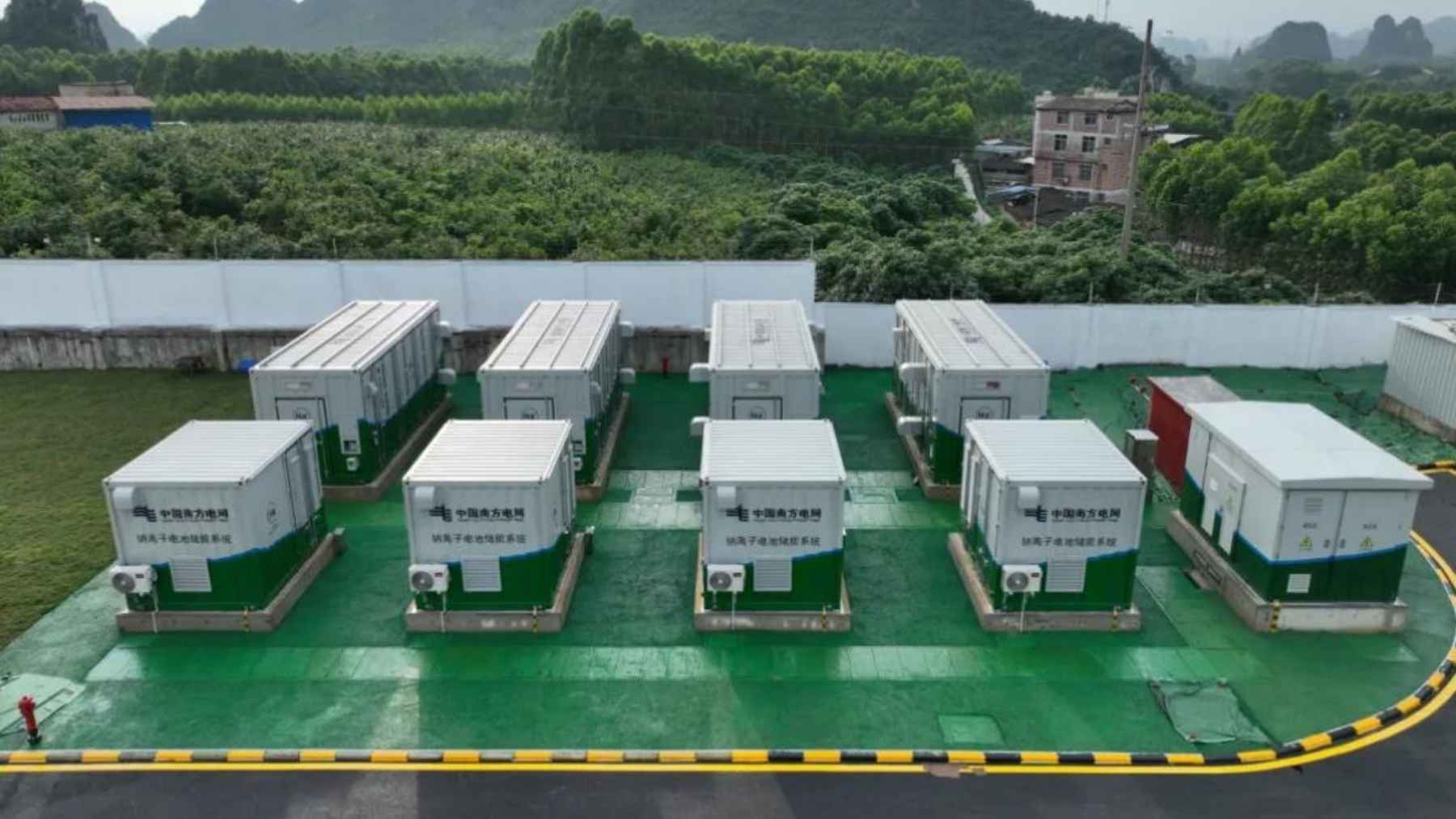
Sodium battery station the size of 15 soccer fields powers Chinese grid, signaling shift from lithium
The article discusses the emergence of sodium-ion batteries as a viable alternative to lithium-ion batteries for grid-scale energy storage.
 autonocion.com·17d ago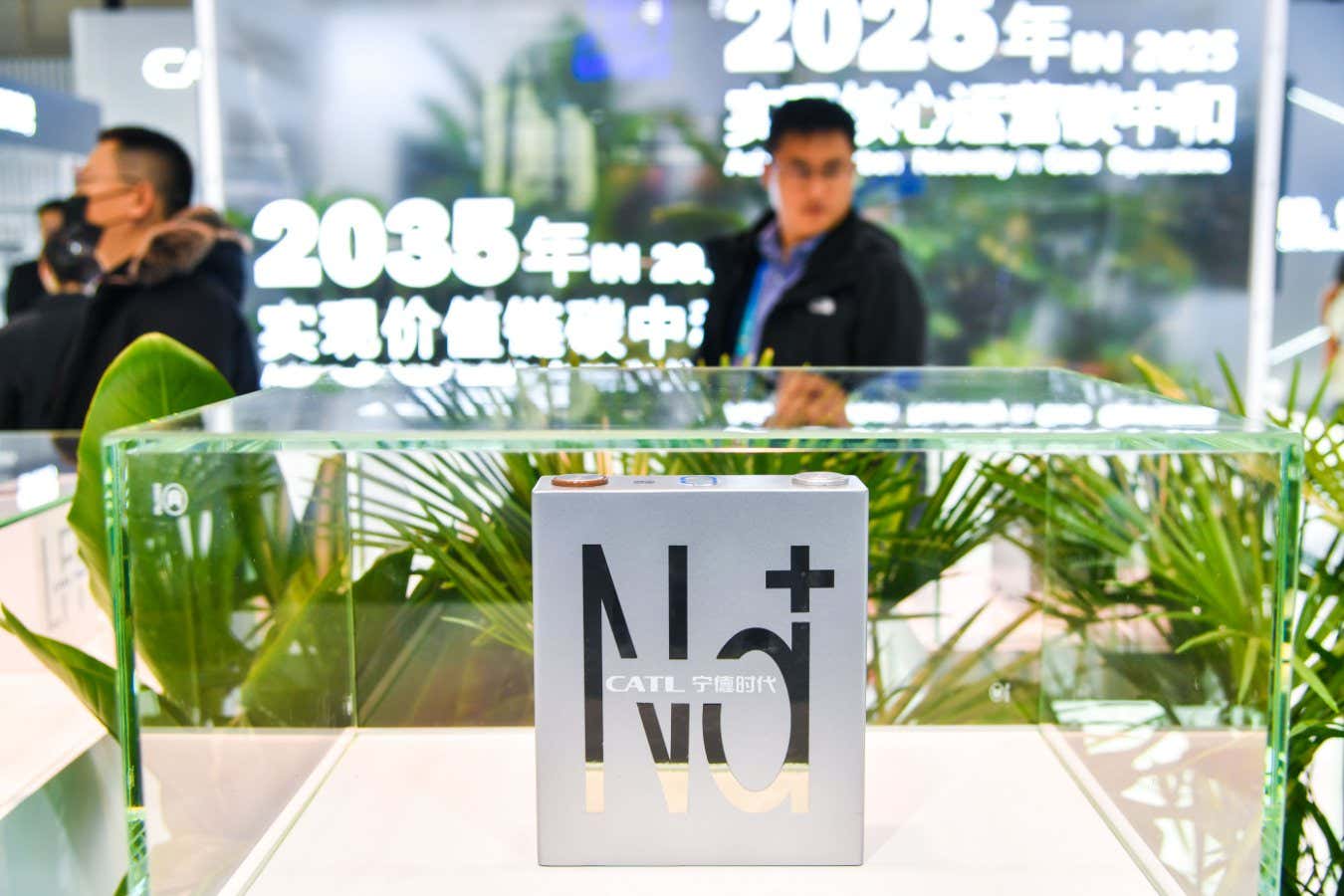
Changan to launch first mass-produced sodium-ion battery EV, challenging lithium dominance
Chinese automaker Changan is launching the first mass-produced EV with a sodium-ion battery (Nevo AO6 model), demonstrating its resilience i
 newscientist.com·21h ago
Comments
Sign in to join the conversation.
No comments yet. Be the first.