
























Move Over, Lithium: Why Sodium-Ion Batteries Are the Big Story of 2026
Unknown ([email protected])6mo ago
From the article
For the last decade, the global energy transition has hinged on a single element: Lithium . We call it "White Gold." Nations fight trade wars over it. Prices fluctuate wildly between $10,000 and $80,000 per ton. And if you are an Indian manufacturer, you have a big problem: We have to import almost all of it from China, Australia, or South America. But as we roll into 2026 , a quiet revolution is happening in laboratories from Shenzhen to Jamnagar. The industry is pivoting to a material so common you can find it in the ocean, in the earth’s crust, and yes—on your dinner table. Sodium. While Lithium-Ion (Li-ion) batteries continue to power the premium Teslas and Tata Curvvs of the world, Sodium-Ion (Na-ion) technology has finally cracked the code for the mass market. Today, Volt Roam goes deep into the chemistry, the economics, and the "Indian Angle" of Sodium-Ion. We explain why Reliance Industries bought a UK tech firm to bring this technology home, and we do the math on how much money a "Salt Battery" could actually save you on your next EV. The Science: Why Swap Lithium for Sodium? To understand the hype, you have to look at the Periodic Table. Lithium (Li) and Sodium (Na) are neighbors. They are both "Alkali Metals." They both love to give away electrons to create a current. However, for years, Sodium had a weight problem. Lithium Ions are small and light. They can pack into a battery anode like commuters on a Mumbai local train during rush hour. (High Energy Density). Sodium Ions are physically larger and heavier. Historically, they couldn't store enough energy to make a viable EV battery. The 2026 Breakthrough Recent innovations in "Hard Carbon Anodes" and "Prussian Blue Analogues" (cathodes) have changed the game. Companies like CATL (with their Naxtra battery) and Faradion have pushed Sodium energy density up to 160–175 Wh/kg . Translation: Sodium batteries are now almost as energy-dense as the LFP batteries used in the Tata Tiago EV, but with a massive cost advantage. The Economic "Killer App": Aluminum vs. Copper This is the technical detail that most blogs miss, but it is the key to the price drop. In a Lithium battery, you must use Copper as the current collector for the anode. If you try to use Aluminum, the lithium reacts with it and destroys the battery. Copper is expensive (~$9,000/ton). In a Sodium battery , you can use Aluminum (~$2,200/ton) for both the cathode and the anode. By replacing Copper and Lithium with Aluminum and Soda Ash, manufacturers can slash the raw material bill by 30% to 40% . The Indian Angle: Reliance, Faradion, & The Jamnagar Factor This isn't just a global story; it is a critical piece of India's "Atmanirbhar" strategy. 1. The Reliance Masterstroke Back in 2022, Reliance Industries (RIL) acquired the UK-based sodium pioneer Faradion for roughly £94 million. Now, in late 2025, the Dhirubhai Ambani Green Energy Giga Complex in Jamnagar is gearing up to be a global hub for this tech. 2. The Raw Material Advantage India has very little Lithium. But India is a global powerhouse in Soda Ash production . By shifting to Sodium-Ion, India moves from being an energy importer to a self-sufficient producer. The "Math Showdown": How Much Will You Save? Let’s apply this to a real-world purchase. Imagine you are buying a high-speed electric scooter in 2026. The Battery Math: Current Scenario (Lithium LFP): 4 kWh Pack @ $90/kWh = ₹30,000 Future Scenario (Sodium-Ion): 4 kWh Pack @ $55/kWh = ₹18,400 The Verdict: Direct saving of ₹11,600 on manufacturing cost alone. This could lower the showroom price by ₹15k - ₹20k. Safety & Performance: The "Cold" Superpower Sodium has two massive advantages over Lithium that make it perfect for India's diverse geography. Zero-Volt Transport (Safety): Lithium batteries are chemically unstable and cannot be drained to 0%. Sodium batteries can be discharged to 0 Volts for transport. They are inert bricks during shipping—incredibly safe. The Himalayan Champion: Lithium batteries faint in the cold. Sodium batteries retain over 90% of their capacity at -20°C . For the Indian Army and Northern India, this is a game changer. Comparison Table: Lithium vs. Sodium Feature Lithium-Ion (LFP) Sodium-Ion (Na-ion) The Winner Energy Density ~170 Wh/kg ~160 Wh/kg Lithium Cost (Cell) $80-90/kWh $40-50/kWh Sodium Safety Thermal Risk Non-Flammable / 0V Sodium Charging Speed 30 mins (10-80%) 15 mins (10-80%) Sodium Cold Performance -20% range at 0°C 90% retention at -20°C Sodium Frequently Asked Questions (FAQ) Q: Can I replace my current EV battery with a Sodium one? No. The voltage curves are different. Your current EV's software and Battery Management System (BMS) are calibrated for Lithium. You cannot swap them. Q: Will Sodium batteries last as long as Lithium? Yes. Early tests show cycle lives of 3,000 to 5,000 cycles. That is roughly 10-15 years of daily use, which is on par with current LFP tech. Q: Is Reliance the only company making them? In India, Reliance is the biggest player, but KPIT/Trentar is also active. Globally, the Chinese giants CATL and BYD are leading the race. Sodium isn't going to kill Lithium. They will be partners. Lithium will be the "Premium Fuel" for long-range beasts. Sodium will be the "Regular Fuel" for the rickshaws, the delivery scooters, and the city cars that make up 80% of Indian traffic. The future of energy isn't just Green. It’s Salty . Stay charged, Pop
Continue reading on omkarmhatre.inYou might also wanna read

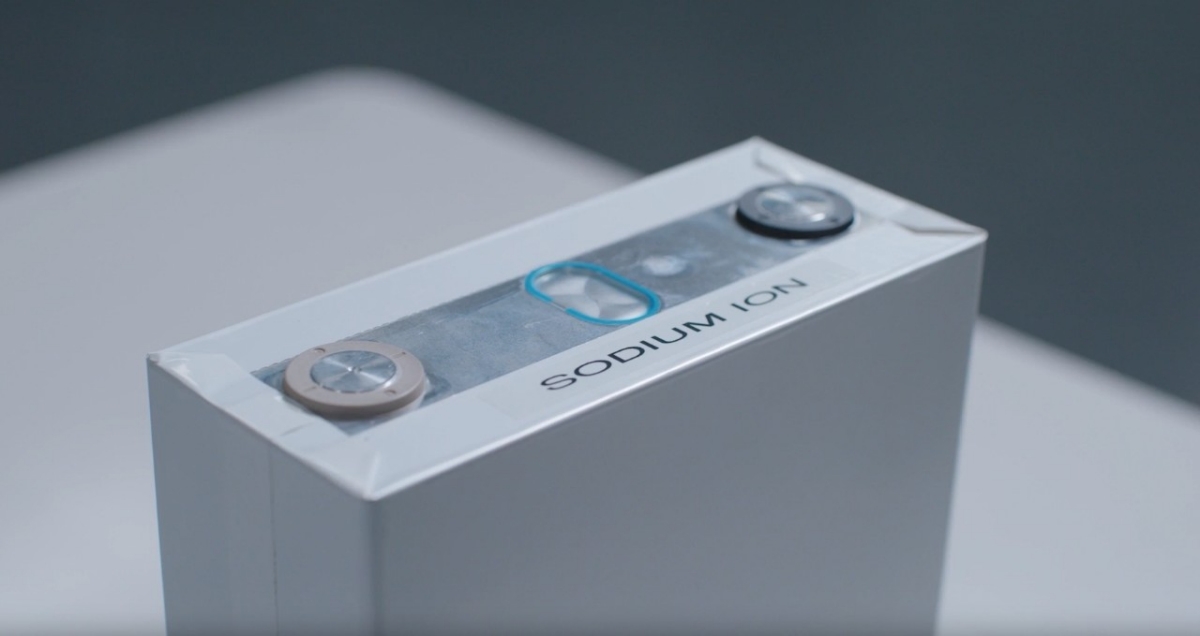
Sodium-ion batteries emerge as a cost-effective alternative for grid-scale energy storage
GM's VP of battery technology argues that sodium-ion batteries are poised to transform grid-scale energy storage due to their lower cost, gr
 news.gm.com·15d ago
Study finds sodium-ion batteries match Tesla's lithium-ion performance at lower cost
A new study from a German university shows that sodium-ion batteries, currently used in EVs and large-scale energy storage in China, match m
 goodnewsnetwork.org·1mo ago
GM enters energy storage market with sodium-ion batteries for AI data centers and grid applications
GM has announced plans to enter the energy storage market with a new sodium-ion battery chemistry, targeting applications in AI data centers
 techcrunch.com·29d ago
Sodium-ion battery breakthrough offers faster charging and improved safety over lithium-ion
Scientists at Tokyo University of Science have developed a new carbon-based electrolyte for sodium-ion (Na-ion) batteries that could signifi
 livescience.com·5mo ago
Rise of the Sodium-Ion Battery as a Global Energy Lifeline
theearthandi.org·16d ago
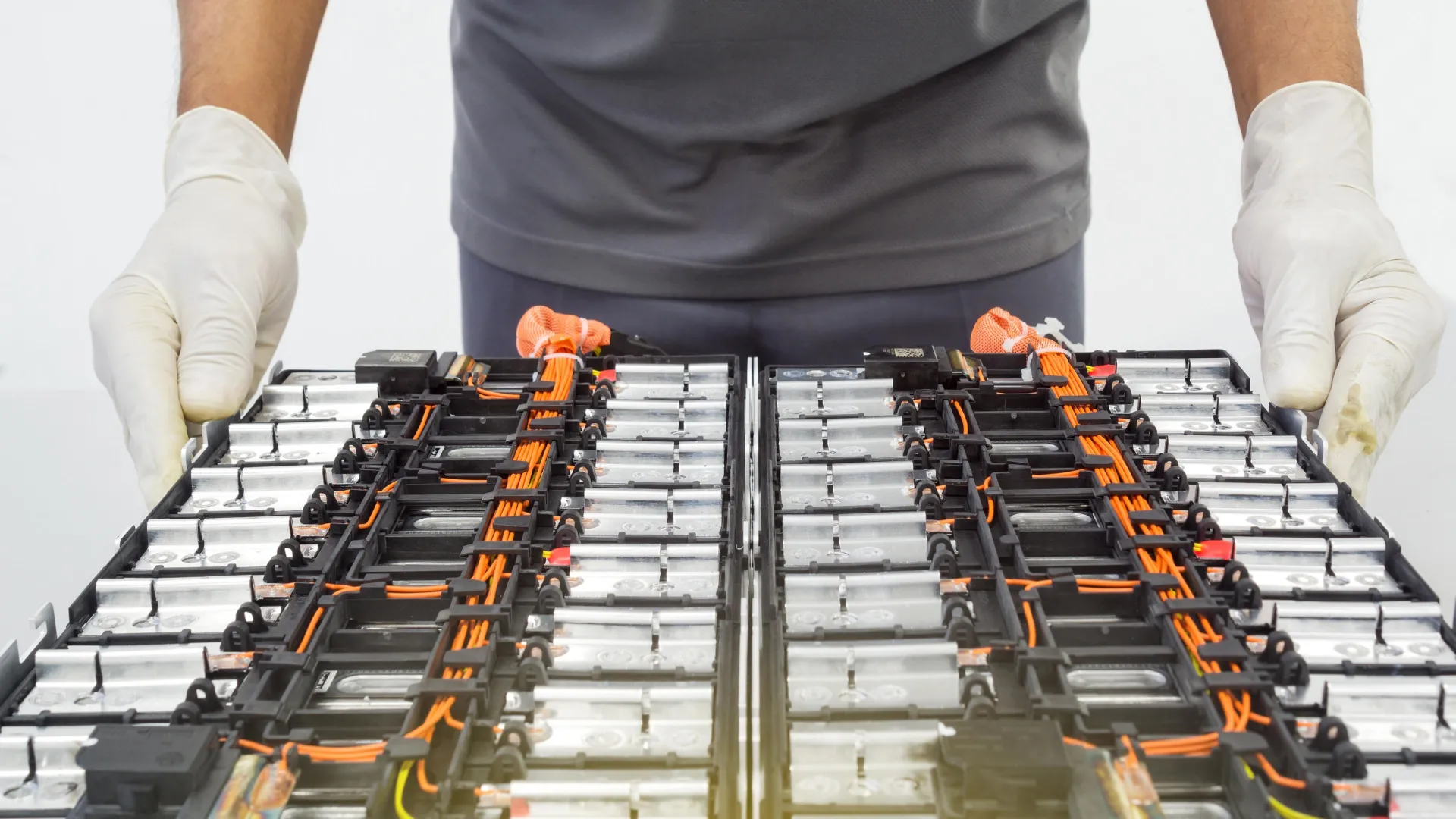
Chinese sodium-ion battery matches Tesla lithium-ion benchmarks in new study
A Chinese sodium-ion battery developed by Hina has achieved performance and manufacturing quality comparable to Tesla's lithium-ion batterie
sciencedaily.com·17d ago
Comments
Sign in to join the conversation.
No comments yet. Be the first.