
























Differentiable Fortran: Extracting Gradients from Legacy Scientific Code Using LFortran and Enzyme
How we built a pipeline to get exact gradients out of a Fortran thermal solver, then used it to solve real inverse problems from Python.
Read the full articleYou might also wanna read


Physics-Informed AI, Part III: From Post-Hoc Checker to Differentiable Physics Head
Part II checked physics after generation. Part III puts the residual inside the training loop with a language-conditioned numerical head. In

LLM-assisted translation successfully ports FESOM2 ocean model from Fortran to C++/Kokkos while preserving physics
Large language models (LLMs) can translate and modify source code, and have been shown to do so for codes of different complexity. Whether t
 arxiv.org·1mo ago
Coding Agent Formalization of Numerical Analysis Reveals Flaws in Compilation-Based Quality Metrics
Recent work has demonstrated that coding agents can formalize entire advanced mathematics textbooks in Lean 4, yet existing efforts concentr
arxiv.org·29d ago
AI-Driven Approach for Portable GPU Kernels in High-Performance Computing
High-Performance Computing (HPC) applications increasingly depend on GPUs, yet developing optimized kernels across evolving GPU architecture
 hgpu.org·27d ago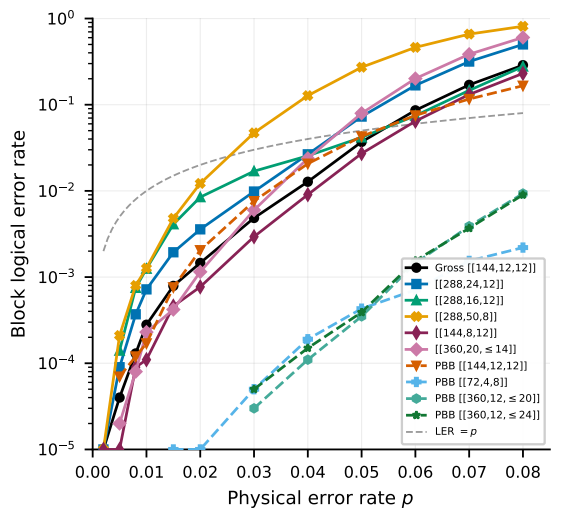
IBM Researchers Develop OpenEvolve, an AI-Powered Framework to Discover Quantum Error Correction Codes
Logical Error Rate Performance for Given Physical Error Rates for Different QEC Codes. Credit:IBM Searching for optimal Quantum Error Correc
 iq.fp2.dev·1mo ago
Separating Problem Solving from Code Generation: Evaluating LLMs on Competitive Programming Through Natural-Language Editorials
Large Language Models (LLMs) increasingly succeed on competitive programming problems, yet existing evaluations conflate algorithmic reasoni
arxiv.org·7d ago
Comments
Sign in to join the conversation.
No comments yet. Be the first.