
























Dielectric Withstand Test (DCW) - Solar PV Module Test
Unknown ([email protected])6mo ago
From the article
Dielectric Withstand Test (DCW) – Complete Guide for Solar PV Module Reliability & Safety Introduction Electrical safety is one of the most critical aspects of solar PV module design and certification. A solar module operates in harsh outdoor conditions for 25+ years — exposed to rain, humidity, dust, high voltage, and system grounding variations. To ensure the module’s insulation system can withstand these stresses, the Dielectric Withstand Test (DCW) is performed as part of IEC 61215 & IEC 61730 safety standards . The DCW test verifies that the PV module’s insulation is strong enough to resist high voltage without breakdown, arcing, or leakage. This is essential for preventing electric shock hazards, fires, and long-term insulation failures . What is the Dielectric Withstand Test (DCW)? The Dielectric Withstand Test , also known as the High-Pot Test or Hi-Pot Test , is an electrical safety test performed on solar PV modules to evaluate: Insulation strength Leakage current resistance Breakdown voltage capability Overall dielectric integrity of the module construction The test applies high DC voltage between the PV module’s electrical circuits and its exposed conductive parts (usually the frame) to ensure no breakdown occurs. It is a mandatory requirement for module safety certification under: IEC 61215 (Design qualification) IEC 61730 (Safety qualification) Why Is DCW Test Important? Solar modules operate at high voltages (600–1500 VDC) in utility-scale plants. Any insulation failure can lead to: Electric shock to maintenance workers Short circuits Fire hazards Junction box failures PID (Potential Induced Degradation) acceleration System tripping Complete module breakdown The DCW test ensures that: ✔ The module’s insulation system is safe ✔ No high-voltage breakdown occurs even under stress ✔ The module can survive extreme environmental exposure ✔ Long-term reliability is maintained ✔ Compliance with international safety standards is achieved Where Does DCW Apply Inside the Module? The dielectric strength is evaluated across: Solar cells Backsheet Glass Encapsulant (EVA/POE) Junction box insulation Cable and connector insulation Frame bonding area Any weakness in these areas can cause current leakage when exposed to high voltage. DCW Test Conditions (IEC 61730 Requirements) The standard test conditions for DCW are: 1. High DC Voltage Applied Typically 1000 V DC + 2 × maximum system voltage For most modules: System voltage = 1000V → Test voltage ≈ 3000V DC System voltage = 1500V → Test voltage ≈ 4000V–5000V DC 2. Duration Voltage is applied for 1 minute (60 seconds) 3. Test Is Performed Between PV module terminals (positive & negative) Module frame or any accessible conductive part DCW Test Setup (Step-by-Step Procedure) 1. Pre-Inspection Technician checks for: Visible defects Cable or junction box damage Moisture or contamination Loose connections 2. Module Positioning Module is placed on an insulated surface to avoid ground interference. 3. Electrical Connections One terminal connected to the high-voltage output Frame connected to ground/reference point If bipolar testing is required, both terminals are tested independently 4. Voltage Application High voltage is gradually raised to the required DC level (e.g., 3000–5000 V). 5. Measurement of Leakage Current The system measures: Leakage current between internal circuits & frame Any sudden spike in current Any arc-flash or breakdown 6. Pass/Fail Evaluation After 60 seconds, technician evaluates module performance. DCW Test Failure Criteria A solar PV module fails the DCW test if: ❌ Insulation Breakdown Occurs Arcing Flashover Dielectric puncture Smoke or burning smell ❌ Leakage Current Exceeds Limit IEC limits leakage to ≤ 50 µA for most modules. ❌ Permanent Deformation or Damage Any damage to the module after the test is considered failure. What Does DCW Test Reveal? The Dielectric Withstand Test helps detect
Continue reading on omkarmhatre.inYou might also wanna read


Perovskite Solar Cell Degradation Under Reverse-Current Stress Depends on Hole-Transport Layer Choice
This study investigates degradation in perovskite solar cells under constant reverse-current stress, rather than the typical voltage-control
 pubs.acs.org·22d ago
Plug-In Solar Safety Shocker
open.substack.com·10d ago

Villena declara la caducidad de la licencia de la planta fotovoltaica Los Alorines
todoalicante.es·1d ago
Villena declara la caducidad de la licencia de la planta fotovoltaica Los Alorines
todoalicante.es·1d ago
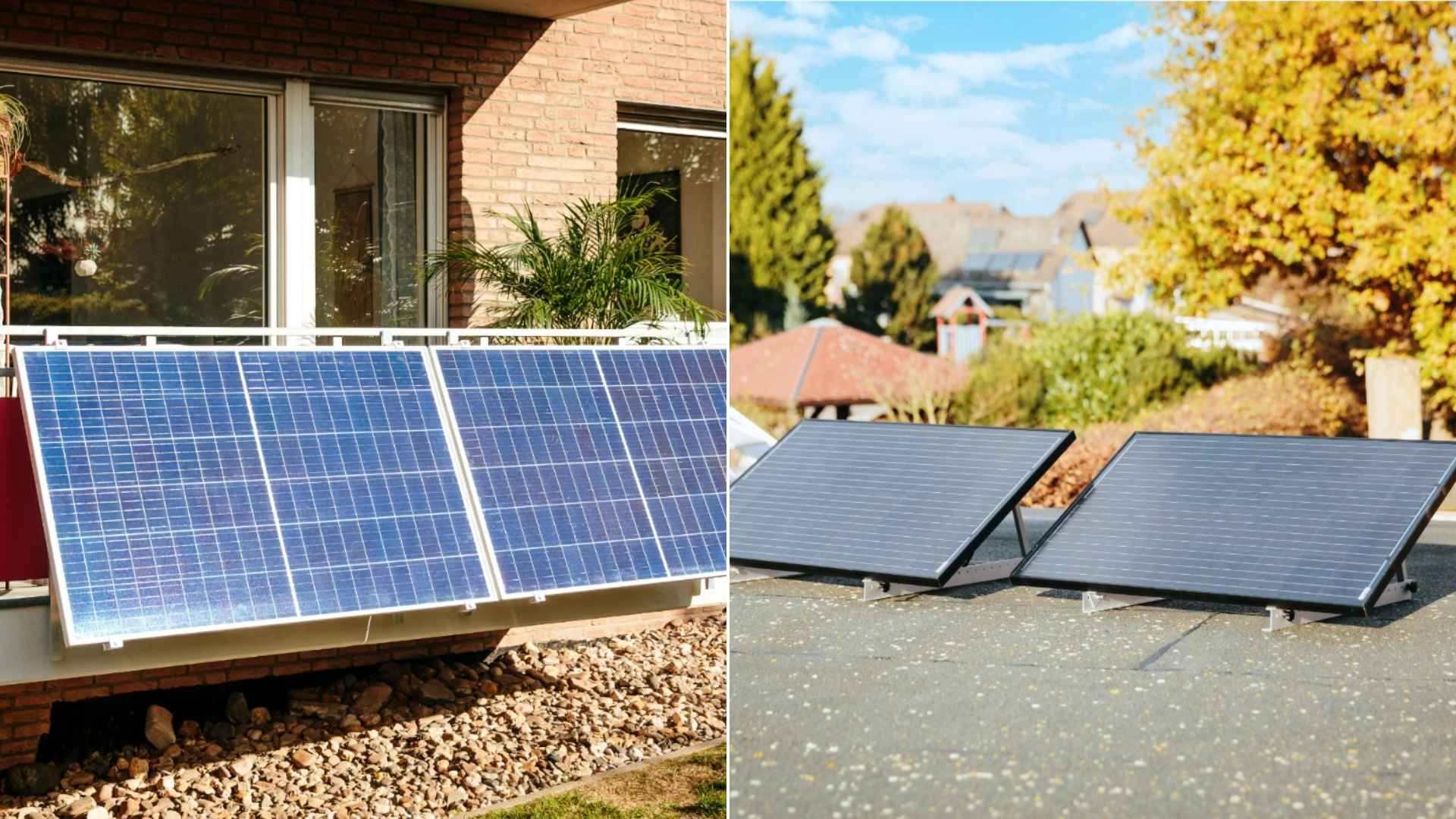
White Paper Finds Disproportionate Regulation of Residential Plug-in Solar vs. Generators for Lineworker Safety
SACE's June 2026 white paper examines the disproportionate regulation of residential plug-in solar photovoltaic (PIPV) units compared to por
 cleanenergy.org·16d ago
Senate asks state energy utility to study safety and utility of portable 'balcony' solar systems
citizenportal.ai·9d ago
Trinasolar launches 620W Vertex N Shield solar module in North America
Trinasolar has launched its new 620W Vertex N Shield photovoltaic module in North America. The module is built on 210mm n-type TOPCon techno
 renewableenergymagazine.com·26d ago
Comments
Sign in to join the conversation.
No comments yet. Be the first.