
























Study reveals how degradable and inert microplastics differently affect soil carbon storage through microbial pathways in agricultural soils
Summary
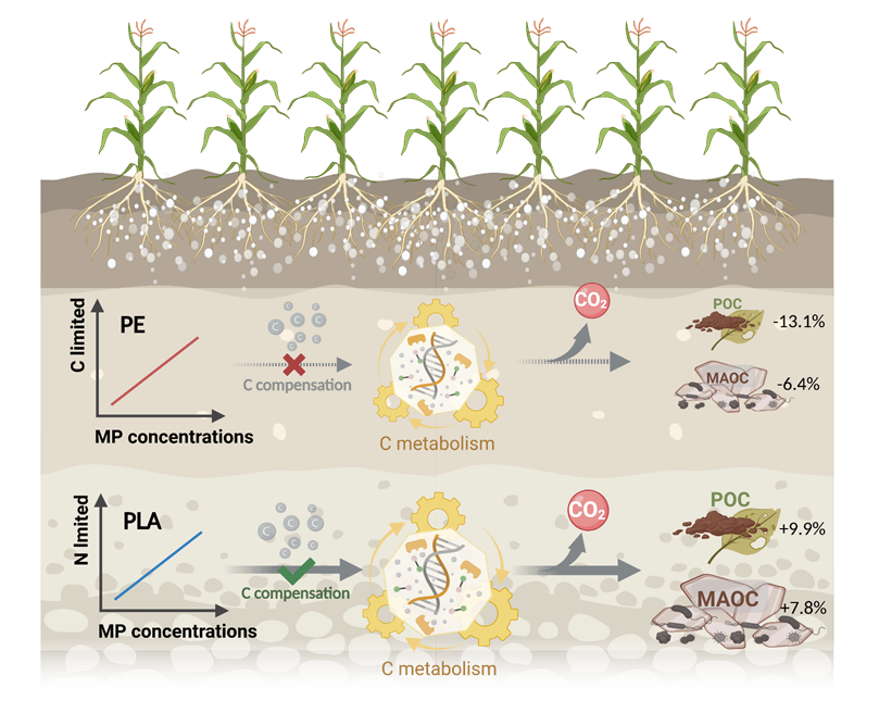
This study examines how different types of microplastics (degradable vs. inert) affect soil organic carbon persistence in agricultural dryland systems where plastic films are commonly used. The research investigates the microbial mechanisms through which microplastic residues influence soil carbon cycling, finding that different microplastic types have distinct effects on soil organic carbon storage and microbial community dynamics in agroecosystems.
Source
 bskyStudy reveals how degradable and inert microplastics differently affect soil carbon storage through microbial pathways in agricultural soilsfesummaries.wordpress.com
Key quotes
· 2 pulledMicroplastics (MPs) are increasingly found in agricultural soils, especially in dryland systems where plastic films have been widely used for crop production.
These plastic film residues may affect how soil stores and cycles C, but different types of MPs may not behave in the same way.
You might also wanna read


Global Study Reveals Widespread Distribution of Plastic-Degrading Bacteria in World's Oceans
This scientific research article investigates the global distribution of bacteria containing PET-degrading enzymes (PETases) in ocean enviro
 academic.oup.com·7mo ago
Carbon Cell Develops Carbon-Negative, Compostable Alternative to Polystyrene from Agricultural Waste
British company Carbon Cell has developed a carbon-negative, compostable alternative to polystyrene packaging and building insulation made f
 Dezeen·7mo ago
Redirecting
Machine learning to predict how fast biodegradable plastics break down in nature

Arctic Research Expedition Studies Underground Fungal Networks and Carbon Storage
A team of biologists led by Michael Van Nuland embarks on an Arctic road trip along Alaska's Dalton Highway to study the critical undergroun
 quantamagazine.org·3mo ago
Comments
Sign in to join the conversation.
No comments yet. Be the first.