
























HKU Engineers Develop Brain-Like SiC Chip Operating at 10 Millikelvin for Quantum Computing Control
By
@QuantumStateX
Summary
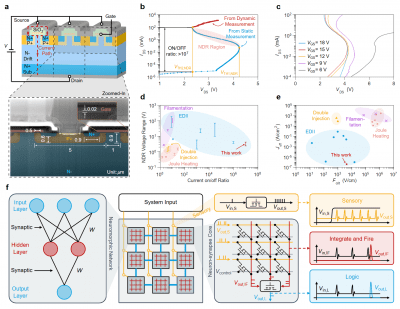
Engineers at the University of Hong Kong (HKU) have developed the first "brain-like" chip using Silicon Carbide (SiC) MOSFETs that can mimic biological neurons at 10 millikelvin (near absolute zero). Led by Professor Yuhao Zhang and PhD student Xin Yang, the team leveraged an "S-shape" negative differential resistance property of SiC to create energy-efficient circuits for quantum control systems. This innovation addresses the wiring and heat challenges that currently limit quantum computer scalability, offering a potential solution for cryogenic control electronics.
Source
 bskyHKU Engineers Develop Brain-Like SiC Chip Operating at 10 Millikelvin for Quantum Computing Controlquantumzeitgeist.com
Key quotes
· 3 pulledThe team, led by Professor Yuhao Zhang and PhD student Xin Yang, harnessed a unique property of Silicon Carbide (SiC) MOSFETs, a stable 'S-shape' negative differential resistance, to create energy-efficient circuits operating near absolute zero.
This innovative approach offers a potential solution to the excessive heat generated by current quantum control systems.
Engineers at HKU have demonstrated the first 'brain-like' chip capable of mimicking biological neurons at a frigid 10 millikelvin, a crucial step toward solving the wiring challenges that limit quantum computer scalability.
You might also wanna read

Shiitake Mushroom Mycelium Used to Create Sustainable Memristors for Neuromorphic Computing
Researchers have developed sustainable memristors using shiitake mushroom mycelium for high-frequency bioelectronics applications. The study
 journals.plos.org·7mo ago
Chinese Researchers Develop Analog Chip Claimed to Be 1,000 Times Faster Than Nvidia GPUs for Specific Applications
Chinese researchers from Peking University have developed a new analog chip using resistive random-access memory (RRAM) technology that repo
 livescience.com·7mo ago
Cornell Researchers Develop Analog 'Microwave Brain' Chip for Ultrafast Signal Processing
Cornell University researchers have developed a novel analog electronic chip called a 'microwave brain' that processes ultrafast data and wi
 newatlas.com·10mo ago
Researchers Develop Materials for Light-Based Computer Chips to Improve Efficiency and Speed
Researchers are developing light-based computers that use photons instead of electricity, which could offer greater energy efficiency and fa
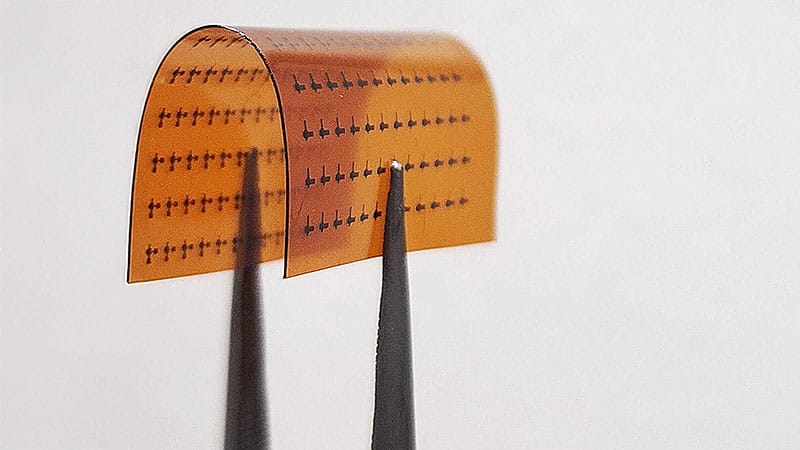
Printed artificial neurons from MoS₂ successfully trigger firing in living mouse brain cells
Researchers at Northwestern University have successfully printed artificial neurons from molybdenum disulfide (MoS₂) on flexible plastic tha
 mdsc.pe·14h ago
Bridging the Semiconductor Talent Gap: Cross-Training CS Students and AI-Assisted Hardware Design
The article discusses innovative approaches to address the talent shortage in the semiconductor industry, including cross-training computer
 semiengineering.com·4mo ago
Comments
Sign in to join the conversation.
No comments yet. Be the first.