





















Rank-Aware Decomposition Technique Reduces Computation in Recommender Systems by 87.5%
By
[Submitted on 24 May 2026]

Toasted to a respectable shade. No regrets, no crumbs left.
Summary
This paper presents a rank-aware decomposition technique for deep ranking models in industrial recommender systems. The key insight is that standard implementations redundantly compute context-only operations N times per request when scoring N candidates. The authors propose an algebraic decomposition that moves context-only computation from once-per-candidate to once-per-request, applicable to FM pairwise products, DCNv2 cross layers, self-attention, and FC projection layers. Applied to a production DLRM-style ranker, this increases per-pod throughput by 87.5% (47% reduction in peak pod count) with identical model predictions. The paper also introduces rDCN, an architectural variant of DCNv2 that maintains rank discipline across depth, matching accuracy at 67% fewer total FLOPs.
Key quotes
· 5 pulledWe present a rank-aware decomposition applicable to the dominant interaction mechanisms in modern recommender architectures
Applied to a production DLRM-style ranker without any architectural change, the decomposition increases per-pod throughput by 87.5% (a 47% reduction in peak pod count) at identical model predictions.
The identity-equivalent decomposition applies only at the first layer of cross networks and self-attention, since each layer mixes ranks in its output.
We further introduce rDCN, an architectural variant of DCNv2 that maintains rank discipline across depth and matches DCNv2 accuracy within training noise at 67% fewer total FLOPs.
any linear or bilinear operation over a rank-partitioned input admits an exact block decomposition that moves context-only computation from once-per-candidate to once-per-request
You might also wanna read

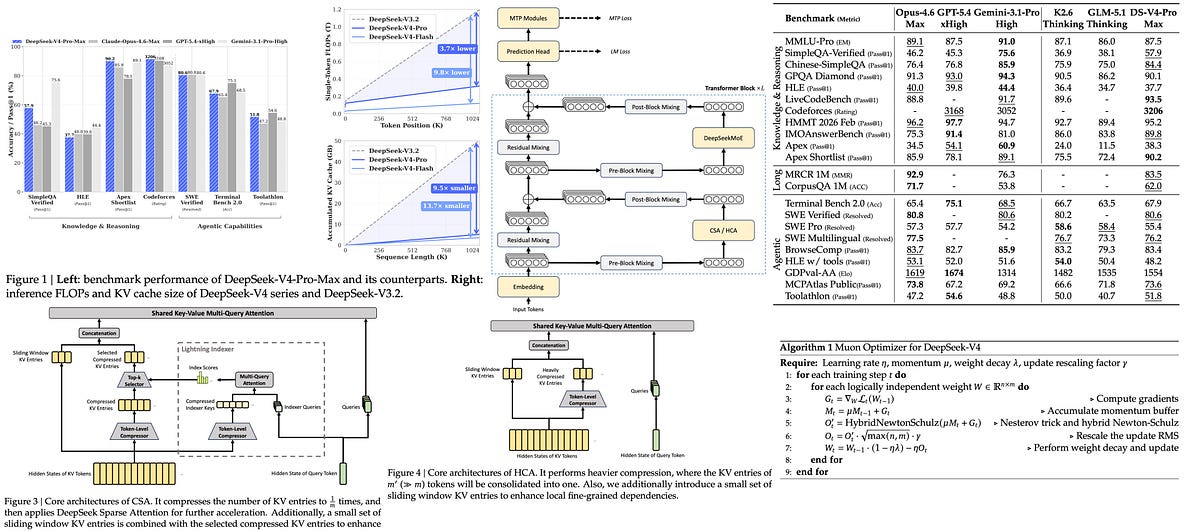
DeepSeek-V4: Hybrid Sparse-Attention Architecture Enables Efficient Million-Token Context Inference
DeepSeek-V4 introduces a hybrid sparse-attention architecture combined with on-policy distillation across domain specialists, enabling 1M-to
 artgor.medium.com·4h ago
Rotary GPU: Enabling Large Mixture-of-Experts Models on Consumer Laptop GPUs with Limited Memory
This paper presents Rotary GPU, an exploratory approach to running large Mixture-of-Experts (MoE) language models on consumer-grade hardware
 arxiv.org·1d ago
LinkedIn cuts GPU training hours by 65% with Generative Recommender system optimizations
LinkedIn has developed a Generative Recommender (GR) system that models user activity as token sequences, offering richer long-context perso
 startuphub.ai·3d ago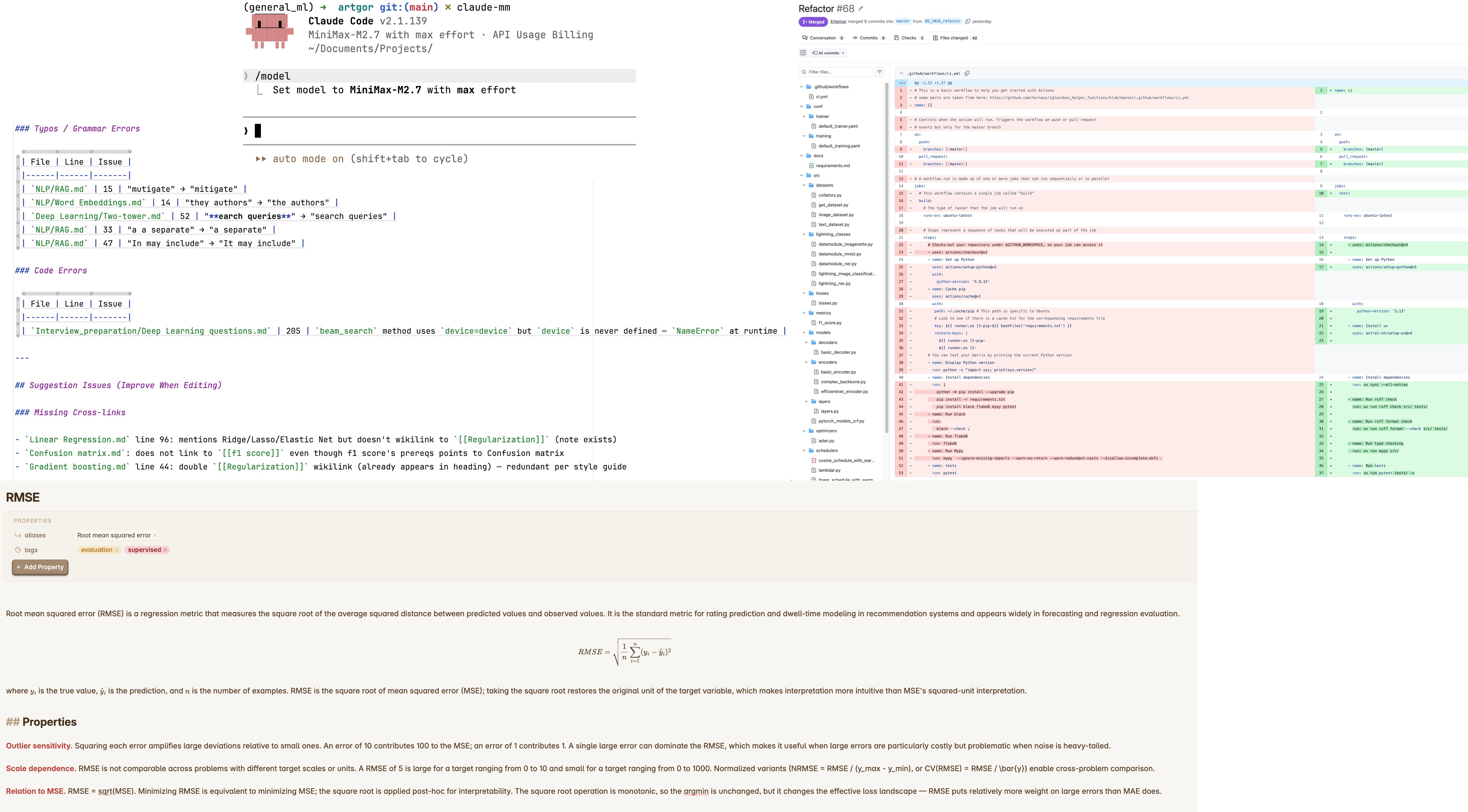
Hands-on evaluation of MiniMax M2.7 via API on ML and coding workflows
The author evaluates MiniMax M2.7 by using it through Claude Code on three real-world ML and coding workflows: scaffolding a Kaggle competit
 andlukyane.com·11d ago
Orthrus: A Dual-Architecture Framework for Fast, Lossless LLM Inference via Diffusion Decoding
Orthrus is a dual-architecture framework that combines autoregressive LLMs with diffusion models to enable fast, lossless parallel token gen
 github.com·16d ago
Running local AI models on an M4 MacBook with 24GB memory: A practical guide
The article details the author's experiments with running local AI language models on an M4 MacBook with 24GB memory. It covers the setup pr
 jola.dev·21d ago