
























A Perspective Mapping Method for Computing the Continuous Integral R2 Indicator via Box Decomposition
By
[Submitted on 29 Jun 2026 (v1), last revised 2 Jul 2026 (this version, v3)]
Summary
This paper introduces a bidirectional perspective mapping between the continuous integral R2 indicator (a Pareto-compliant refinement used in multi-objective optimization performance assessment, bounded archiving, and skyline selection) and integration over unions of anchored axis-aligned boxes. The authors show that by translating the ideal point to the origin, approximation points become positive loss vectors, and the subgraph of the lower weighted Tchebycheff envelope maps to the complement of an anchored-box union in reciprocal objective space. This allows hypervolume algorithms that emit box decompositions to be reused for integral R2 computation by replacing ordinary box volumes with closed-form weighted box integrals. The paper provides complexity results: O(n log n) for N=2,3 objectives, O(n²) for N=4, and higher complexities for more objectives, with a lower bound of Ω(n log n) in the algebraic decision-tree model and #P-hardness when N is part of the input.
Source

 bskyA Perspective Mapping Method for Computing the Continuous Integral R2 Indicator via Box Decompositionarxiv.org
Key quotes
· 5 pulledThis work introduces a bidirectional perspective mapping between continuous integral R2 computation and integration over unions of anchored axis-aligned boxes.
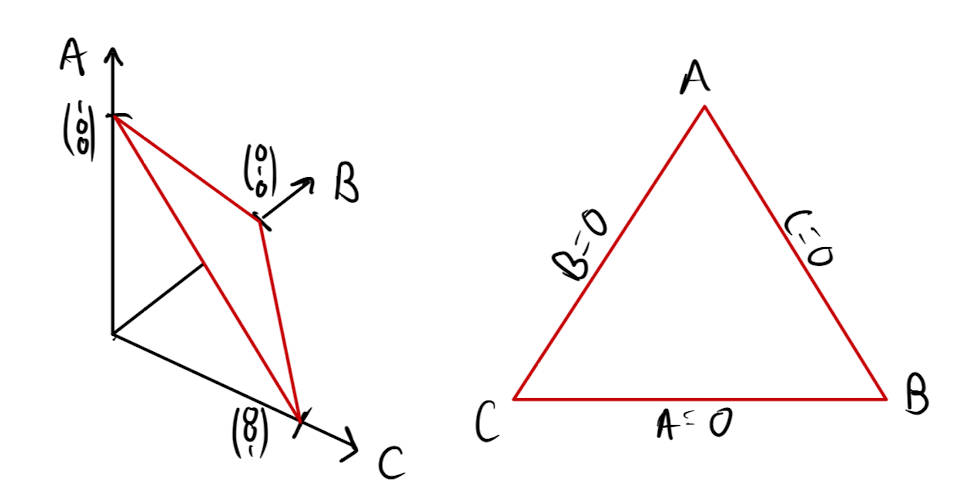
The Jacobian gives an absolute R2 formula as a weighted complement volume with density $(x_1+\cdots+x_N)^{-(N+1)}$, while differences of R2 values become finite weighted hypervolume differences.
Hence, hypervolume algorithms that emit box decompositions can be reused by replacing ordinary box volumes with closed-form weighted box integrals.
Together, the proposed perspective mapping provides a powerful tool for transferring algorithmic and structural results between anchored-box union and hypervolume theory and integral R2 computation.
On the lower-bound side, exact value computation has an $\Omega(n\log n)$ lower bound in the algebraic decision-tree model already in two objectives, this bound lifts to every fixed $N\geq2$, and exact computation is $\#P$-hard when $N$ is part of the input.
You might also wanna read


Unified Framework for Black-Box Optimization Reveals Hybrid Methods Outperform Constituent Algorithms
This paper presents a unified theoretical framework connecting several black-box optimization (BBO) methods — Evolution Strategies (ES), Con
arxiv.org·1d agoUnified Framework for Black-Box Optimization Reveals Hybrid Methods Outperform Constituent Algorithms
This paper presents a unified theoretical framework connecting several black-box optimization (BBO) methods — Evolution Strategies (ES), Con
arxiv.org·1d ago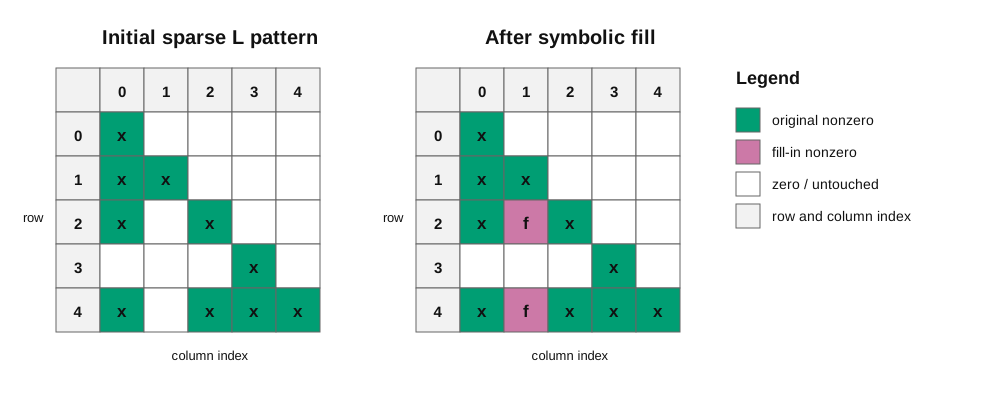
Deriving the Sparse Cholesky Elimination Tree for Matrix Factorization
This article provides a technical derivation of the elimination tree for the right-looking sparse Cholesky algorithm (A = LL^T) for sparse m
Reflecting on Optimisation: A Personal Take on Theory vs. Modern Practice
Magnus Ross reflects on his lack of deep study in optimisation, admitting he knows the basics (Adam, AdaGrad, L-BFGS) but zones out when dis
Breaking Quadratic Barriers: A Non-Attention LLM for Ultra-Long Context Horizons

Generalized Windowed Operation: A Unified Framework for Deep Learning Operations
This research paper introduces the Generalized Windowed Operation (GWO), a theoretical framework that unifies deep learning operations by de
 zenodo.org·9mo ago
Learning from Redundant Optimization: The asin() Function Case Study
The article discusses the author's realization that a faster implementation of the asin() (arcsine) function was already available in standa
 16bpp.net·3mo ago
Comments
Sign in to join the conversation.
No comments yet. Be the first.