
























Why NES composite video is wobbly: A technical deep dive
By
zdw
Summary
A deep-dive technical analysis of why composite video output on the original Nintendo Entertainment System produces a wobbly, unstable picture. The article explores the nitty-gritty of how the NES generates its video signal, the quirks of composite video encoding, and the specific hardware design choices (including the PPU and RF modulator) that lead to the characteristic instability. It blends retro gaming nostalgia with electrical engineering concepts to explain a phenomenon familiar to NES enthusiasts.
Source
 Hacker NewsWhy NES composite video is wobbly: A technical deep divenicole.express
Key quotes
· 3 pulledIs it the platonic ideal of an 8-bit video game system? Well, only because it's so prominent and successful– it's actually kind of an oddball in its expandability and design.
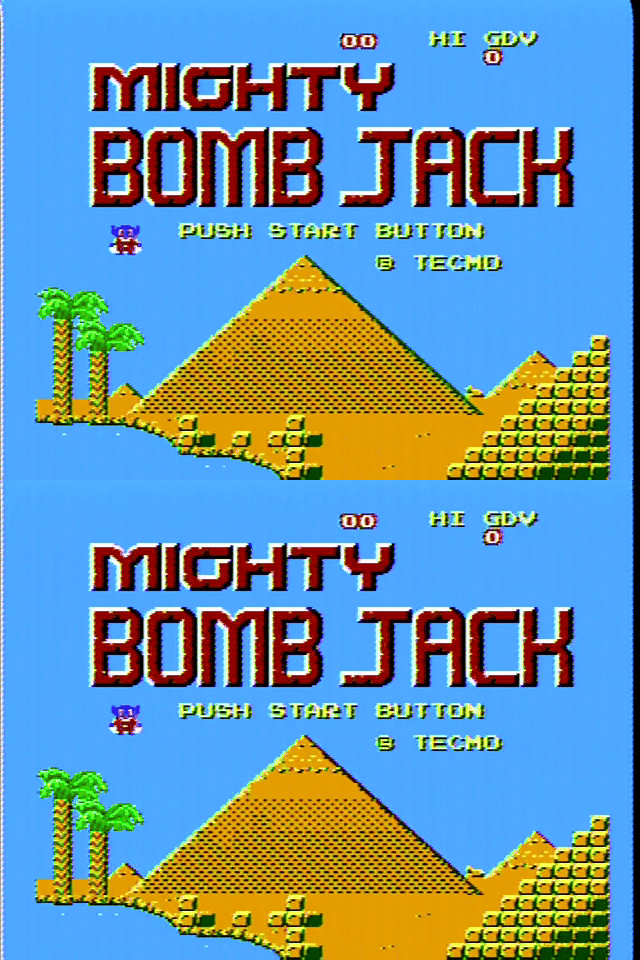
The picture is a bit… wobbly. Well, over composite video anyway.
Let's dig in and learn a little big more about the nitty-gritty of composite video.
You might also wanna read


How Nintendo Direct's video format replaced E3 and reshaped gaming showcases
The article discusses how Nintendo's shift to prerecorded video presentations (Nintendo Direct format) effectively killed the traditional E3
 polygon.com·29d ago
Exploring the Disparity in Cat and Dog Video Games
The article discusses the prevalence of cat-themed video games and the lack of similar attention given to dog-themed games in the gaming ind
polygon·11mo ago
30 Years Later: A Retrospective Appreciation of the N64's Unconventional Controller
The author reflects on finally appreciating the Nintendo 64 controller after nearly 30 years. Having missed the N64 era as a kid (sticking w
 nintendolife.com·15d ago
Raspberry Pi project 240-MP brings VCR-style retro interface to digital media libraries
A Raspberry Pi project called 240-MP gives media libraries a retro VCR-style makeover, allowing users to browse and play media files with a
 theregister.com·22d ago
Comments
Sign in to join the conversation.
No comments yet. Be the first.